
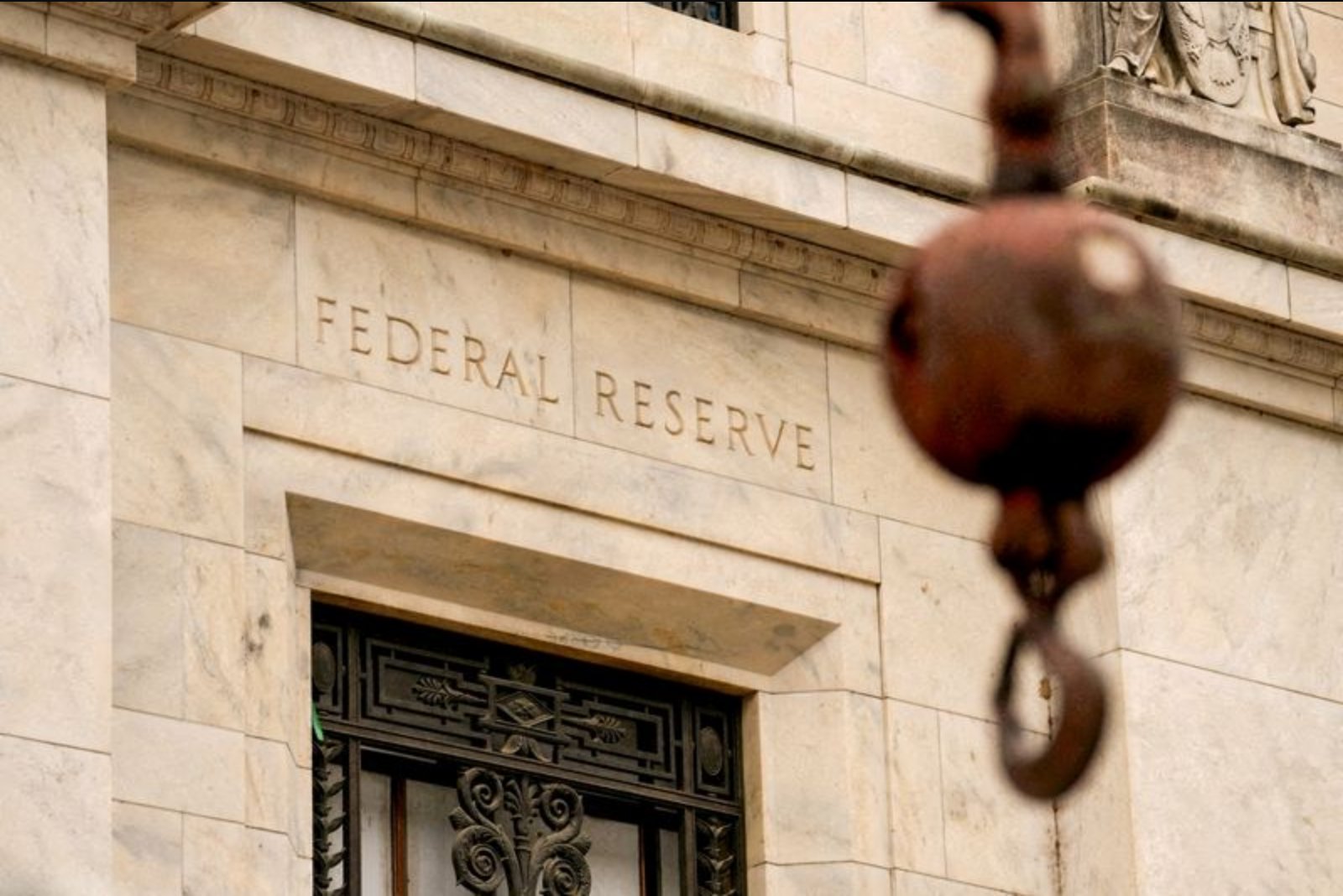
It is Federal Reserve decision day, and market attention is split between monetary policy and leadership changes at the central bank. By the time the Federal Open Market Committee concludes its meeting, it is increasingly likely that Jerome Powell will step down as chair. Simultaneously, the Senate is expected to cast a vote on Kevin Warsh’s confirmation, a development that could mark the beginning of a new and potentially contentious chapter for the Fed.
Forward markets reflect near certainty that the FOMC will stand pat on interest rates. Fed funds futures are pricing a 100% probability of a hold, and no policy changes are expected until well into 2027. Yet public indications suggest the committee is more fractured than in previous cycles, leaving open questions about how a new nominee might manage the Fed’s relationship with the White House. President Donald Trump has been vocal in calling for quick and aggressive rate cuts, a demand that raises the prospect of heightened political pressure on the central bank.
Observers anticipate that debate over Powell’s legacy will largely center on his defence of the Fed’s independence amid sustained pressure from the president who appointed him. It is also not yet confirmed whether Powell will remain on the Federal Reserve Board as a governor after his term as chair ends on May 15.
Markets took a cautious tone on Wednesday as investors processed the confluence of central bank uncertainty and an intensifying geopolitical standoff. S&P 500 e-mini futures were up 0.1%, while MSCI’s broad index of Asia-Pacific shares outside Japan erased earlier losses and was trading flat. Traders are balancing FOMC-related uncertainty with renewed diplomatic tensions between Washington and Tehran, an issue that is clouding risk sentiment globally.
The Wall Street Journal, citing U.S. officials, reported that President Trump has ordered aides to prepare for an extended blockade of Iran, a development that adds a fresh layer of geopolitical risk for markets to digest.
Technology stocks offered little solace. Asian chipmakers slumped after the Journal reported that OpenAI had missed internal targets for weekly users and revenue. The report raised investor concerns about the company’s ability to sustain heavy spending on data centres. Earlier trading on Wall Street had seen pressure on shares such as Oracle and CoreWeave in response to the same report.
European trading was muted in the early session. Pan-region futures and German DAX futures were flat, while FTSE futures were down about 0.2%.
In corporate news, merger talks between Pernod Ricard and Brown-Forman have broken down. The French spirits group and the Kentucky-based owner of Jack Daniel’s ended discussions after failing to agree on mutually acceptable terms.
Several scheduled items could influence market moves through the day. Corporate earnings in Europe include Deutsche Bank, Amundi, Mercedes-Benz, Norsk Hydro, AstraZeneca, GSK, TotalEnergies and Universal Music Group. In the United States, major reports are expected from Alphabet, Microsoft, Amazon.com, Meta, AbbVie and Qualcomm.
Key macroeconomic releases include Euro Zone Money-M3 annual growth for March, and April sentiment measures covering business climate, consumer confidence, economic sentiment, industrial sentiment and services sentiment. Germany is due to publish preliminary CPI and HICP readings for April. Germany will also auction 10-year bunds later in the day, an event that may attract attention from fixed-income markets.
Traders and analysts will be watching whether the combination of leadership transition at the Fed, geopolitical friction in the Middle East, technology-sector developments and a busy earnings calendar will jointly influence risk appetite and market direction.