
Hook & thesis
SolarEdge (SEDG) has gone from deep lows to a strong recovery, up roughly 200% in the last 12 months. That run has been fueled by commodity-driven demand spikes and fresh optimism around storage and electrification. Today’s price action looks like a healthy pullback inside a broader uptrend - the kind of setup I prefer to buy with a strict stop.
My trade thesis is straightforward: macro-led demand pulses (oil volatility, energy security concerns) plus the company’s entrenched inverter ecosystem give SolarEdge upside to retest the $50s. Valuation isn't dirt-cheap, but free cash flow generation, a sub-$3B market cap and an actively shifting energy mix justify a tactical long. I lay out an actionable plan with entry, stop, and a mid-term target below.
What SolarEdge does and why the market should care
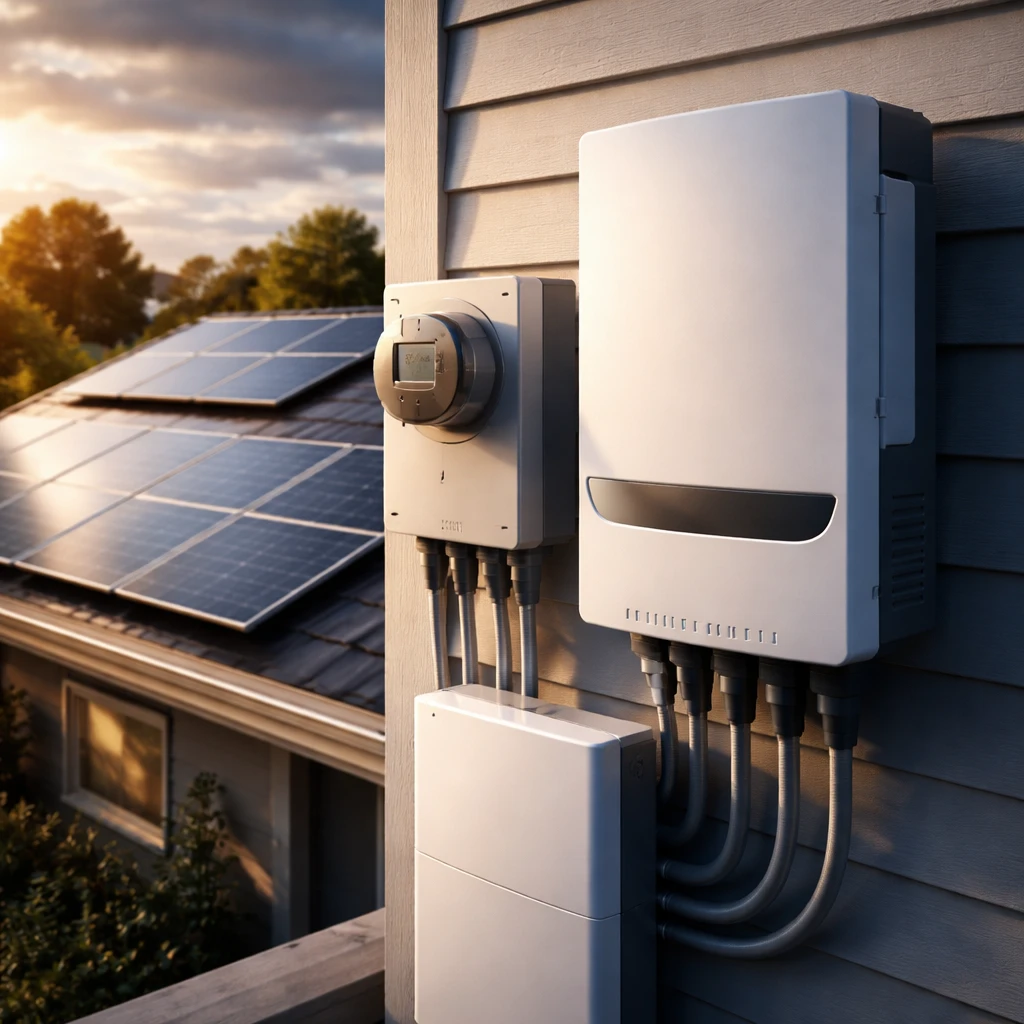
SolarEdge is a manufacturer of photovoltaic inverter solutions and related energy products - power optimizers, monitoring software, storage gear and EV chargers. The inverter is the gateway device between panels and the grid; a company that controls that gateway has leverage to capture aftermarket services, storage pairings and software monetization. That makes SolarEdge a core infrastructure play in any accelerating solar adoption environment.
Investors should pay attention because the demand drivers are visible: episodic oil-price spikes make solar more attractive as a fuel-free solution, residential storage economics keep improving, and policy tailwinds continue to favor distributed generation. When those drivers align, inverter vendors tend to see highly cyclical but sharp revenue recoveries - a feature of the industry rather than a bug.
Key fundamentals and valuation framing
Read the numbers this way: SolarEdge trades with a market capitalization around $2.6 billion and an enterprise value near $2.5 billion. Price-to-sales sits roughly at 2.2x, and price-to-free-cash-flow is in the low-30s. Free cash flow last reported was about $80.8 million, which gives the company some runway even while earnings are negative (EPS is roughly -$6.72 per share).
Profitability metrics are still challenged: return on equity is deeply negative and the company is unprofitable on an EPS basis. Debt is meaningful but not crazy - debt-to-equity around 0.82 - so leverage is present but manageable in a rising revenue environment.
So valuation is a mix: not a bargain multiple, but also not a hyper-premium. For a company with strong FCF and a near-term demand impulse, paying ~2x sales and ~32x free cash flow is defensible if growth and margin recovery continue. This is a setup where price action matters as much as long-term unit economics; that’s why this is a tactical swing trade rather than a buy-and-forget.
Relevant market and technical context
- Share price context: 52-week high near $53.75 and 52-week low near $11.45 - the market has widely re-rated the stock in the past year.
- Momentum: the 10-day simple moving average is about $45.39, the 20-day is ~$46.71, and the 50-day is ~$40.66. Current price is roughly $42.99 - a pullback toward the 50-day.
- Momentum indicators are mixed: RSI sits near 48 and MACD shows recently bearish momentum, signaling a short-term consolidation within a larger uptrend.
- Market action shows active short interest (over 11M shares at recent settlements) and meaningful short volume days - both amplify intraday swings and create the possibility of squeeze-driven moves higher if positive catalysts arrive.
Trade plan (actionable)
Direction: Long
Entry: $43.00
Stop loss: $38.00
Target: $52.00
Horizon: mid term (45 trading days). I expect the trade to play out over several weeks as inventory normalization, dealer restocking, and macro headlines (oil security, subsidies) play through order books and margins.
Rationale: $43 is a reasonable back-test of recent price levels and keeps risk contained. A stop at $38 is below the 50-day moving average and clears noise while protecting capital if the headline-driven bid reverses. $52 sits just under the recent 52-week high and represents a logical level where momentum-driven buyers could re-engage and where analysts have incrementally raised targets in recent coverage.
Catalysts to watch (2-5)
- Oil-market volatility and supply disruptions - prior episodes caused demand shifts to solar; recent headlines in March amplified that thesis (see 03/20/2026 and 03/24/2026 coverage).
- Inventory clearing and channel restocking - several analyst notes suggested the company could clear excess inventory in a tightening market, which would help margins.
- Policy and macro headlines - the Supreme Court tariff ruling in February (02/20/2026) and public endorsements from industry leaders in January (01/23/2026) are examples of event-driven sentiment that can move orders and multiples.
- Quarterly reports or guidance updates - any upward revision to revenue or margin outlook would be a direct booster to the multiple and is the clearest fundamental re-rating catalyst.
Risks and counterarguments
Investing in SolarEdge right now comes with clear and quantifiable risks. Below I list the most consequential ones and a counterargument to the bullish case.
- Unprofitability & lumpy sales: Reported EPS is negative and historical sales have been lumpy. If demand proves ephemeral after an oil-related scare subsides, revenue could re-contract and margins may not recover quickly.
- Valuation sensitivity: Price-to-free-cash-flow is in the low-30s. That leaves little margin for error in estimates - a single quarter of weak results could see a sharp multiple compression.
- Policy and tariff risk: Trade and tariff shocks or unfavorable policy changes in major markets can hit pricing and volumes quickly. Past tariff volatility has periodically compressed margins.
- Channel inventory & competition: If channel partners are still long product or competitors (including large incumbents) reset pricing, SolarEdge could face prolonged pressure before restocking cycles help sales.
- High short interest and volatility: Heavy short activity increases intraday volatility and can cause whipsaw action. That can trigger stop losses on both sides and distort technicals.
Counterargument: The bullish case leans heavily on macro-driven demand (oil volatility, energy security, subsidy cycles). If those tailwinds fade or if cheaper alternatives undercut pricing, the stock’s re-rating can reverse quickly. The company’s negative EPS and past cyclical revenue swings mean valuation is contingent on sustained demand, not temporary pulses.
What would change my mind
I will reconsider the trade if any of the following occurs: a) a quarterly report that shows renewed, sustainable margin recovery and positive GAAP profitability, b) management-guided revenues or backlog materially below market expectations, or c) a breakdown below $38 on heavy volume that signals demand erosion rather than a short-term pullback.
Conclusion
SolarEdge sits at the intersection of structural opportunity (storage + distributed generation) and cyclical sensitivity. That combination creates tradable setups where well-defined entry and stops are more important than conviction alone. The company’s market cap near $2.6B, positive free cash flow and visible demand catalysts justify a mid-term tactical long with tight risk controls.
Execute the trade with an entry at $43.00, a stop at $38.00 to protect capital, and a profit target at $52.00 over the next 45 trading days. If the macro tailwinds and inventory normalization persist, the run toward the low $50s is a high-probability scenario. If not, the stop protects downside and lets us redeploy capital elsewhere.
Key signals to monitor: incoming quarterly guidance, channel inventory commentary, oil-price headlines, and short volume behavior. Those will tell you if this is a durable recovery or a tactical bounce worth fading.