
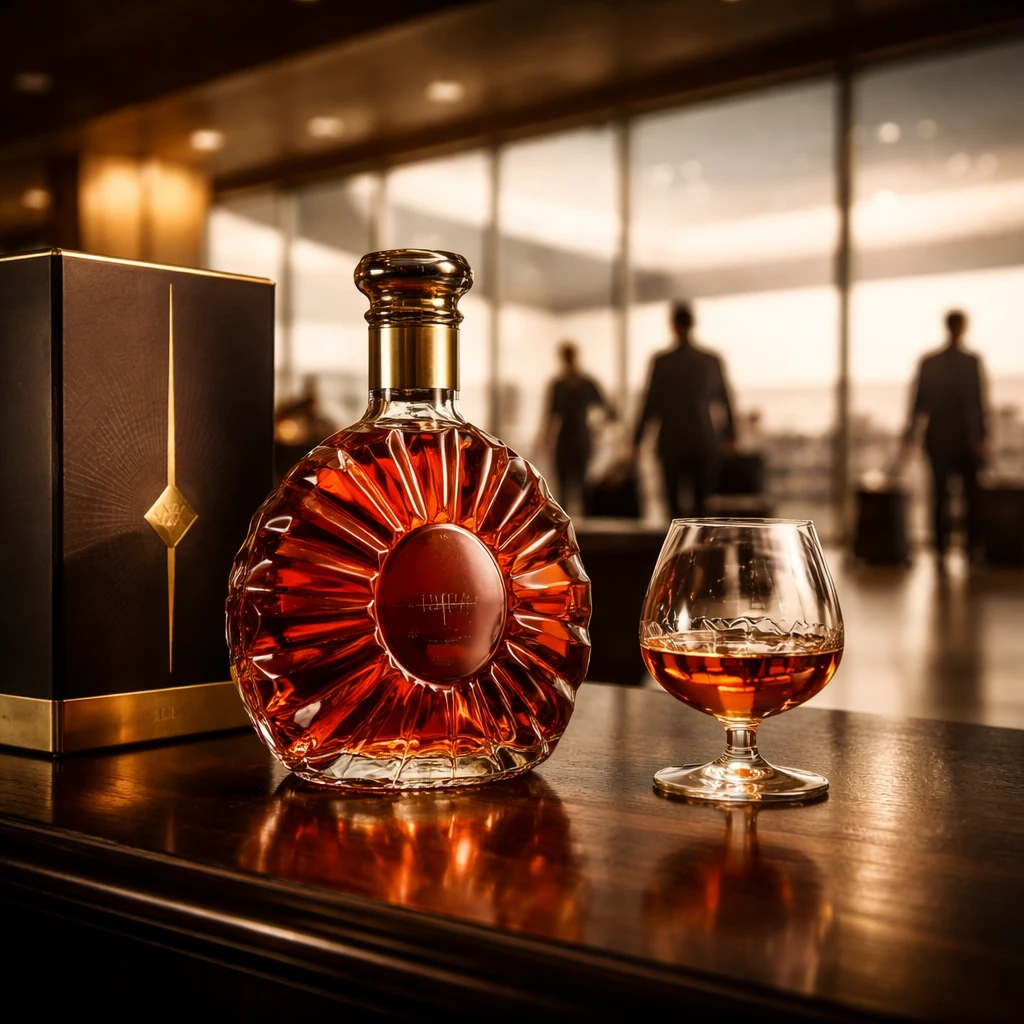
Hook and thesis
Remy Cointreau is a premium-luxury spirits company with some of the best-known names in cognac and liqueurs. The headline thesis here is simple: the company's long-cycle brand equity and improving operating leverage should produce clear upside into 2026, but the path will be uneven. This is a staged, patient trade - not a fast flip.
Price action and macro noise have created an entry opportunity for disciplined buyers. If you can accept a multi-month hold while global travel and luxury consumption normalize, the upside to a 2026 earnings re-rating looks real. But this trade needs time to work and a clearly defined stop to limit downside if discretionary spending disappoints again.
What Remy Cointreau does and why the market should care
Remy Cointreau operates at the high end of the spirits industry, selling premium cognacs and liqueurs that command outsized margins versus bulk spirits producers. These brands benefit from strong pricing power, global recognition, and structural demand from affluent consumers and travel retail channels. The market cares because premium spirits tend to retain pricing through inflationary cycles and deliver strong free cash flow once volume recovers, making them attractive stores of value for patient investors.
Fundamental drivers that support the thesis
- Brand strength and pricing power: Remy’s portfolio sits in the luxury segment where brand and provenance matter more than promotional activity. That structural advantage supports margin stability and the ability to pass cost inflation on to consumers over time.
- Travel-retail recovery: A disproportionate share of luxury spirits sales come through travel retail and duty-free. As global travel continues to recover post-pandemic, this channel should contribute meaningfully to volume and mix improvement.
- Margin leverage: Once fixed costs are spread over higher volumes and pricing holds, operating leverage can materialize quickly in the numbers, turning modest top-line improvements into outsized EPS gains.
- Cash generation and optionality: Luxury spirits businesses typically convert earnings into cash efficiently. That gives management options for bolt-on M&A, share buybacks, or debt paydown should they choose to accelerate returns to shareholders if cash flow normalizes.
Valuation framing
Remy is a premium consumer franchise; historically such names trade at a multiple premium to the broader spirits sector during growth and re-rating periods and at a discount in trough environments. With luxury demand cyclical, the logical way to think about valuation here is to anchor on expected 2026 earnings power and a premium multiple for branded-luxury growth. If 2026 earnings materialize and travel-retail volumes recover, a rerating is plausible as multiples expand back toward historical luxury peers. For the impatient investor, this requires waiting for the multiple and the top-line recovery to converge. For the disciplined trader, the gap between current market price and a conservative 2026 intrinsic value supports a long entry now with a path to attractive returns if catalysts align.
Catalysts (2-5)
- Continued global travel recovery boosting duty-free and airport sales.
- Price mix improvements in key markets offsetting input cost pressure.
- Positive quarterly results that show margin expansion as volumes recover.
- Management signaling capital allocation actions (buybacks or targeted M&A) funded by improved cash flow.
Trade plan - actionable entry, targets, stops, and horizon
This is a patient, long trade with a clear exit plan if the thesis goes off the rails. Trade specifics:
- Trade direction: Long.
- Entry price: Buy at $170.00 (stagger entries into the position if you prefer; for example, 50% at $170.00 and 50% on a 5% pullback).
- Stop loss: $140.00. A break and close below $140 would indicate a material shift in market sentiment or a deterioration in earnings trajectory that invalidates the recovery thesis.
- Target price: $220.00. This target assumes a materially healthier margin profile and partial rerating into 2026 earnings expectations.
- Horizon: Long term (180 trading days). Expect the trade to take multiple quarters to play out as travel-retail and margin improvements evolve and get recognized by the market.
Why this horizon? Luxury-consumption trends and travel-led recovery are platformed around macro normalization and tourist flows, which typically evolve over several quarters. Allowing 180 trading days gives time for sequential quarterly prints to show the margin trajectory and for multiple expansion to begin.
Risks and counterarguments
Every trade has risks. For Remy Cointreau, the principal risks include:
- Macro sensitivity: Luxury spirits are correlated with consumer discretionary spending among affluent buyers. A macro slowdown or geopolitical event that hits travel could materially compress volumes.
- FX and input-cost pressure: The company sells globally; currency moves can swing reported revenue and margins. Rising raw-material or distribution costs could compress margins if price raises lag.
- Travel-retail volatility: The recovery in duty-free can be lumpy. If airport footfall or tourist flows underperform expectations, the top-line recovery may stall.
- Execution risk: Management must keep pricing discipline and avoid margin-dilutive promotions. Missteps in marketing or distribution could slow recoveries in key markets.
- Premium valuation vulnerability: Luxury branded stocks can move swiftly on sentiment. Even with good fundamentals, a broad derating in consumer/luxury stocks could cap upside.
Counterargument: One could argue that Remy’s sensitivity to travel and high-end discretionary spending makes it a value trap: if the luxury consumer re-prioritizes experiences over premium bottles, volumes might not come back to prior peaks. Additionally, if inflation remains sticky and real incomes for core buyers are pressured, pricing power may not fully offset volume declines. Those outcomes would make a near-term rerating unlikely.
Why I remain constructive despite the risks
The premium spirits segment has shown resilience historically: strong brands maintain consumer loyalty and can take pricing without losing core clientele. Travel-retail, while volatile, has a long runway of upside as global tourism continues to recover. Finally, operating leverage in distillation and distribution can convert modest volume upticks into disproportionate bottom-line gains. That combination argues for upside by 2026 if sequential results show margin recovery.
What would change my mind
I would revisit the bullish stance if any of the following occur:
- Two consecutive quarterly prints showing declining margins and no signs of volume recovery.
- Management abandons pricing discipline or signals material margin weakness in guidance.
- A macro shock that meaningfully weakens travel flows for an extended period.
Conclusion
Remy Cointreau is a high-quality luxury player where a recovery in travel and better margin visibility could unlock meaningful value by 2026. The trade I recommend is a patient long with an entry around $170.00, a stop at $140.00, and a target of $220.00 over roughly 180 trading days. This is not a quick momentum play; it requires conviction in a multi-quarter recovery and readiness to weather volatility along the way. If the recovery shows up in revenue mix and margins over the next several quarters, the return profile looks attractive; if not, the stop keeps downside contained.