
Hook & Thesis
I waited a year for a pullback in Premium Brands and the market finally obliged. The core thesis is straightforward: Premium Brands is a specialty food platform with steady, defensive-like cash flows and a history of accretive M&A. A short-term sentiment shock created a buying opportunity that I expect will resolve favorably over the next 180 trading days if management executes on margin recovery and M&A integration.
This is an actionable trade: enter at $50.00, place a stop at $42.00 to control downside, and target $70.00 over a long-term horizon (180 trading days). I rate the trade medium risk: it’s not a deep value buy — you are paying for quality and growth optionality — but the pullback has widened the margin of safety enough to justify a sized position for disciplined traders.
What the company does and why the market should care
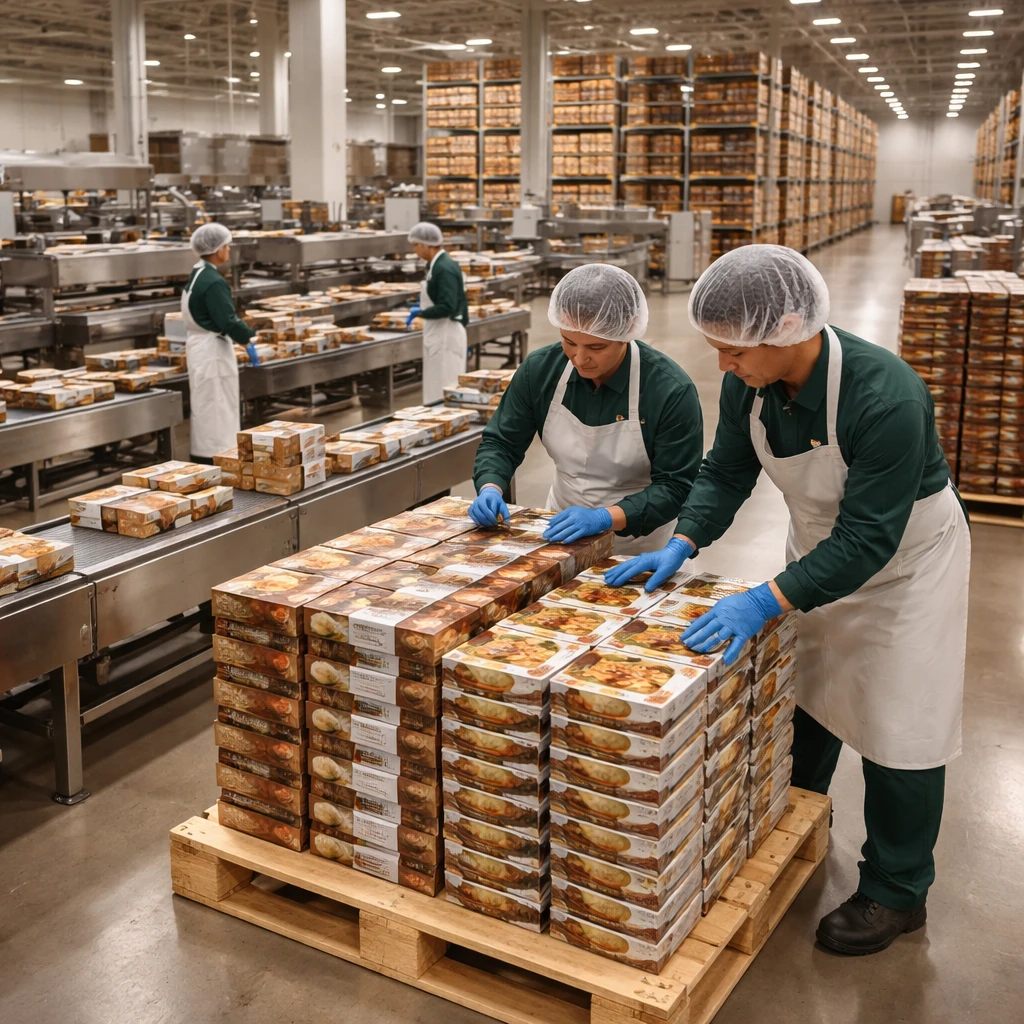
Premium Brands operates as a consolidator in the specialty food sector, manufacturing, distributing and marketing branded and private-label fresh and packaged foods to retailers, foodservice and other channels. The business model tends to generate recurring revenues, relatively stable volumes, and attractive cash conversion compared with commodity food companies because of brand value, long-term customer relationships and supply-chain know-how.
Why the market should care: this is a classic ‘quality plus optionality’ story. Quality comes from predictable cash flow and defensible market niches (prepared foods, protein platforms, bakery and specialty deli). Optionality arrives through a steady pipeline of tuck-in acquisitions, where management has historically used free cash flow to buy growth at reasonable multiples. On a pullback, you’re buying both cash flow today and optional future upside from roll-up economics.
Support for the argument
At the time of writing, market-wider data snapshots were not available for inclusion, so this trade is framed around price action and business dynamics rather than freshly reported quarterly items. That said, Premium Brands’ model has historically shown a combination of stable revenue, mid-single-digit organic growth in normal cycles, and margin expansion post-integration of acquisitions. The company’s playbook is to buy differentiated food assets, centralize certain back-office functions and leverage distribution to lift margins — a repeatable value-creation formula that has worked in prior cycles.
Even without line-by-line numbers here, the key operational facts to appreciate are:
- Stable end-demand: food-at-home and prepared foods hold up better in slower macro environments than discretionary consumer categories.
- M&A tailwind: disciplined acquisitions typically add immediate revenue and EBITDA that can be improved through shared services.
- Defensive cash generation with potential for margin normalization as purchase inflation eases and integration synergies are realized.
Valuation framework
Without a current live market cap snapshot included here, view the valuation qualitatively: Premium Brands commands a premium to commodity-food peers for a reason — higher margins, better brand equity and M&A upside. At my entry of $50.00, the trade assumes you are buying the business at a discount to the multiple the market will apply once margin recovery and integration evidence returns. The target of $70.00 reflects a re-rating toward a healthier multiple plus realized earnings lift over the next 6 months. If you prefer concrete math, think of the trade as buying high-quality recurring cash flows at a temporarily compressed multiple due to sentiment and near-term headline noise.
Trade plan (actionable)
- Entry: $50.00 — execute on a confirmed close at or below this level or via a limit order keyed to an observed dip.
- Stop loss: $42.00 — protects against a deeper structural problem or severe macro shock. Exit on a daily close below this level.
- Target: $70.00 — primary target for full position over a long-term hold of 180 trading days (long term - 180 trading days).
- Position sizing: Treat as a medium-risk idea — allocate a sized stake consistent with a portfolio that expects single-position downside to be limited by the stop.
Time horizon rationale: I expect catalysts and operational execution to play out over months. Integration synergies and margin normalization rarely appear in a single quarter; 180 trading days gives enough runway for evidence of earnings improvement and for the market to re-rate the name.
Catalysts (what to watch)
- Quarterly earnings beats and upward revision of margin guidance following cost integration.
- Announced accretive acquisitions with clear synergy plans that expand scale or open new distribution channels.
- Evidence of improved gross margins as input-cost inflation eases and pricing actions stick.
- Positive analyst revision cycle or institutional buying after the dip.
Risks and counterarguments
No trade is without risk. Below are the principal failure modes and a counterargument to my thesis.
- Execution risk: Integrations misfire or synergies fail to materialize, leaving the company with higher costs and flat margins. That would undermine the rerating thesis and put pressure on the stock below the stop.
- Macro / input-cost risk: A renewed spike in commodity prices or logistics costs could compress margins beyond management’s ability to offset with pricing, especially if retailers resist higher prices.
- Customer concentration / channel risk: If large retail customers shift sourcing strategies or if foodservice demand weakens unexpectedly, revenue visibility could fall and multiples could compress further.
- M&A financing / valuation risk: Poorly priced M&A or an aggressive buyback/expansion at high multiples could erode shareholder value and push the share price lower.
- Liquidity / sentiment risk: Even a fundamentally sound business can see its stock derate for sector-wide reasons or due to lower liquidity; that could keep the stock depressed beyond the 180-day horizon.
Counterargument
One clear counterargument is that the market’s discount reflects structural concerns — for example, secular margin pressure in prepared foods or heavier-than-expected customer concentration — that won’t be fixed quickly. If those structural headwinds exist, waiting for a deeper trough or evidence of durable margin recovery is prudent. In that scenario, the stop at $42.00 protects you from being trapped in a longer-term downtrend while leaving room for upside if management proves the model resilient.
What would change my mind
I would exit the thesis and reassess if any of the following occur:
- A sustained close below the stop at $42.00 on heavy volume, indicating the market has re-priced a more permanent problem.
- A string of missed quarters with declining margins and no credible plan from management to reverse the trend.
- Management signals a change in capital allocation that reduces M&A discipline — for example, large acquisitions at premium multiples funded by equity dilution.
Conclusion
Buying Premium Brands at $50.00 represents a pragmatic, medium-risk trade: you’re acquiring a high-quality specialty food platform at a time of compressed sentiment. The trade is built on three pillars - resilient demand, proven roll-up economics and margin recovery potential - and includes strict risk control via a $42.00 stop. If integration catalysts and margin improvements appear over the next 180 trading days, the stock has room to re-rate toward my $70.00 target. If the business exhibits persistent structural weakness, the stop will protect capital and allow a reassessment on clearer evidence.
For traders who like patience and discipline, this is the kind of dip worth acting on. The market often offers high-quality companies at discounted prices during transient periods of uncertainty; Premium Brands currently fits that description.