
Hook & thesis
Ivanhoe Mines is a classic reconstruction story — a high-quality copper asset undermined temporarily by operational setbacks at Kakula but still carrying optionality into the next copper cycle. The market's knee-jerk reaction to a required rebuild gives nimble traders an asymmetric risk-reward: buy exposure now at an entry that prices in slow restart risk, hold through commissioning, and capture re-rating if throughput and grades normalize.
That said, this is not a quick flip. The company and the mine require time to complete repairs, re-commission systems and prove consistent production. My recommended trade is a long with a defined stop and a 180 trading day time horizon to allow Kakula to demonstrate stable output and for sentiment to recover.
Business overview - why the market should care
Ivanhoe Mines is best understood as a project developer/operator where a small number of large-scale, low-cost copper assets drive value. Kakula — part of the Kamoa-Kakula complex — has been the growth engine. When operating normally, its high-grade ore and low cash cost profile make it one of the most profitable copper mines on a per-tonne basis. That structural advantage is why market participants care: a return to reliable, high-grade production materially improves cash flow and changes the company's valuation trajectory.
For traders, the immediate relevance is two-fold: 1) operational headlines (rebuild progress, commissioning milestones, first ore through the plant) will drive sharp intraday and multi-week moves; and 2) longer-term re-rating depends on demonstrated throughput and steady copper realization. Because the market tends to over-penalize near-term outages, there can be attractive entry windows for buyers prepared to wait.
What we know about the situation
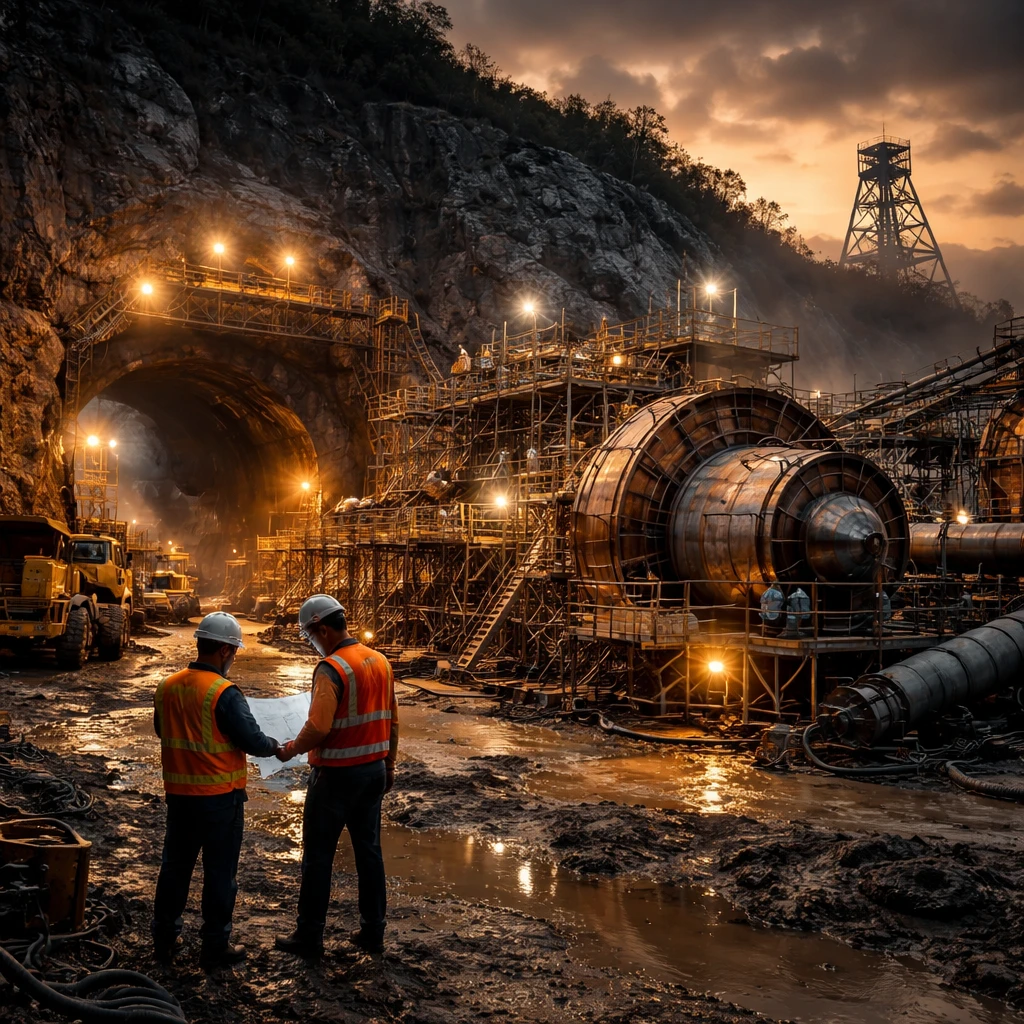
Operationally, Kakula is undergoing a rebuild and phased re-commissioning. That process introduces execution risk (supply chains, contractor performance), time risk (how long to reach steady-state throughput) and price risk (copper price swings during the rebuild period). Management's communications and site updates will be the single most important flow of information for this trade.
Valuation framing - qualitative
A comprehensive market snapshot and up-to-date market cap are not available in this note, so valuation is framed qualitatively. Historically, Ivanhoe has traded with a premium to many junior miners because Kakula's grades and scale imply low marginal costs and strong free cash flow when fully ramped. The recent operational setback compresses near-term free cash flow expectations and expands political/technical risk premiums, which can justify a temporarily lower multiple.
For a trader, that means the current price often reflects a mix of delayed cash flow and execution uncertainty rather than a permanent impairment to asset value. If Kakula returns to expected grades and throughput, the narrative should shift back toward growth and margin strength and the stock should re-rate higher — provided macro copper remains supportive.
Catalysts (what to watch)
- Site progress reports - completion of key rebuild milestones and mechanical commissioning dates.
- First ore through the plant and initial concentrate shipments - proof points that the plant is running and recoveries are acceptable.
- Production guidance updates - any upward revisions to commissioning timelines or throughput targets.
- Copper price moves - an improving copper complex would give an extra tailwind and accelerate re-rating.
- Operational data releases - throughput, grade, recovery metrics and unit cash costs will materially alter forward cash flow expectations.
Trade plan (actionable)
Trade direction: long.
Entry price: $3.25.
Stop loss: $2.45. Tight enough to protect capital from a deeper sell-off; wide enough to allow for short-term volatility around operational updates.
Target price: $5.50. The target reflects a re-rating toward historical mid-cycle multiples once Kakula demonstrates stable throughput and grades.
Horizon: long term (180 trading days). Expect the trade to take several months: repairs, commissioning and the path to consistent concentrate production rarely fit into a single quarter. Holding through at least one clear commissioning update is prudent.
Position sizing note: use a size that limits downside to a pre-set portion of your portfolio if the stop is triggered — this is a high-volatility resource trade with event risk.
Why this plan makes sense
The entry at $3.25 aims to capture a valuation that embeds meaningful execution risk. The stop at $2.45 limits exposure if further negative technical news or a bigger macro sell-off materializes. The $5.50 target gives a sensible payoff if the mine proves it can return to expected margins and the copper price remains supportive. Over a 180 trading day window, there is enough time for at least one major operational milestone to re-assert a recovery case.
Risks (balanced and specific)
- Execution risk: Rebuilds can reveal secondary issues. Unexpected mechanical failures, contractor delays, or calibration problems could push commissioning timelines out or increase restart costs.
- Operational ramp risk: Achieving nameplate throughput and recoveries often takes longer than planned. Lower-than-expected grades or recoveries compress margins and delay cash flow.
- Commodity price volatility: Copper prices could decline during the rebuild window, reducing the upside and making the stock less attractive even if operations recover.
- Financing/ liquidity risk: If the company needs additional capital to finish the restart and markets are weak, equity dilution or high-cost debt could impair returns for existing shareholders.
- Geopolitical and permitting risk: The Kamoa-Kakula complex operates in a jurisdiction with resource-country risk; changes in regulation or permitting delays can add cost or time.
Counterarguments to the thesis
One strong counterargument is that the market correctly prices in a higher permanent risk premium: if the rebuild uncovers structural issues (geological complications, water management problems, or metallurgical constraints), then the asset's long-term economics could be worse than historical guidance suggested. In that case, buying into the rebuild is effectively buying into a binary outcome where downside may be larger than anticipated.
Another counterpoint: even with a successful restart, global copper prices could languish, muting any recovery in free cash flow and preventing a meaningful re-rating. Trading in commodities is inherently two-sided: operational improvement must coincide with a supportive price environment to drive material upside.
Conclusion and what would change my mind
My stance: constructive but patient. This is a long trade that assumes the rebuild proceeds without discovering material new problems and that the company can demonstrate ramping throughput within a reasonable time. The recommended entry at $3.25 with a $2.45 stop and a $5.50 target over 180 trading days balances risk and reward for those willing to live through operational headlines.
What would change my mind: I would tighten the stop or abandon the long if site updates indicated chronic metallurgical issues, persistent failures in critical plant systems, or a need for significant additional capital. Conversely, if the company delivers clear commissioning milestones ahead of schedule with sustained grades and recoveries, I would add to the position and lift targets — success on the ground should remove a large portion of the execution premium the market applies today.
Final thought
There are no easy wins here. The rebuild narrative is a patient path to optionality: buy the probable recovery, size for volatility, and respect the stop. For disciplined traders who can stomach project noise for several months, Ivanhoe offers an asymmetric opportunity — but only if you keep a close eye on site-level data and lock in risk controls.