
Hook / Thesis
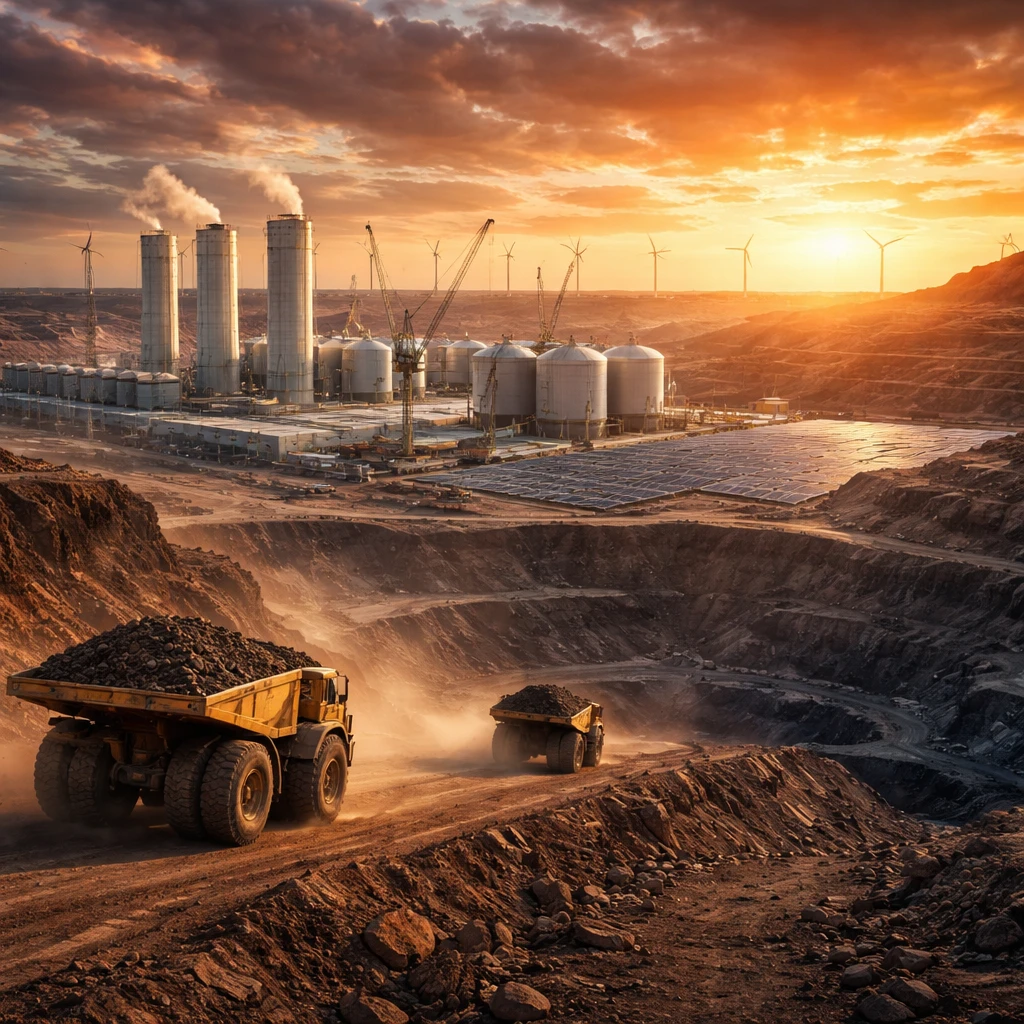
Fortescue has one foot in a low-risk cash generator and the other in a capital-intensive, high optionality future: green hydrogen, renewables and battery metals. The practical investment case is simple - use reliable iron-ore free cash flow to underwrite a multi-year diversification program that, if executed, could re-rate the company from a pure-miner multiple to a diversified energy-and-metals platform.
This trade idea buys that transition at what I consider a favorable risk/reward: a long position with a clear stop and a multi-stage target that captures both an iron-ore rerating and positive news flow on Fortescue Future Industries (FFI) project milestones. The core logic is that Fortescue's current operating franchise funds growth initiatives, so investors are getting both dependable cash generation and asymmetric upside on green optionality.
Business overview - why the market should care
Fortescue is principally an iron-ore producer with large-scale, low-cost operations. The company has generated significant operating cash from its mining assets, enabling a sizable capital return program and de-risked balance sheet relative to peers during commodity down-cycles. Management has been explicit about redeploying surplus cash into decarbonization: large-scale electrolysis, green hydrogen, ammonia and adjacent battery-metal initiatives.
The market cares because this is not a pure exploration bet. Fortescue is effectively buying time and option value - continuing to monetize iron ore today while building scale in technologies that could command higher enterprise multiples if they prove commercial. That combination - reliable cash flow plus optionality - is attractive if execution is disciplined and capital allocation prioritizes both shareholder returns and project returns above vanity projects.
How this trade works - numbers and structure
Enter: buy at $18.00. Target: $27.00. Stop: $13.50. Trade direction - long. Time horizon - long term (180 trading days). Risk level - medium.
Why these levels? The entry gives exposure with a defined downside capped by the stop. The $27.00 target captures two possible outcomes: a re-rating driven by either (1) continued resilient iron-ore margins and distribution of surplus cash, or (2) material positive milestones or commercial offtake for FFI projects that shift investor perception toward a diversified future franchise. The stop at $13.50 limits capital erosion in the event of a deep iron-ore downturn or a sudden, credibility-damaging execution failure in the diversification plan.
Valuation framing
Fortescue's valuation today reflects two implicit assessments: the ongoing earnings power of its iron-ore business and the present value of the green investments. A reasonable investor should decompose the valuation the same way. If the market assigns a conservative multiple to the mining business but discounts future energy assets heavily, any credible progress on FFI commercialization could meaningfully expand the multiple on total enterprise value.
There is no single peer that perfectly matches Fortescue's hybrid profile, so valuation must be qualitative-plus-structural: compare iron-ore cashflow yields to historical troughs and peaks, track implied capex for FFI relative to the company's cash balance and free cash flow, and observe whether management maintains shareholder-friendly behavior (dividends, buybacks) while progressing diversification. If the company can sustain both an attractive shareholder return and steady project funding, the present valuation should widen.
Catalysts (2-5)
- FFI commercial contracts or offtake agreements announced - these materially reduce execution risk and would likely trigger re-rating.
- Quarterly results showing persistent iron-ore margins and positive free cash flow - supports continued capital returns and project funding.
- Regulatory or permitting milestones for large electrolysis or ammonia projects - shortens timeline to revenue for the green business.
- Strategic partnerships with industrial offtakers or government framework agreements for green hydrogen - validates market demand.
Trade plan and timeline
Primary trade: establish a long position at $18.00. Set the stop loss at $13.50 and the target at $27.00. Hold horizon: long term (180 trading days). Rationale: 180 trading days gives sufficient runway for industrial project announcements and multiple quarterly reporting cycles; it also covers the typical timeline for early-stage commercial deals or government-policy actions to be announced.
Active management rules:
- If a confirmed FFI commercial offtake or major financing deal is announced, consider moving the stop to breakeven and scale up the position on constructive detail.
- If iron-ore prices collapse or quarterly free cash flow turns negative with clear evidence of sustained margin pressure, exit at the stop - protecting capital is priority.
- Partial profit-taking at the first target of $22.00 is sensible; leave a second tranche to run to $27.00 to capture optionality re-rating.
Risks and counterarguments
At least four risks should be considered:
- Commodity cyclicality: Iron-ore prices are volatile. A sustained downturn would reduce free cash flow and could force the company to slow or scale back diversification spending.
- Execution risk on FFI projects: Large electrolysis and hydrogen projects are capital intensive and technically complex. Delays, cost overruns or weak offtake contracts could destroy value rather than create it.
- Capital allocation missteps: If management prioritizes headline-grabbing projects over returns and pursues projects with negative NPV at scale, shareholder value may be impaired.
- Policy and market adoption risk: Green hydrogen depends on regulatory support and industrial adoption. Slow policy action or cheaper competing technologies could limit addressable markets.
- Currency and geopolitical risk: As a global commodity exporter and investor, the company faces FX fluctuations and jurisdictional risks that can affect margins and project timelines.
Counterargument: buy the iron-ore pure play instead. One persuasive counter to this thesis is that Fortescue's diversification premium is already priced in, or that the market will simply discount FFI as speculative for years. If investors want iron-ore exposure without the execution and capital allocation noise, pure-play miners with lower non-core ambition might be better suited.
What would change my mind
I would materially downgrade this trade if any of the following occurred:
- Reported free cash flow turns negative for multiple quarters and management raises equity to fund projects - indicating stress on the balance sheet.
- Concrete evidence that FFI projects are non-commercial at the scale contemplated - for example, repeated failed pilot results or inability to secure credible offtakes.
- Management abandons disciplined shareholder returns in favor of unfunded expansion - that would increase dilution and lower the expected return profile.
Conclusion - clear stance
Fortescue is a buy for investors who accept a controlled level of execution risk in exchange for asymmetric upside from a successful green pivot. The suggested long position at $18.00 with a $13.50 stop and a $27.00 target balances downside protection and upside capture. The company's iron-ore cash engine materially de-risks the transition; the key to success is disciplined execution and transparent capital allocation.
Monitor the cadence of FFI commercial deals and quarterly free cash flow - they will be the clearest signals for whether Fortescue can convert optionality into durable value. If these signals turn negative, reduce exposure quickly. If they turn positive, consider adding to a winning position while protecting unrealized gains.