
Hook & thesis
The fertilizer story is not glamorous, but it is consequential: nutrients drive yields, and yields drive the economics of farming. Right now, structural features of the fertilizer market - capital intensity of new mines, long permitting cycles, and concentrated global supply - keep upside in fertilizer producers when crop prices and farmer economics are supportive. Mosaic (MOS) sits squarely in the middle of that equation as one of the largest U.S.-based producers of phosphate and potash.
My trade thesis is simple: buy Mosaic for exposure to a multi-month recovery and re-rating tied to improving demand for crop nutrients and an industry backdrop that limits rapid supply response. This is a trade, not a buy-and-forget allocation: position sizing, a clear stop, and a defined target are critical, because MOS is cyclical and can be volatile when commodity prices swing.
What Mosaic does and why it matters
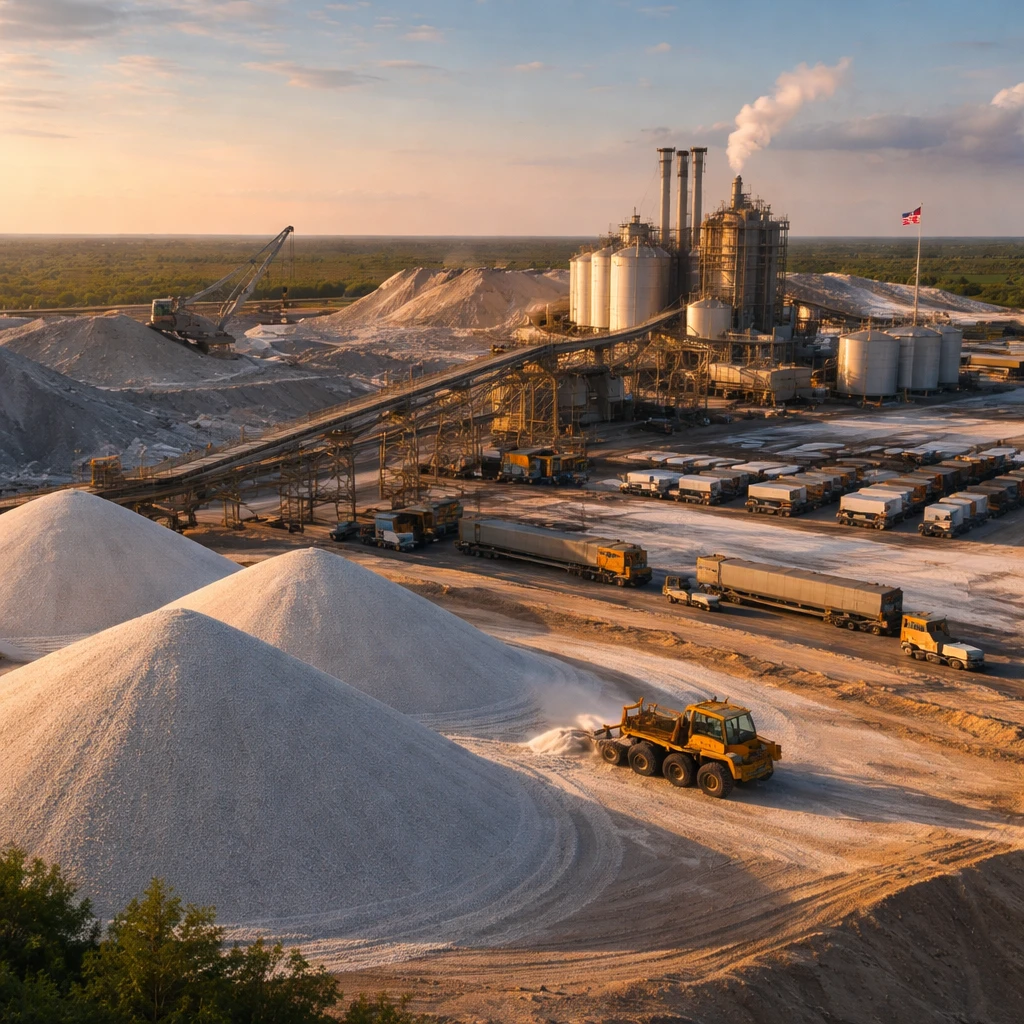
Mosaic is a vertically integrated fertilizer producer focused on phosphate and potash - the two nutrients most closely linked to global row-crop production in major agricultural markets. The company mines, processes and sells granular fertilizer and concentrates to farmers, wholesale distributors and global trading houses. In the U.S., Mosaic has scale advantages on distribution and customer relationships that allow it to capture margin when nutrients are scarce and to move volumes quickly when planting and application seasons pick up.
Why should investors care?
- Agriculture demand is relatively inelastic. Farmers need nutrients to protect yield; short-term cuts in application typically depress yields and future income. That makes demand smoother compared with other cyclicals.
- Supply is slow to respond. New potash and phosphate capacity takes years and hundreds of millions - often billions - of dollars to bring online, which creates periods where demand outstrips available product and prices stay elevated.
- Cash generation in up cycles. Producers like Mosaic historically convert commodity windfalls into free cash flow, which can be used to pay dividends, buy back shares, and reduce leverage - actions that can support equity prices as cycles turn.
Supporting the argument with the available context
At its core this trade is about three inputs: crop economics, nutrient inventories, and Mosaic's operational leverage. Recent seasonal cycles have shown that when farmers expect healthy crop prices and tight fertilizer availability, they accelerate purchases ahead of application windows. That dynamic typically benefits producers with scale and distribution networks. Mosaic fills that bill as a major U.S. supplier with broad logistics capabilities.
Because fertilizer markets are commodity-driven, Mosaic's earnings are volatile across seasons. That volatility is the feature we want to trade: when fundamentals point to higher nutrient demand and constrained incremental supply, Mosaic's operating leverage can amplify earnings recovery and equity upside.
Valuation framing
Fertilizer producers are commonly valued in cycles - earnings and cash flow swing markedly with commodity prices. Without a live market snapshot here, think of valuation logically: MOS typically trades at a premium to smaller, more regional peers when it looks likely that cycles will turn in favor of producers because of its larger asset base and distribution reach. Conversely, in deep troughs, the stock often trades at steep discounts to historical averages because earnings collapse.
For investors, the right question is not whether MOS is cheap on a single static metric, but whether today’s price embeds a reasonable multi-month recovery in nutrient prices and farmer demand. My trade assumes the market underestimates the chance that fertilizer tightness persists through the coming northern-hemisphere application seasons, supporting a substantial earnings improvement for MOS.
Catalysts to watch (2-5)
- Planting intentions and reported fertilizer buying by major agricultural markets - early acceleration in pre-season purchases would be a clear positive.
- Commodity price signals - stronger-than-expected phosphate and potash price direction would directly improve margins.
- Mosaic quarterly operating updates - higher realized prices, improved volumes, or margin expansion would be near-term triggers.
- Supply-side disruptions or slower-than-expected ramp of new capacity globally - any tightening in availability supports prices and the MOS thesis.
- Shareholder-friendly capital allocation: announcements of buybacks or special dividends would materially support the equity.
Trade plan - actionable and specific
Trade direction: long. Risk level: medium.
| Entry price | Target price | Stop loss | Horizon |
|---|---|---|---|
| $60.00 | $78.00 | $48.00 | long term (180 trading days) |
Rationale: The $60 entry sits near recent consolidation levels and gives favorable upside to the $78 target, which prices in a meaningful improvement in nutrient demand and margin recovery. The $48 stop limits downside to sharp, commodity-driven reversals and also reflects a level where the fundamental thesis - that tightness persists and cash generation improves - would be in serious doubt.
Time horizon explanation: I recommend holding this trade for up to 180 trading days. Fertilizer cycles and farmer buying windows operate on multi-month timelines. Expect volatility around seasonal reports and earnings; the trade needs time to capture both improved forward pricing and subsequent margin expansion.
Risks and counterarguments
Below are the principal risks that could invalidate this trade, followed by the main counterargument to the bullish case.
- Commodity price reversal: A sharp drop in phosphate or potash prices would immediately compress Mosaic’s margins and can lead to significant equity downside.
- Demand destruction from weak crop prices: If crop prices decline materially, farmers can defer purchases or reduce application rates, reducing nutrient demand.
- Global supply response: Accelerated ramp of new potash or phosphate capacity globally, or the release of inventory from major producers or traders, could relieve tightness and pressure prices.
- Operational issues: Mines and processing facilities are subject to outages, permitting delays, and cost overruns; an operational setback could hit production and earnings.
- Macroeconomic and currency risks: A stronger dollar or global demand slump could hit commodity prices and dampen export volumes.
Counterargument: The main counterargument is that current market pricing already reflects a potential recovery; MOS may be partially or fully priced for a rebound. In that scenario, a rally could be muted because investors are already forward-looking. In practice, this means active risk management and strict stops are essential; if the stock grinds higher slowly rather than gap higher, patience and willingness to scale into position are necessary.
What would change my mind
I would reconsider this trade under several circumstances:
- Evidence of rapid and sustained declines in phosphate and potash prices driven by large inventory releases or demand erosion.
- Clear signs that Mosaic’s production or distribution is structurally impaired - for example, prolonged mine outages or major regulatory setbacks.
- A sharp increase in interest rates or capital-market stress that forces a re-rating of cyclical commodity equities more broadly.
- Conversely, concrete evidence that Mosaic is returning a large portion of incremental free cash flow to shareholders (accelerated buybacks or special dividends) could make me more bullish and justify a larger position.
Conclusion
Mosaic is a pragmatic way to play fertilizer tightness and the agricultural cycle. The company’s scale and distribution in the U.S. give it an advantage when demand picks up, and the structural features of fertilizer supply tend to favor producers when markets tighten. This trade is explicitly tactical: an entry at $60 with a $48 stop and a $78 target gives a risk/reward framework that captures the upside of a multi-month recovery while protecting capital if commodity dynamics reverse.
Keep position size moderate, monitor crop price signals and Mosaic operating updates, and be ready to tighten stops or trim exposure if early-season data disappoints. If fertilizer fundamentals hold and Mosaic reports steady margin improvement, this trade should capture the move as the market re-prices cash flow resilience into the equity.
Key dates to watch
- Quarterly results and management commentary (watch volume and realized prices).
- Major seasonal planting and application reports in key markets.
- Announcements from large global potash and phosphate projects that could materially change supply expectations.
Trade responsibly: cyclical commodity names can move quickly. Use position sizing and the stop outlined above to manage downside while keeping upside potential intact.
Published 03/10/2026