
Hook / Thesis
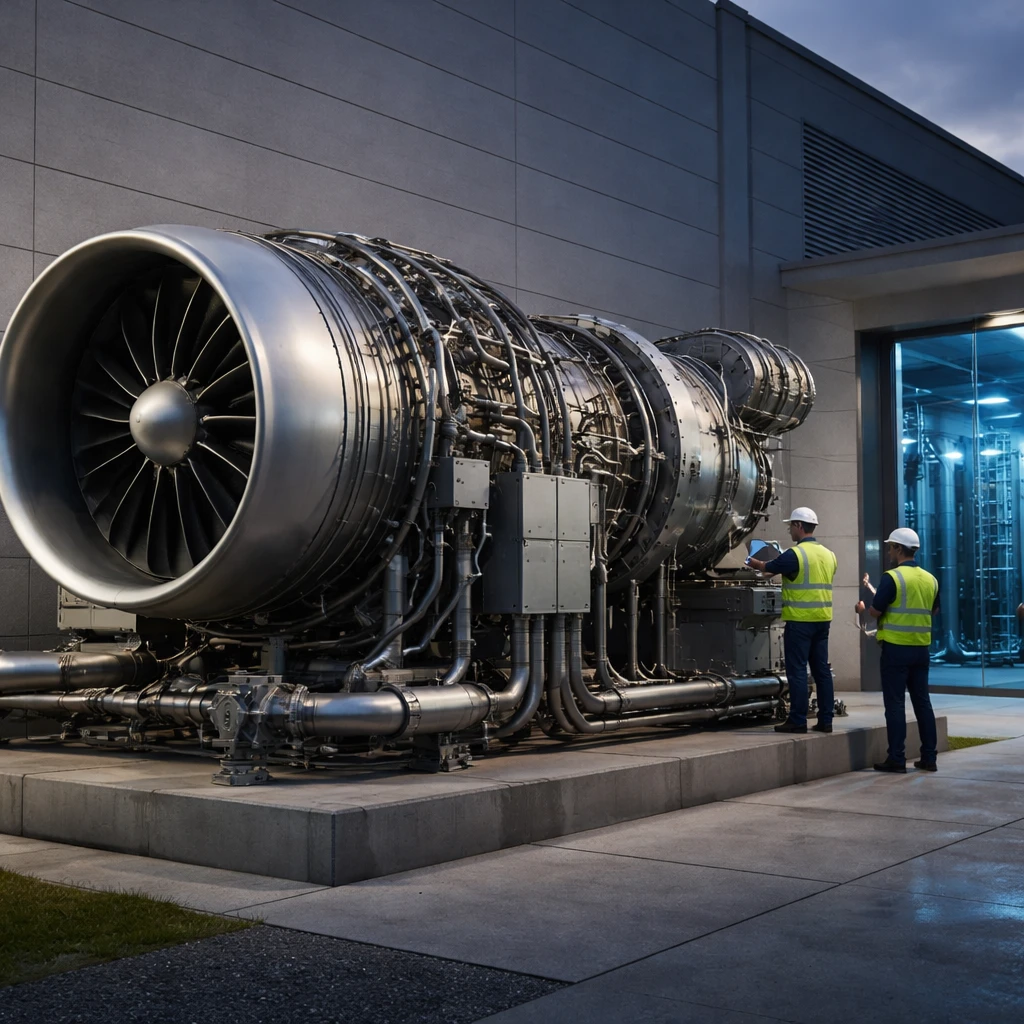
FTAI Aviation is no longer just a boutique engine lessor and MRO supplier; it is positioning to be a multiyear compounder by monetizing orphaned CFM56 and V2500 engines in three ways: aftermarket servicing, module/component manufacturing, and conversion into stationary power turbines via FTAI Power. Those three levers create both recurring aftermarket cashflow and a potential high-margin growth business that addresses the booming demand for data center power density.
That narrative has teeth: the stock trades at $273.25 with a market cap near $28.0B, a P/E around 56x, and a P/B above 80x. Those multiples are high, but FTAI pairs asset-level optionality (engine feedstock and MRO) with a technology-driven expansion (engine-to-turbine conversions and AI-driven inventory via the Palantir tie-up). If management executes on deployment of turbines and captures aftermarket share, the combination could support continued multiple expansion and strong top-line growth — making FTAI a high-conviction long for investors willing to accept execution risk.
Business Overview - What they do and why it matters
FTAI Aviation owns, leases, and services commercial jet engines with a focus on CFM56 and V2500 platforms. The company operates three segments: Aviation Leasing, Aerospace Products (manufacture/repair/refurbish), and Corporate & Other. Crucially, FTAI has built manufacturing capability (a Module Factory and a JV for PMA components) that reduces aftermarket cost while increasing control over supply — a competitive advantage when feedstock is plentiful.
Over the last 12 months the company has accelerated strategic moves: a closed deal acquiring seven off-lease Airbus aircraft from Air France (adding engines and modules to feed MRO and the inventory pool), a Palantir partnership to drive AI-assisted inventory and maintenance decisions, and the launch of FTAI Power to repurpose CFM56 engines as data center turbomachinery. Each of those steps addresses a specific bottleneck: feedstock supply, operational productivity, and new end-markets respectively.
Why the market should care - the fundamental driver
Two structural trends matter here. First, the installed base of CFM56 engines is enormous and supplies used modules, cores, and parts that are profitable to service and resell. Second, data centers are hungry for compact, efficient, distributed power solutions. If FTAI can convert retired jet engines into reliable aeroderivative-like turbines at competitive costs, it can unlock a new, higher-margin revenue stream while preserving the aftermarket demand for parts and services.
Hard numbers that support the thesis
Key financial and market snapshot metrics:
| Metric | Value |
|---|---|
| Current Price | $273.25 |
| Market Cap | $28,028,148,850.91 |
| EPS (TTM) | $4.66 |
| P/E | ~56x |
| P/B | ~80x |
| Enterprise Value | $29,971,328,505 |
| EV/EBITDA | ~30x |
| EV/Sales | ~11.95x |
| Free Cash Flow (TTM) | -$1,063,182,000 |
| Dividend (quarterly) | $0.40 / share |
| Shares Outstanding (approx) | 102,573,280 |
These numbers show a company currently priced for growth and execution rather than for deep value. Negative free cash flow and an EV/EBITDA of ~30x indicate the market is paying for future earnings expansion and the optionality embedded in the FTAI Power opportunity.
Technicals and market microstructure
Momentum looks constructive: the stock trades above its 10-, 20-, and 50-day moving averages (10-day SMA ~$252.63, 20-day ~$245.84, 50-day ~$263.90), and the 9-day EMA ($255.70) sits below the current price. RSI is ~59, suggesting room to run before becoming stretched. Short interest has been variable; recent settlement data shows roughly 4.7M shares short with days-to-cover near 3, and daily short volume has been meaningful in recent sessions. That structure increases the chance of sharp, short-covering-driven rallies on positive news but also quick moves lower on disappointment.
Valuation framing
At a headline P/E around 56x and P/B near 80x, FTAI is priced like a growth compounder rather than a cyclical parts supplier. That multiple premium is defensible only if two things happen in the coming 12-24 months: (1) FTAI Power proves repeatable economics and secures initial commercial turbine orders, and (2) aftermarket margin expansion or scale reduces FCF burn and drives positive free cash flow. If neither occurs, the stock is vulnerable to a material multiple contraction because current valuation already bakes in significant growth.
Historically, the stock has been volatile - 52-week high was $323.51 and low $85.23 - illustrating both the upside from narrative momentum and the downside when growth expectations moved. Given the company’s partnerships (Palantir for AI, GE for technical collaboration) and the Air France deal adding feedstock, I view the valuation as aggressive but not absurd if FTAI converts narrative into demonstrable revenue and margin gains.
Catalysts (what to watch)
- Commercial roll-out of FTAI Power turbine units and first revenue recognition from conversions.
- Progress reports on the Palantir implementation showing measurable inventory turns, lower repair cycle times, or lower maintenance cost per engine.
- Additional feedstock acquisitions or strategic deals (more purchases like the 7-aircraft Air France transaction) that increase module and parts inventory.
- Quarterly results that show narrowing FCF losses or positive free cash flow driven by higher aftermarket margins.
- Macro tailwinds: stable or falling jet fuel prices supporting airline flight activity and hence demand for MRO services.
Trade Plan - Entry, Targets, Stop, and Horizon
This is a directional long with a higher-risk profile given the valuation and execution dependency. I recommend entering at the current market price of $273.25. Set a hard stop at $230.00 to cap downside in case the FTAI Power rollout or aftermarket improvements stall. Primary target is $380.00, which reflects upside if FTAI converts its narrative into measurable revenue and margin improvement and if multiples remain supportive.
Time horizon: long term (180 trading days). I expect the bulk of value realization to come from staged deployments and initial commercial contracts for FTAI Power, plus 2-3 quarterly updates showing improvement in maintenance economics and inventory utilization. If early turbine deployments and the Palantir productivity lift are demonstrated sooner, consider taking partial profits at a mid-term target of $320.00 (mid term - 45 trading days) while holding a base for the long term. If the stock breaks convincingly below $230 within the first several weeks, cut the position to preserve capital.
Position sizing and risk management
Given the high valuation and negative FCF, cap any single position in FTAI to a size consistent with a concentrated-speculative sleeve (for most portfolios that means low single-digit percent exposure). Use the $230 stop to limit drawdown; if you choose a wider stop, reduce position size accordingly.
Risks and counterarguments
- Execution risk on FTAI Power: Converting aircraft engines into reliable data center turbines is technically complex. Delays, higher-than-expected conversion costs, or underperformance could materially reduce the addressable economics and investor enthusiasm.
- Negative free cash flow and cash burn: The company reported free cash flow of -$1,063,182,000. Continued negative FCF raises funding risk; if capital markets tighten or the company needs to raise equity at lower prices, current shareholders could be diluted.
- Rich valuation - multiple compression risk: The stock trades at ~56x P/E and P/B above 80x. If growth slows or macro conditions push investors to favor value over narrative, FTAI could face a swift multiple contraction.
- Regulatory / certification hurdles: Re-purposing aero engines for stationary power may require certifications, safety testing, or face regulatory hurdles in certain jurisdictions, delaying commercialization.
- Counterargument: Much of FTAI’s upside is narrative-driven. If Palantir integrations or GE partnership benefits are more modest than promised, or if airlines accelerate fleet renewals (reducing aftermarket demand for older engines faster than feedstock can be monetized), the investment case weakens and the current price may not be justified.
- Competition and incumbents: Established players like GE Vernova and other aeroderivative suppliers may contest the market for data center power; incumbents have scale and proven track records that reduce price or contracting flexibility for a new entrant.
What would change my mind
I will increase conviction if I see clear, repeatable early revenue from FTAI Power (multi-unit contracts) and demonstrable improvement in maintenance unit economics (higher margins, improved inventory turns driven by Palantir). I will reduce conviction or cover shorts if the company reports consecutive quarters of widening FCF losses, failure to secure commercial turbine orders, or loss of key partnerships. A drop below $230 on high volume with no positive recovery catalysts would also force a reevaluation of the thesis.
Bottom line: FTAI is a high-beta, high-conviction long. The story combines an attractive aftermarket business with a potentially transformative new product in FTAI Power. Pay careful attention to execution and cash flow; if those improve the stock can compound materially from here, but if execution slips the premium valuation makes downside rapid and painful.
Key monitorables (near-term)
- Quarterly results showing progress toward cash flow break-even or narrowing FCF losses.
- First commercial FTAI Power orders and any published performance metrics.
- Operational metrics post-Palantir rollout: faster repair cycles, higher inventory turns, lower unit costs.
- Additional feedstock purchases or JV announcements that expand manufacturing and parts supply.
Trade plan recap: enter at $273.25, stop at $230.00, target $380.00. Maintain a long-term horizon of 180 trading days, with a mid-term profit-taking consideration at $320.00 if catalysts accelerate.