
Hook & thesis
Dynagas LNG looks mispriced: the shares trade like a failing dry-bulk operator while the business is a fairly straightforward owner-operator of LNG carriers with a meaningful portion of revenue tied to long-term charters. For disciplined traders, that creates a mid-term asymmetric opportunity - limited visible downside versus a plausible upside if market sentiment normalizes, charter counterparty clarity improves, or management takes simple corporate-actions that unlock value.
My base case is that the market is undervaluing near-term cash flows and optionality from contract renewals and redeployments. This is a trade, not a buy-and-forget call: enter at $3.20, take profits on a re-rating toward $5.50, and protect capital with a hard stop at $2.20. The plan targets a mid-term horizon where the company can crystallize clearer income visibility and the shipping sector tends to re-rate on visible cash conversion.
What Dynagas does and why investors should care
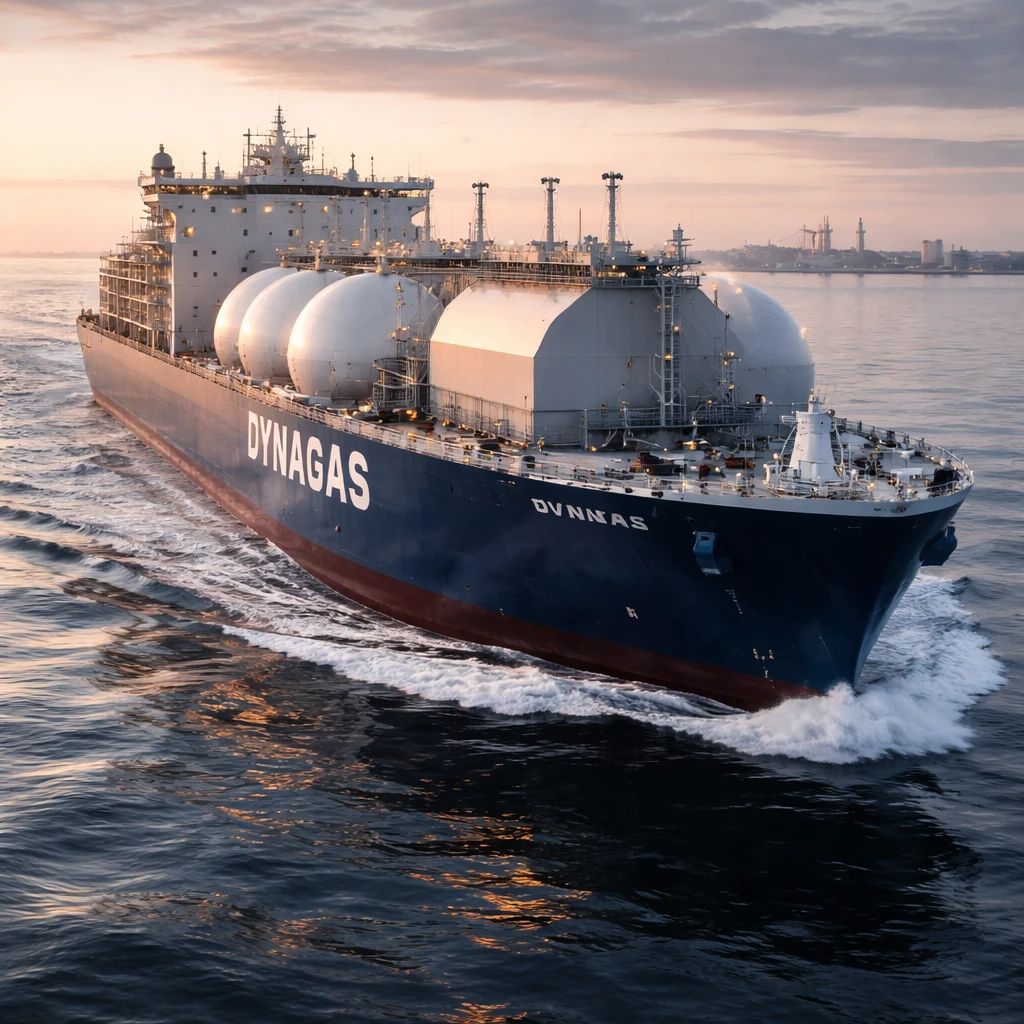
Dynagas is primarily an LNG carrier owner and operator. The company’s economic engine is simple: long-lived vessels earning time-charter or voyage revenues, with operating costs that are relatively predictable, plus periodic charter renewal or new employment that can re-rate the asset economics. For equity holders, that translates into near-cash yields when vessels are under contract and optional upside when spot or short-term charter markets strengthen or when management executes asset or capital structure optimization.
Investors should care because shipping equities, especially those with long-term charters, can deliver both yield and revaluation catalysts. When markets confuse liquidity or headline credit issues with long-term operability, they can over-discount the present value of contractual cash flows. That’s the mispricing I’m betting on here.
How I see the setup
- Core cash flow - A significant share of revenues stems from multi-year charters. That creates a baseline cash conversion that is less cyclical than spot-only franchise models.
- Optionality - Redeploying vessels at higher rates, or unlocking value via asset sales or a return of capital, are straightforward value-accretive levers that can emerge quickly if market dynamics shift.
- Sentiment-driven discount - The stock appears to be trading on headline risk and sector illiquidity more than on a detailed roll-forward of contracted earnings. That creates a tactical window where a sensible liquidity event or guidance can trigger a re-rating.
Valuation framing
There’s no secret sauce here: the equity value should be driven by discounted contracted earnings from chartered vessels plus residual asset value. The market price at the suggested entry of $3.20 implies investors expect either persistent charter weakness, protracted idle time, or dilutive capital raises. My view is that these outcomes are not the base case. Instead, a normalization of charter coverage and modest corporate actions could move the market toward a fairer multiple of recurring cash generation.
Absent a detailed market-cap snapshot in this write-up, think of the trade more as a cash-flow arbitrage than a multiple play: if the company can demonstrate stable coverage of fixed costs and debt service through visible charters and modest spot exposure, the equity should command a noticeably higher multiple than currently implied by headline sentiment.
Catalysts - what could unlock the upside
- Charter renewals and new contract announcements - Fresh long-term employment or firm extensions for existing tonnage would immediately improve cash-visibility.
- Asset-light capital moves - Management selling older tonnage, monetizing non-core assets, or repurchasing stock would directly tighten the share count and signal surplus cash availability.
- Sector tailwind - Any sustained improvement in LNG charter rates or increased seasonal demand for cargo lifts will push short-term re-deployment economics higher for the fleet.
- Improved disclosures - Clearer guidance on contract coverage, capex timing, and debt maturities reduces uncertainty and should compress the risk-premium investors demand.
Trade plan (actionable)
Entry: buy at $3.20. Target: $5.50. Stop loss: $2.20. Trade horizon: mid term (45 trading days) with a monitoring cadence of weekly checks and event-driven adjustments.
Rationale: 45 trading days is long enough for a couple of discrete catalysts - a charter announcement, an earnings/operational update, or a modest shift in sector sentiment - to materialize. It’s short enough to avoid multi-quarter macro shifts that might introduce unpredictable new risks.
Position sizing: given the volatility common to shipping names and the liquidity profile of smaller maritime plays, size the position so that hitting the stop at $2.20 would be a contained loss (for example, 1-2% of portfolio capital). This is not a full conviction long; it’s a tactical asymmetric risk-reward idea.
Risks - what can go wrong
- Charter counterparty failure: If a major charterer defaults or delays payments, cash flow could be interrupted, forcing operational or financial rearrangements.
- Refinancing and liquidity risk: Shipping is capital intensive. If management needs to refinance at higher yields or issue equity to cover capex, shareholders can suffer meaningful dilution.
- Spot market weakness: A sustained collapse in LNG shipping rates could leave the fleet earning below breakeven when older contracts roll off, pressuring earnings and asset values.
- Regulatory / operational shocks: Geopolitical events, new environmental rules, or accidents can temporarily take ships out of service or raise operating costs materially.
- Illiquidity and market sentiment: Small-cap shipping stocks can trade in wide ranges and gap materially on low-volume news, making stops less effective in fast-moving markets.
Counterargument to my thesis
The bear case is straightforward: structural oversupply in LNG carrier capacity, coupled with muted growth in charter demand, could mean that near-term contracted cash flows are insufficient to justify current equity value. If the company’s debt maturities cluster and market access is poor, management might be forced into asset sales at fire-sale prices or dilutive capital raises. Those outcomes justify the deep discount the market is applying. In other words, the market could be pricing in a realistic downside scenario that my base case underestimates.
What would change my mind
I would exit the trade and reassess if any of the following occur:
- Management discloses a need to raise equity or a sizeable debt covenant breach without a credible remedy.
- A major charterer announces bankruptcy or material non-payment that curtails cash inflows.
- Asset sales are conducted at heavily distressed pricing that permanently impair the company’s recovery potential.
- The share price convincingly breaks below the $2.20 stop and remains depressed on no new positive information - in that case, the stop is both a loss-control tool and an information signal.
Conclusion and final stance
Dynagas presents a pragmatic asymmetric trade: modest capital at risk with a credible pathway to a >70% upside if the market re-prices the company closer to the intrinsic value of its contracted cash flows. This is a tactical long - not a buy-and-hold thesis - aimed at capturing a re-rating while capping downside with a strict stop.
If you agree with the view that shipping equities can often overreact to headline risk, and you’re comfortable with the operating and refinancing risks inherent to the sector, this trade offers a concrete risk-reward setup: enter at $3.20, protect at $2.20, and take profits at $5.50 within a mid-term window of 45 trading days unless new information causes a plan revision.
Monitoring note: Keep an eye on contract renewal announcements, liquidity updates, and any sign of management signaling returns of capital. Those are the most direct and actionable near-term information points that will determine whether this mispricing corrects or proves justified.