
Hook & thesis
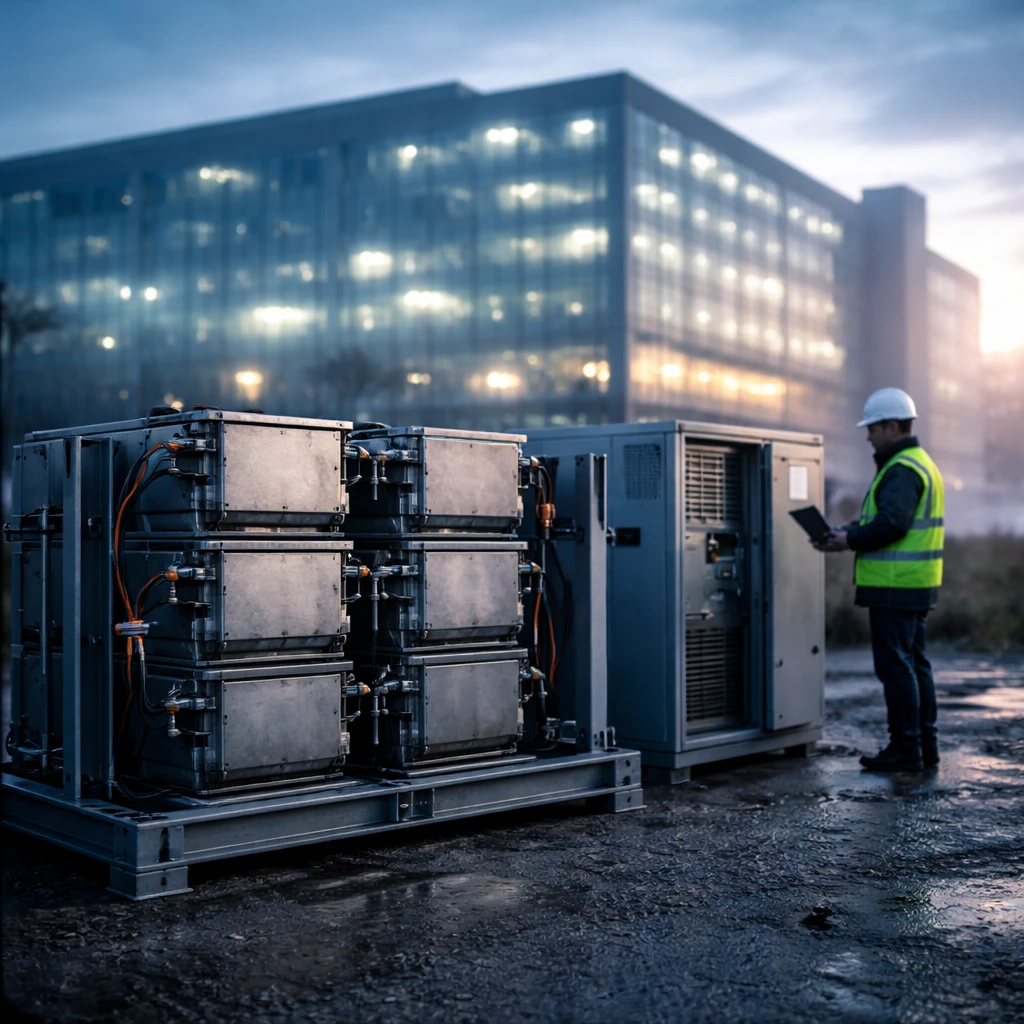
Ceres Power has quietly become one of the more interesting small-cap plays linking clean energy hardware to a clear commercial use-case: resilient, lower-emission power for data centers and edge facilities. As hyperscale and colocation operators chase higher uptime, lower carbon impact and distributed resiliency, Ceres' solid-oxide fuel cell stacks and licensing model offer a differentiated route to both on-site power generation and uninterruptible power supply (UPS) alternatives.
We are proposing a tactical long position in Ceres Power with strict risk controls: entry $2.50, stop $1.75, and target $4.50. This trade is a directional, event-driven position that aims to capture adoption momentum into the data-center vertical and broader commercialization milestones. Expect to hold the trade for the long term (180 trading days) while monitoring discrete catalysts and revenue translation milestones.
Why the market should care
Data centers are under growing pressure to improve resilience and reduce emissions. Traditional diesel generators still dominate backup power, but they are noisy, polluting and increasingly politically and economically costly to run. Fuel cells present an attractive alternative: lower emissions, quieter operation, and the potential to integrate with hydrogen or natural gas feedstocks to reduce lifecycle carbon intensity.
Ceres' value proposition is twofold. First, its steel-supported solid-oxide fuel cell stack offers competitive cost and durability characteristics versus incumbents. Second, Ceres operates a licensing and supply ecosystem model that can scale faster than a pure-equipment seller, enabling partnerships with OEMs, integrators and end users in the data-center supply chain. For those reasons, the company is well positioned to become a supplier of choice for edge data centers and distributed UPS solutions where space, noise and emissions matter.
Business model and fundamental driver
At its core, Ceres sells or licenses fuel cell stacks and partners to integrate those stacks into complete power subsystems. Data-center customers care about three things: reliability, operating cost, and compliance with sustainability goals. Fuel-cell systems can deliver cleaner baseline power and faster, cleaner back-up compared with diesel gensets; when combined with on-site hydrogen or low-carbon fuels, the emissions profile improves materially.
The fundamental driver for equity upside is the ramp in commercial deployments and recurring revenues through long-term service agreements, component sales and licensing fees. Adoption by even a handful of major colocation customers or hyperscalers can accelerate revenue visibility and de-risk the business model.
Valuation framing
Smaller, technology-driven hardware companies like Ceres tend to trade on a mixture of forward revenue multiples and execution risk. Ceres' current quoted price levels imply a valuation that assumes material commercial scale remains to be proven. That creates asymmetric upside if management can show steady, repeatable orders from data-center customers and convert pilots into multi-site deployments.
Qualitatively, the bear case priced into the stock is one where commercialization stalls, margins remain negative as production scales, and capital raises dilute shareholders before profitability. The bull case rests on steady adoption in the data-center segment plus diversified commercial wins in industrial and residential power markets. Our target of $4.50 assumes visible, sequential commercial progress and a modest re-rating as growth becomes more predictable.
Catalysts to watch (2-5)
- Commercial partnership announcements with data-center operators or major system integrators - these shorten the sales cycle and signal product acceptance.
- Order wins that move beyond pilot projects into multi-site or multi-MW contracts - proof that the product is deployable at scale.
- Quarterly updates showing sequential revenue growth and improving gross margins as manufacturing ramps.
- Regulatory or incentive changes that support hydrogen or low-carbon distributed generation - favorable policy can accelerate procurement decisions for data centers.
- Third-party validation (e.g., reliability or lifecycle tests) that demonstrate parity or superiority to gensets for UPS and backup scenarios.
Trade plan
Trade direction: long. Entry: $2.50. Stop loss: $1.75. Target: $4.50. Position horizon: long term (180 trading days). Rationale: give the company time to move from pilots to repeatable revenue while capping downside via a clear stop-loss.
Practical execution: initiate a base position at $2.50. Add selectively on pullbacks to the $2.00 area if the underlying business signals improve (order announcements or margin progress). The stop at $1.75 limits structural downside while allowing for the typical volatility of small-cap energy hardware names. If the stock meets the $4.50 target ahead of major revenue inflection, consider scaling out incrementally to lock in gains while retaining a smaller core for further upside.
Key supporting points
- Clear product fit: data-center operators need quieter, cleaner backup with lower lifecycle emissions - fuel cells check multiple boxes.
- Scalable licensing model: partnering with OEMs and integrators shortens time-to-market versus building a global manufacturing footprint from scratch.
- Policy tailwinds: decarbonization programs and local air-quality rules push operators toward alternatives to diesel, especially in jurisdictions with aggressive emissions targets.
- Asymmetric payoff: modest improvements in execution and order flow can lead to a large rerating given current valuation underweights commercialization risk.
Risks and counterarguments
No trade is without risk. Below are the principal downside scenarios and a concise counterargument to our bullish thesis.
- Execution risk: Converting pilots into multi-site deployments is hard. System integration, warranty exposure and on-site commissioning can all slow revenue realization.
- Competition and commoditization: Other fuel-cell technologies and improved battery-based UPS solutions could undercut Ceres on price or efficiency.
- Capital intensity and dilution: Scaling manufacturing and supporting service networks requires capital. If capital raises are needed, shareholders may be diluted and the stock could fall despite operational progress.
- Feedstock and infrastructure constraints: Fuel-cell systems ultimately need a fuel source. Widespread adoption of low-carbon hydrogen, or consistent access to suitable natural gas blends, is not guaranteed in all data-center locations.
- Macro and procurement cycles: Data-center buildouts are sensitive to macro demand and corporate capex cycles. A demand slowdown could delay purchases and extend the sales cycle materially.
Counterargument: It is reasonable to be skeptical that a hardware company can scale into the conservative, risk-averse data-center market quickly. Large operators historically favor proven, minimal-risk suppliers for power infrastructure. If Ceres cannot demonstrate multi-site reliability and competitive total-cost-of-ownership versus incumbents, uptake could be slow and the current growth story overstated.
We acknowledge that risk. That is why our trade is paired with a disciplined stop and a multi-month time horizon - the market will reward demonstrable progress in orders and margins rather than promises.
What would change our mind
We will reassess the bullish stance if any of the following occur:
- Significant and repeated failure of field deployments or warranty events that suggest systemic product issues.
- Large-scale customer losses or cancellations of pilots by major hyperscalers that signal product-market rejection in the data-center segment.
- Evidence of severe margin deterioration or an urgent capital raise at punitive terms indicating funding stress.
Conversely, our confidence would increase if the company reports a series of multi-site contracts, materially improved gross margins driven by manufacturing scale, or a strategic OEM partnership that embeds Ceres stacks in a data-center product roadmap.
Conclusion
Ceres Power is an asymmetric risk-reward idea for investors who believe that data centers will pivot to cleaner, quieter and more resilient on-site power solutions over the next 12-18 months. The core of the trade is execution: convert engineering wins into repeatable commercial orders. Our long trade at $2.50 with a $1.75 stop and $4.50 target gives the stock room to breathe while protecting capital against the common pitfalls that beset early-stage hardware companies. Monitor order announcements, margin progress, and any strategic OEM relationships - those will be the clearest signs that the market should re-price the equity higher.