
Hook & thesis
Hut 8's most recent financials shocked the market with a $248 million loss, a headline figure that tends to scare off casual shareholders. Counterintuitively, that same number is what makes the stock tradeable for short-to-mid-term speculators: the loss reset expectations, compressed valuation multiples, and left a capital structure and asset base that some buyers now view as mispriced relative to recovery scenarios.
My thesis is simple: buy a tactical, size-limited long on Hut 8 for a mid-term swing (45 trading days) that captures a combination of operational stabilization, potential asset reappraisal, and any short-covering bounce. This is not a value-or-breadth endorsement for long-term buy-and-hold; it is a risk-first trade designed to pay if the market’s reaction to recent red ink proves overdone.
What Hut 8 does and why the market should care
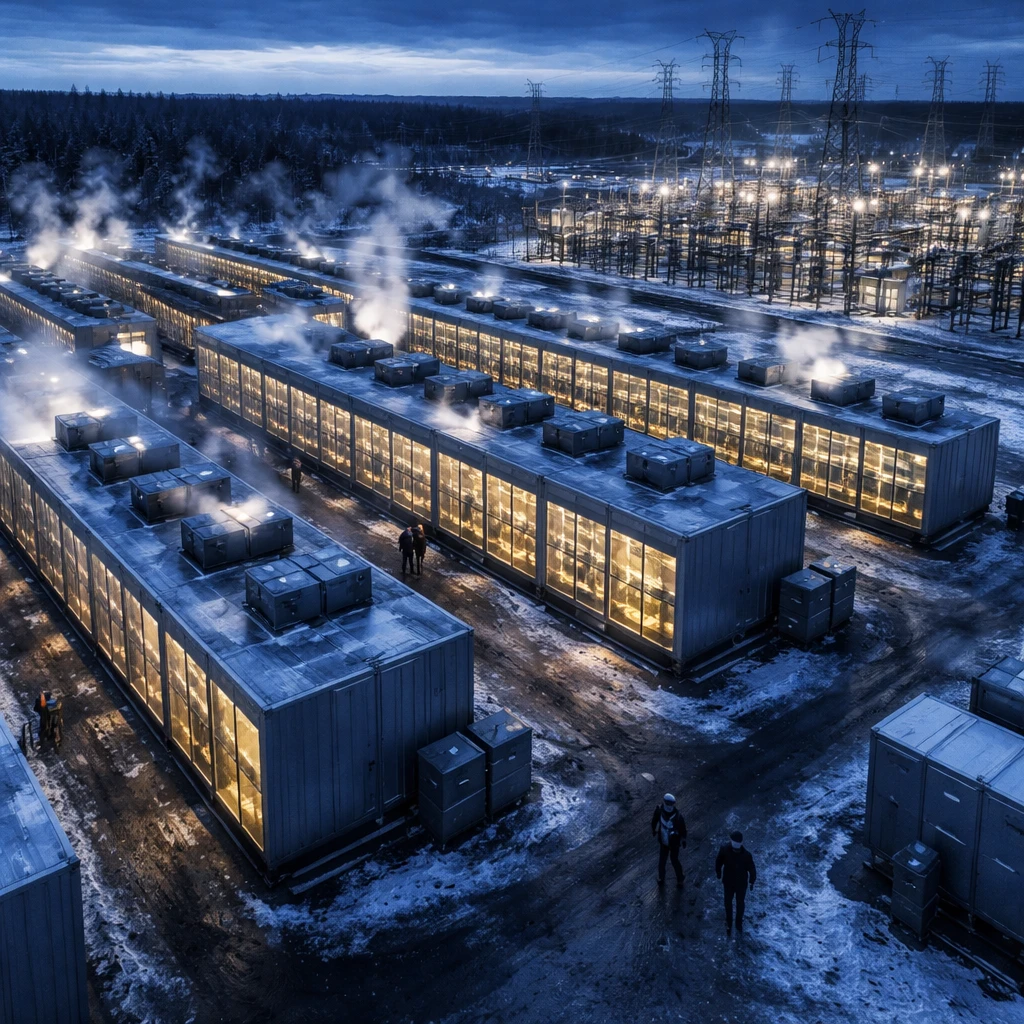
Hut 8 is a vertically integrated Bitcoin miner that combines owned mining rigs, hosting capacity, and power arrangements. For market participants, miners are levered plays on the underlying commodity - Bitcoin - and on electricity cost curves, hashing efficiency and operational uptime. Miners can flip between holding and selling mined coins, enter hosting contracts, or monetize excess capacity in different ways. In short, the business is cyclical, capital intensive and extremely sensitive to margins.
Why investors still buy into a miner that just posted a $248M loss? There are three practical reasons:
- Reset expectations: Big headline losses often trigger write-downs and one-time charges that, once cleared from future earnings, make subsequent quarters look materially better on a percentage basis.
- Asset optionality: Miners own ASIC fleets and sometimes power contracts; if the market can value those assets conservatively, the equity can be worth materially more than the depressed share price implies.
- Idiosyncratic catalysts: Improvements in hash price, power cost optimizations, hardware refresh cycles, or a period of sustained price support in the underlying crypto can lead to outsized moves in miner equities.
Support for the argument - selective numbers and context
The headline loss of $248M is the pivotal fact here: it compressed expectations and, importantly, likely contains non-recurring items that prospective buyers expect will not repeat at the same scale. Outside of the mining space, the broader market is allocating capital to compute and energy projects at scale - for context, recent coverage in the market shows AI infrastructure spending is forecast to almost triple to $902 billion by 2029 and individual data center and cloud contracts are being inked in the tens of billions. Those numbers tell us two things relevant to Hut 8: large-scale compute demand is durable, and energy infrastructure and power contracting are areas attracting significant capital. Miners that can negotiate low-cost power or monetize co-location assets are therefore sitting on optionality that the headline loss obscures.
Valuation framing
The market has repriced Hut 8 to reflect the $248M hit and elevated operational risk. Without relying on a precise market cap number here, the qualitative picture is straightforward: losses of this magnitude punish trust, compress multiples and push risk premia higher. That creates a classic asymmetric trade opportunity for speculative long-only traders if you believe (a) the loss is partly transitory, (b) the company can preserve or improve its power cost base, and (c) macro or crypto-specific tailwinds stabilize realized miner economics.
Compare mentally to prior cycles where miners trading through deep drawdowns recovered multiple-fold when market sentiment around Bitcoin and energy costs improved. The valuation case here is less about a neat multiple and more about the binary possibility of re-rating back toward prior trough multiples and the potential for operating leverage to show through in several quarters.
Catalysts to watch (2-5)
- Operational updates - fleet uptime, realized hash rate and any guidance on coin holding vs. selling policy.
- Power contract renegotiations or new low-cost power deals - reduced electricity expense is an immediate margin lever.
- Evidence of asset monetization - selling excess equipment, entering hosting deals, or securing financing against ASIC fleets.
- Short interest dynamics and institutional buying - a noticeable squeeze or block purchases can accelerate a rally.
Trade plan - exact entry, targets, stop, and horizon
This is a high-risk, directional swing trade intended to last mid term (45 trading days). Size the position small relative to portfolio risk tolerance and be prepared to act on the stop without hesitation.
- Trade direction: Long
- Entry price: $1.80
- Target price: $3.60
- Stop loss: $1.20
- Horizon: mid term (45 trading days) - allow time for operational clarity and any sentiment-driven replay.
Why these levels? The entry at $1.80 attempts to capture a valuation trough where downside is priced aggressively. The stop at $1.20 limits capital at risk to a clearly defined point below which the market is signaling deeper structural impairment. The target at $3.60 assumes a re-rating and some recovery in miner economics; it represents a meaningful upside that justifies the risk. Adjust position size if you enter materially away from $1.80.
Risks and counterarguments
This trade is speculative. Below are the principal risks and at least one counterargument to the thesis.
- Persistently weak realized crypto prices or miner revenue: If mining revenues remain depressed, losses can continue and the equity can reprice lower. This is the single largest business risk.
- Capital intensity and refinancing risk: Miners often rely on debt or equipment financing. Rising rates or tighter credit can force asset sales at unfavorable prices or dilute equity holders.
- Power cost inflation or contract exposure: A significant rise in power cost or loss of favorable power contracts undermines margins quickly; miners are very sensitive to electricity price moves.
- One-time impairments and accounting volatility: The $248M loss may signal structural problems or recurring impairments if equipment becomes obsolete faster than expected.
- Operational outages and regulation: Forced shutdowns, stricter regional energy policies, or permitting issues can temporarily or permanently reduce hash rate and revenue.
Counterargument: A legitimate counterargument is that the $248M loss reflects deeper structural erosion - obsolete hardware, poor power deals, or accounting that hides recurring cash drains. If losses are not one-off but ongoing, the equity may have substantially less upside and meaningful downside risk. In that scenario, patience and a conservative capital allocation approach are warranted; a full recovery would likely require a multi-quarter operational turnaround plus favorable crypto market moves.
What would change my mind
I would abandon this trade and move to neutral/short if any of the following happen within the trade window:
- Management admits the $248M loss contains recurring components and provides no credible plan to stem future impairments.
- The company reports material disruptions to power supply or loses access to low-cost electricity at scale.
- There is a sharp deterioration in liquidity or evidence of distressed asset sales to meet obligations.
Conclusion - stance and practical advice
Hut 8 presents an asymmetric, high-risk swing opportunity after a $248M headline loss. The market's knee-jerk repricing creates room for a tactical long if you accept the scenario-based nature of the bet. This is not a long-term endorsement without further evidence of earnings stability and power-cost discipline; rather, it is a speculative, time-boxed trade that profits if operational clarity and sentiment improve in the mid term.
If you take this setup, size it conservatively, set the stop at $1.20, and watch the catalysts closely. If management demonstrates durable margin improvement or monetizes assets in a way that meaningfully strengthens the balance sheet, the trade can be re-sized or extended. If any of the red flags described above appear, cut the position and re-evaluate.