
Hook & thesis
Yancoal Australia sold off after FY2025 earnings missed the market's hopes. The headline reaction looks overdone to us. This is not a thesis that says the coal cycle is permanently back to its 2021 highs; rather, it's a trade that buys a beaten-down equity with real asset coverage, recurring cash generation and several identifiable catalysts that can re-rate the stock over a multi-month horizon.
We believe the appropriate response to the FY2025 disappointment is a constructive one: take a long position at current levels with a disciplined stop. The upside comes from a combination of stabilizing coal prices, operational cost steps, and capital management optionality—factors that can restore investor confidence over the next 180 trading days.
What the company does and why the market should care
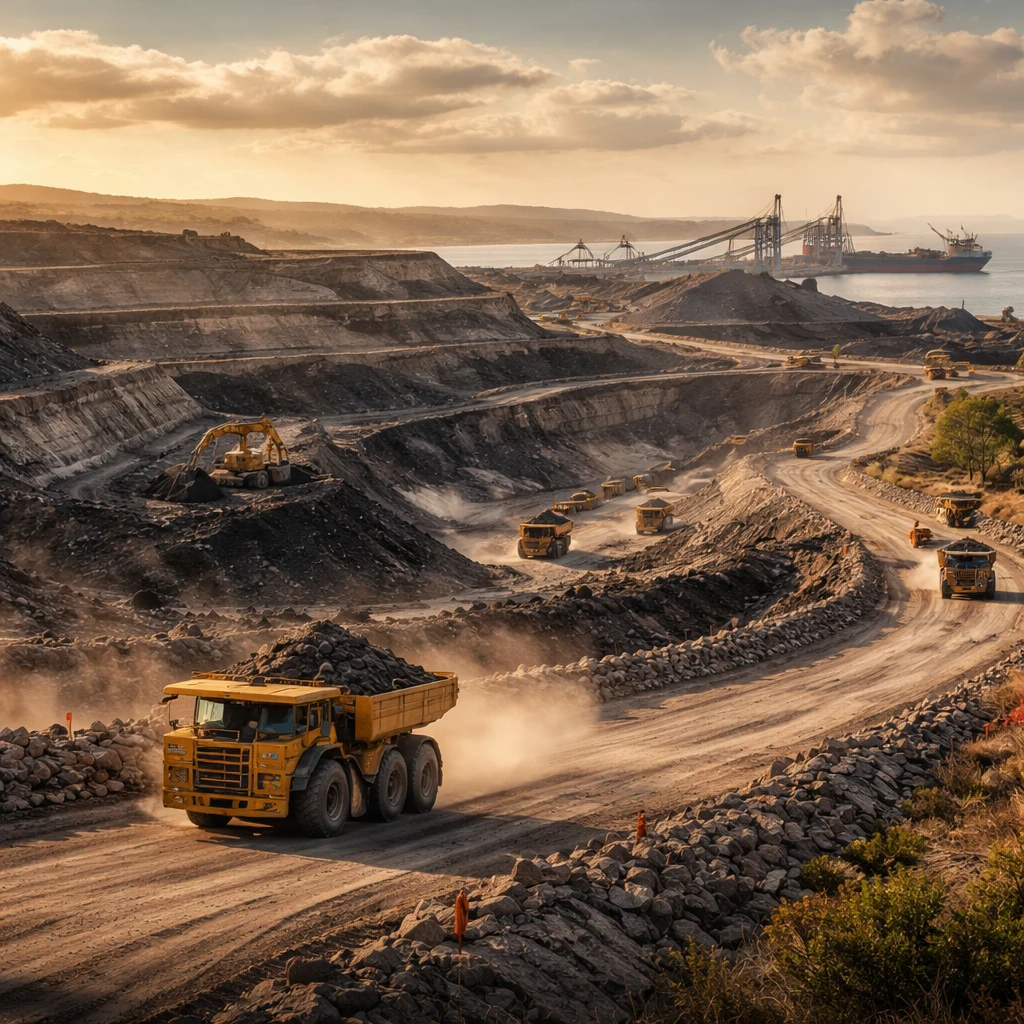
Yancoal Australia operates a portfolio of predominantly open-pit coal mines focused on thermal and metallurgical coal for export markets. Its cash flows are cyclical and hinge on seaborne coal demand, freight dynamics and mine operating performance. For investors, the combination of commodity exposure and hard assets means the share price is very sensitive to short-term earnings cycles, but also that downside is anchored by tangible reserves and infrastructure.
The market cares because shifts in seaborne coal pricing or improvements in utilization at Yancoal's assets can translate quickly into materially higher free cash flow. Conversely, weak prices or operational setbacks compress margins and produce headline earnings disappointments - which is what we saw in FY2025. That gap between short-term volatility and medium-term asset value is the basis for this trade idea.
Why we still prefer a buy after the FY2025 miss
- Asset-backed footprint: Yancoal's operations and reserve base provide tangible downside support relative to many commodity-facing developers. While the market often sells first and asks questions later, balance-sheet and asset coverage limit terminal downside.
- Cash flow levered to a recovery: A modest recovery in seaborne coal prices or better-than-expected ramp-ups at key mines can disproportionately improve cash flow on the margin. That makes the company a good candidate for mean-reversion trades when sentiment is depressed.
- Management optionality: After a weak earnings print, management typically prioritizes free cash flow, cost control and capital allocation. That can lead to buybacks, higher dividends or disciplined M&A/asset sales that re-rate the stock.
Valuation framing
Post-FY2025 sell-off, the stock trades at a materially lower multiple of trailing earnings and cash flow than it did through the last stronger cycle. The market is pricing in extended weakness; our view is that this pricing embeds a pessimistic path for coal prices and operational performance that is unlikely unless a major demand shock occurs.
Put another way: the current valuation reflects a deep cyclical trough rather than permanent impairment. If coal prices stabilize and incremental mine productivity improvements hit, the re-rating potential is significant because the earnings base is levered to commodity moves. Without implying a precise peer multiple, the qualitative conclusion is that the risk/reward improves meaningfully on a pullback after a disappointment.
Catalysts (near to medium term)
- Recovery or stabilization in seaborne thermal and metallurgical coal prices driven by seasonality or logistics tightness.
- Operational announcements showing improved strip ratios, higher run-of-mine (ROM) volumes or lower unit costs at material sites.
- Management capital allocation moves: a formal buyback, higher distribution or sale of non-core assets.
- Improved demand from key Asian buyers and any easing of freight/port bottlenecks that lift export realizations.
Trade plan
We propose a pragmatic, risk-managed long trade with a clearly defined entry, stop and target. This is designed to capture a mid-to-long term recovery while limiting downside if the operating backdrop deteriorates further.
| Action | Price | Horizon |
|---|---|---|
| Entry | $6.50 | Long term (180 trading days) |
| Target | $9.00 | |
| Stop loss | $5.00 |
Why these levels? Entry at $6.50 represents a point where downside appears limited relative to the company's asset base and upside is meaningful if catalysts materialize. The $5.00 stop limits capital loss to a manageable level if the market signals sustained structural weakness. The $9.00 target reflects a re-rating scenario consistent with a recovery in coal realizations and visible operational improvement over the next ~6-9 months.
We explicitly frame this as a long-term trade - not a quick scalp. Expect the position to last the full horizon unless a clear negative development triggers the stop. During the holding period, trim size into strength if the stock runs ahead of fundamentals.
Risks and counterarguments
- Commodity price risk: The most obvious downside. If seaborne coal prices fall further or remain depressed, earnings and cash flow will stay under pressure and the valuation gap may widen. This is the primary reason for the stop loss.
- Demand shock from key markets: A sharp slowdown in Chinese steel output or accelerated moves away from coal-fired generation would hit volumes and pricing with minimal lead time.
- Operational setbacks: Cost inflation, pit design issues, or delayed ramp-ups at a major mine could compound the earnings miss and keep the stock under pressure.
- Regulatory and ESG pressure: Increased environmental regulation, mine approvals delays, or financing constraints for coal projects could materially affect long-term valuation.
- Currency and freight risk: Adverse AUD/USD moves or rising freight/insurance costs can erode margins despite stable commodity prices.
- Counterargument: The FY2025 miss could be signaling the start of a protracted structural decline for thermal coal demand rather than a cyclical trough. If global decarbonization accelerates faster than the market expects, the company’s asset base and cash flows could be permanently impaired. This is a credible outcome and the principal reason the trade is sized conservatively and protected with a stop.
What would change our view
We would upgrade the position (add size) if management announces credible capital returns (buyback/distribution) or if we see sustained improvement in seaborne coal prices and concrete operational metrics showing cost per tonne declines. Conversely, we would exit and reassess if there's sustained deterioration in demand from Asia, a material regulatory action that curtails exports, or if operational results continue to miss consensus for several consecutive quarters.
Conclusion
Yancoal Australia's FY2025 earnings disappointment is a painful reminder of commodity cyclicality. It also creates an actionable opportunity for disciplined, horizon-aware investors. We view the pullback as a buying window: the company's asset base, leverage to commodity improvement and capital management optionality produce an asymmetric risk/reward profile over a 180 trading day horizon. The trade is not without meaningful risks — commodity, regulatory and operational — so size the position accordingly and use the $5.00 stop to preserve capital.
In short: selective buy on weakness with a clear stop and a 180 trading day horizon. If the cyclical drivers re-assert themselves and management executes, upside to our target is a realistic outcome.