
Hook & thesis
United Rentals (URI) is a capital-intensive business that acts more like a factory of durable cash flows than a volatility-prone growth story. The company's scale gives it pricing power at times of strong demand and a defensive tilt when construction activity softens: equipment owners often prefer renting over buying given uncertain project timelines and the high cost of owning depreciating machinery.
We view URI today as a tradeable long: the business generates predictable cash, management has leaned into disciplined fleet replacement and M&A, and the multiple has room to expand if utilization recovers modestly. The trade is actionable with a precise entry, stop and target, and a time horizon that lets the rental cycle breathe.
What the business does and why the market should care
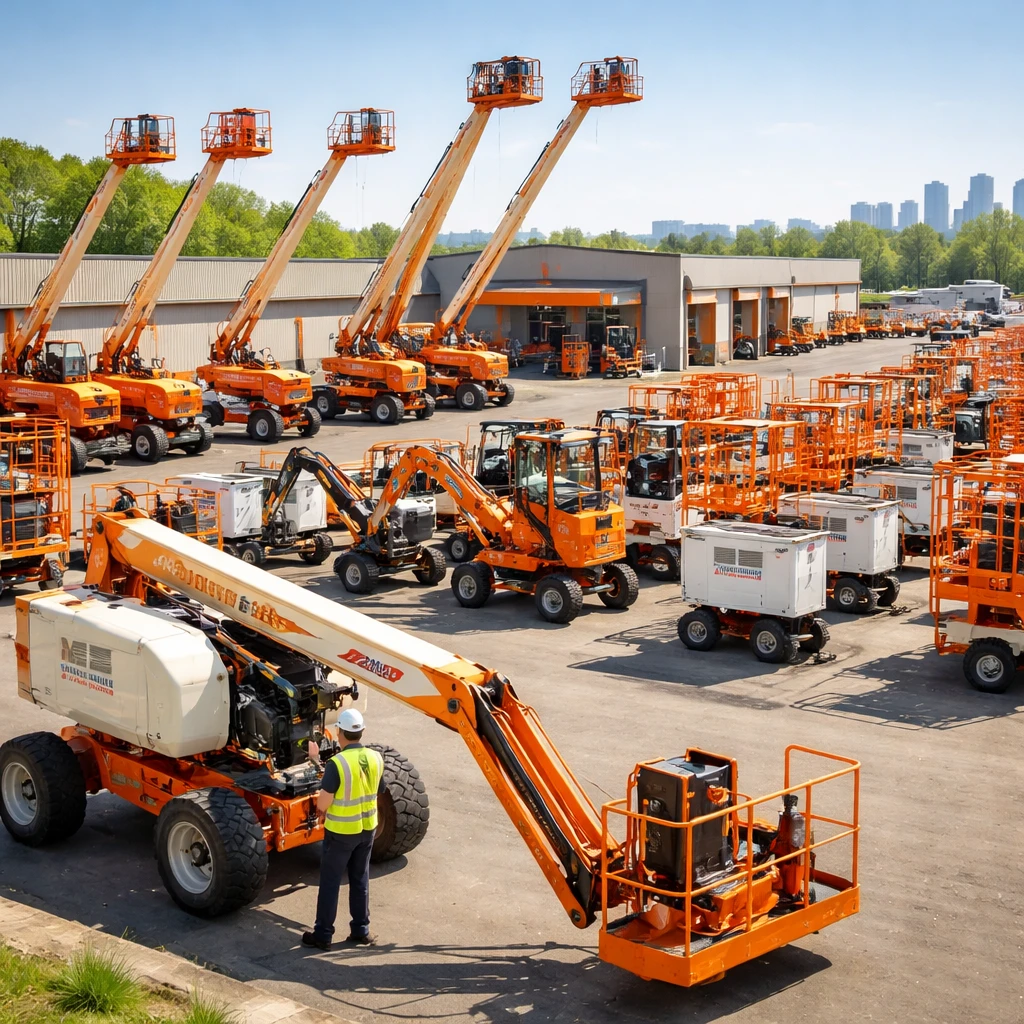
United Rentals is the largest equipment rental company in North America, operating a broad fleet across aerial, earthmoving, power & HVAC, trench safety and specialty equipment. The economics are straightforward: buy equipment, rent it out, and after a period of ownership either sell it in the secondary market or redeploy it. The model produces steady recurring revenue and high operating leverage once utilization and pricing improve. For investors, that means exposure to construction and industrial activity without the binary capex risk of owning the work.
Scale matters. Large fleets reduce per-unit ownership costs, enable more flexible pricing, and let management match fleet composition to local demand. That combination tends to produce better utilization and higher margin capture than smaller peers, particularly when replacement costs for new equipment are elevated and supply chains are slow. In short, United Rentals is a cash-generation engine that benefits from industry structure.
How this trade works - actionable plan
| Trade Direction | Entry Price | Target Price | Stop Loss | Time Horizon | Risk Level |
|---|---|---|---|---|---|
| Long | $325.00 | $390.00 | $295.00 | Long term (180 trading days) | Medium |
Entry rationale: $325 is a tactical price that offers a roughly 20%+ upside to the target while keeping downside manageable with the $295 stop. The stop is under a near-term structural support area; if broken decisively it signals that utilization or pricing momentum is deteriorating faster than expected.
Target rationale: $390 assumes modest utilization recovery and margin expansion, plus re-rating as investors reward cash-generation stability. The 180 trading day horizon lets a cyclical recovery in construction activity and equipment rental demand play out while management executes on fleet optimization and capital returns.
Valuation framing
United Rentals' valuation should be viewed through two lenses: replacement economics and cash flow yield. Equipment replacement costs are high relative to used-market supply, which supports rental day rates over new supply when demand rebounds. Second, the business converts operating income into free cash flow at a reasonable clip once fleet capex normalizes. That gives a floor to valuation, especially when combined with a disciplined approach to share buybacks and targeted M&A.
Relative to history, the multiple for a market leader like United Rentals tends to contract during downturns and expand during recovery phases. The current trade assumes the market is pricing in slow growth and that a modest recovery in utilization plus the continuation of disciplined capital allocation will prompt a re-rating. This is not a story that requires a radical multiple expansion; even a move toward historical averages would deliver meaningful upside from current levels.
Catalysts
- Utilization uptick - a sustained improvement in fleet utilization driven by seasonal construction activity or infrastructure spending would lift rental revenue per day and margins.
- Better pricing visibility - evidence that day rates have begun to firm, particularly in aerial and earthmoving segments.
- Fleet optimization announcements - management selling older non-core assets or improving mix toward higher-margin specialty equipment could boost free cash flow.
- Capital allocation clarity - incremental buybacks or disciplined M&A that show management prefers shareholder returns when organic growth is constrained.
- Macroeconomic tailwinds - increased infrastructure spending or stronger commercial construction would be a structural positive.
Risks and counterarguments
Every trade has risk. Below are the most relevant for URI with an explicit counterargument.
- Economic slowdown - a sharp pullback in construction activity would reduce utilization and pricing, pressuring revenue and margins. This is the single largest downside risk for a rental company.
- Commodity price and interest rate pressure - higher financing costs raise fleet replacement costs and can reduce used-equipment demand; if new equipment becomes significantly more expensive, it can squeeze margins in the short run.
- Fleet residual risk - the secondary market for used equipment can be volatile. If used prices collapse, asset disposals can underperform expectations and hurt cash generation.
- Execution risk with capital allocation - poor M&A or aggressive fleet expansion funded by debt could weaken the balance sheet and reduce shareholder returns.
- Operational disruptions - logistics, maintenance backlogs or major weather events could temporarily depress availability and increase costs.
Counterargument - Some investors will argue that rental demand is cyclical and that today is not the bottom; they prefer to wait for clearer macro signs. That is a valid, conservative stance. This trade does not rely on a perfect macro inflection; it only requires a modest normalization in utilization and continued discipline on capital allocation. If utilization stalls for an extended period or management abandons buybacks, the case weakens materially.
What would change my mind
I would reduce conviction or exit the trade if any of the following occur:
- Management pivots to aggressive fleet growth funded by leverage rather than focusing on returns of capital.
- Guidance shows sustained decline in pricing power across multiple equipment classes without a clear path to recovery.
- Material deterioration in used-equipment prices that undermines residual value assumptions and free cash flow.
- Macro indicators point to a prolonged recession in construction and industrial capex, not just a short slowdown.
Conclusion
United Rentals is a practical way to own durable cash flow exposure to construction and industrial demand without taking on speculative growth risk. The company’s scale, fleet economics and ability to adjust capital allocation make it a strong candidate for a tactical, risk-managed long. The trade outlined here - buy at $325, stop at $295, target $390 over roughly 180 trading days - balances upside from operational normalization and valuation rerating with a clear stop that limits downside if the cycle weakens.
Execution is key: enter the position with size control, watch quarterly utilization and day-rate trends, and be ready to act if management signals a material change in capital allocation priorities or if macro data points to durable weakness in construction activity.