
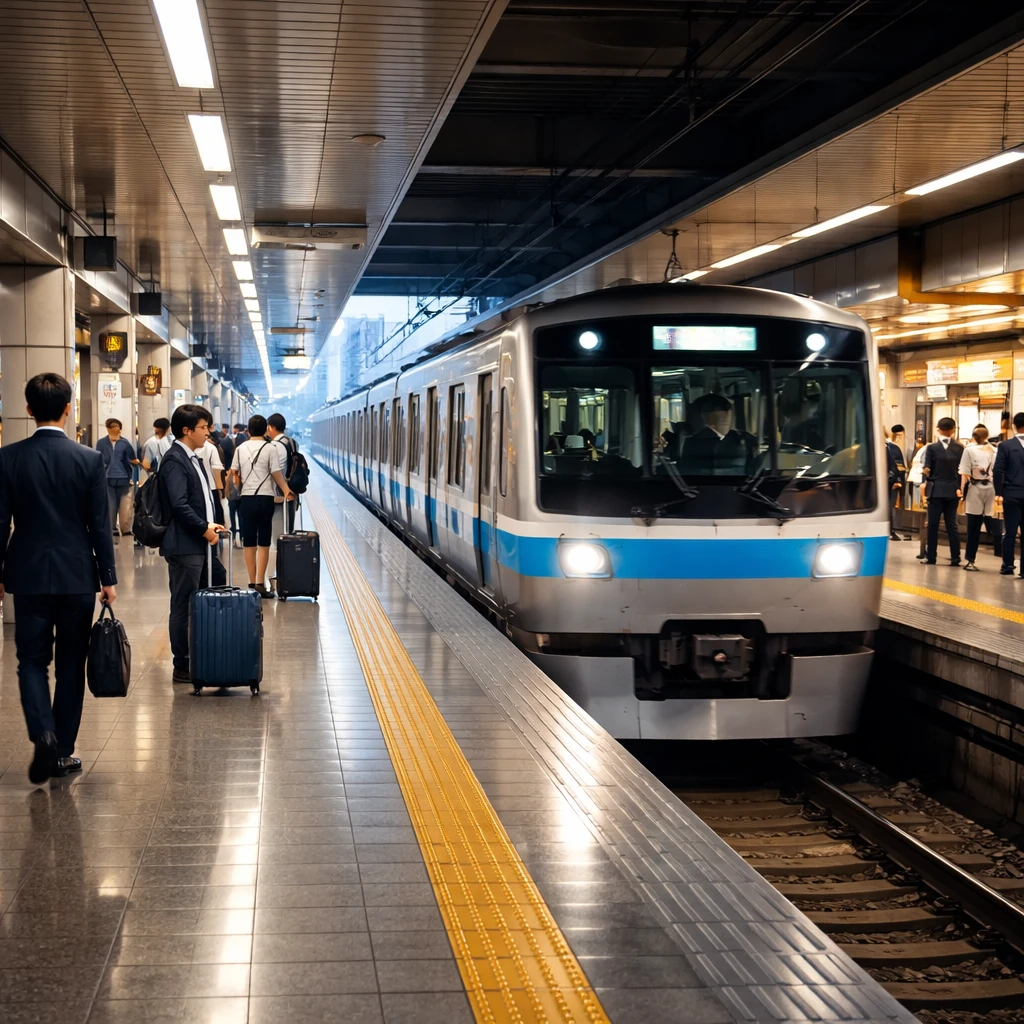
Hook & thesis
Tokyo Metro is a classic defensive infrastructure play: predictable fare-based cash flow, essential service status inside Japan's capital, and an earnings profile that tends to hold up better than cyclical equities in economic slowdowns. On top of that, the potential for yen appreciation over the next several quarters creates an extra, asymmetric upside for USD-based investors if Japan's interest rate narrative or global risk flows push the currency higher.
My trade thesis is simple: buy Tokyo Metro at a defined entry, hold for operational tailwinds and a currency kicker, and protect capital with a tight, objective stop. This is not a high-beta momentum bet; it is a position trade that aims to harvest stable commuter demand plus optional upside from macro moves in FX or fare adjustments.
Why the market should care - the business in plain terms
Tokyo Metro operates urban subway lines that are integral to Greater Tokyo's mobility. That makes its revenue base structurally defensive: a large share comes from commuter tickets, season passes and retail leases inside stations. Those revenue streams are less elastic than cyclical consumer spending. When foot traffic recovers or tourism increases, incremental upside flows directly to top-line and margin improvement through higher fare volumes and stronger station retail performance.
For investors, two features stand out:
- Revenue resilience. Core ticketing and commuter revenues tend to see smaller swings than GDP in large cities because commuting is often mandatory and habitual.
- Currency optionality for USD investors. A stronger yen mechanically boosts USD returns even if local JPY equity performance is muted — a non-linear source of upside that can double as a tailwind when global risk sentiment shifts.
Valuation framing
Tokyo Metro historically trades like an infrastructure/utility hybrid: lower volatility, steady dividend bias, and modest growth expectations. Given the company's essential-service profile and relatively stable cash conversion, a valuation premium versus small-cap cyclicals is reasonable. At the same time, infrastructure investors often value clarity of cash flow and payout policies more than headline EPS growth. For this trade I'm treating the equity as a yield-like exposure with capital appreciation optionality rather than a fast-growth name.
Because headline market snapshots and specific balance-sheet line items were not part of this note, the trade is structured around a fixed entry and stop to control downside and a target that reflects a reasonable re-rating from conservative to neutral valuation after operational or currency catalysts play out.
Trade plan (actionable)
- Direction: Long Tokyo Metro (ticker 9009).
- Entry price: buy at $9.50 per share.
- Target price: $12.00 per share.
- Stop loss: $8.00 per share.
- Horizon: long term (180 trading days) - this allows time for ridership trends to strengthen, for potential fare revisions to be implemented, and for macro FX moves to unfold.
Why these levels? The entry is chosen to provide a cushion off the stop while offering a meaningful percentage upside to the target. The stop at $8.00 limits downside and forces discipline if operating or macro conditions deteriorate. The $12.00 target captures a pragmatic re-rating scenario driven by modest upside to ridership, improved retail leasing within stations, or a stronger yen that amplifies USD returns.
Catalysts
- Yen appreciation: any sustained move higher in the yen versus the dollar will materially increase USD returns for international holders even without domestic operational surprises.
- Ridership normalization: incremental recovery in commuter and tourist volumes translates to higher farebox revenue and better station retail performance.
- Fare or tariff adjustments: regulatory or corporate moves to adjust fares, even modestly, would directly lift revenue and margins.
- Operational productivity gains: tighter control of opex, more efficient train scheduling and higher station retail occupancy can improve free cash flow.
- Macro re-rating of defensive assets: in a risk-off environment investors often rotate into utilities and defensive infrastructure; Tokyo Metro could benefit from such flows.
Support for the argument
Urban metro systems benefit from predictable human behavior: people commute, retail in stations captures captive audiences, and long-term contracts or government ties create revenue visibility. The trade leans on these structural characteristics more than on short-term earnings beats. The dual return engine - operating steadiness plus currency upside - is compelling for investors who want equity exposure to infrastructure without taking on heavy cyclicality.
Risks and counterarguments
No trade is without risk. Below are the key downside scenarios and one counterargument to the thesis worth noting.
- Risk - Ridership deterioration: structural changes in commuting patterns (permanent shifts toward remote work) or an economic slowdown reducing commuter volumes would pressure fare revenue and station retail sales.
- Risk - Regulation and fare caps: government oversight and political sensitivity to fare increases could limit pricing power and delay revenue recovery.
- Risk - Large capital expenditure cycle: unexpected capex for safety upgrades, new rolling stock, or infrastructure repairs could compress free cash flow and force equity dilution or higher debt.
- Risk - FX moves in the opposite direction: if the yen weakens, USD returns could be materially diminished even if local JPY performance is stable.
- Risk - Market liquidity and investor focus: Tokyo Metro may not be as liquid or widely followed as larger global names, so price action can be choppier around news events.
Counterargument: Critics will point out that urban transit is a low-growth business with limited upside absent aggressive fare hikes or large-scale increases in tourism. If the market is only willing to pay for growth, Tokyo Metro's valuation may languish and the stock could underperform more cyclical, higher-growth alternatives.
This is a fair point. The trade is deliberately structured as a defensive position rather than a growth bet. The upside case does not rely on transformational growth but on steady operational improvement combined with macro FX tailwinds. If investors demand rapid top-line expansion, this thesis will underperform – that is precisely why the stop and defined horizon are critical.
What would change my mind
I would reassess or close the position if any of the following occur:
- Clear evidence of a permanent, multi-quarter decline in commuter volumes beyond what remote work trends would imply.
- An announced capital program that materially increases leverage without a credible plan for covering the incremental cost.
- Significant regulatory changes that freeze fares or reduce station-related commercial revenue for an extended period.
- FX regime shifts that point to a structurally weaker yen for the foreseeable future, removing the currency upside case.
Execution checklist & position sizing
Keep position sizing conservative given the idiosyncratic risks of rail operators and potential liquidity constraints. Use limit orders for entry to avoid intraday spikes. If building the position in tranches, stagger two equal entries around $9.50 and $9.00 while maintaining the same stop at $8.00 to keep risk management consistent.
Conclusion
Tokyo Metro represents a defensive way to own core urban infrastructure with a defined upside path via a stronger yen or gradual operational recovery. This trade is not about rapid appreciation; it is about capital preservation with an asymmetric potential return profile. Enter at $9.50, protect capital with a $8.00 stop, and aim for a $12.00 target over a long-term (180 trading days) horizon. The trade balances steady fundamentals with an external macro kicker and uses strict stops to keep downside contained.