
Hook / Thesis
Bloom Energy (BE) jumped decisively when market chatter tied the company to a commercial relationship with Oracle that would position Bloom as a preferred on-site power provider for AI data centers. Whether the deal is large or small in dollar terms, the headline matters: it signals that hyperscalers and cloud players are actively evaluating non-grid, on-site power solutions to support dense, 24/7 AI workloads.
That validation matters at a time when Bloom's stock is being re-priced from speculative growth to strategic infrastructure. The market bid the shares up to $200.78 intraday on 04/14/2026 as momentum and headlines converged. My trade idea: take a disciplined long at the breakout price with a conservative stop and an ambitious target that reflects both the company's opportunity and the current stretched valuation.
What Bloom Does and Why the Market Should Care
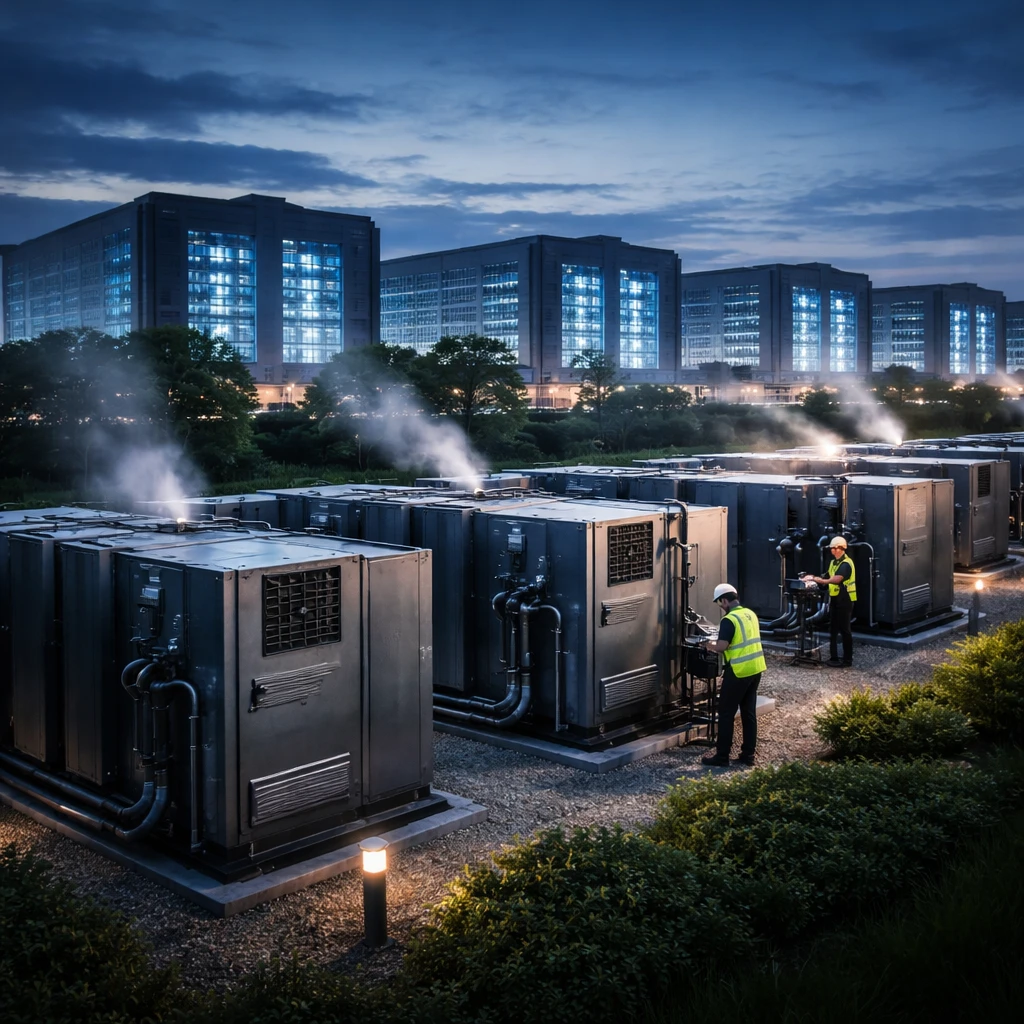
Bloom Energy manufactures and installs solid oxide fuel-cell based power platforms - Bloom Energy Servers - that convert low-pressure natural gas or biogas into electricity electrochemically. Their value proposition to AI customers is straightforward: reliable, on-site, high-capacity power that reduces dependence on strained grid infrastructure and avoids intermittent renewable variability. For AI data centers that need predictable, high-quality power 24/7, on-site fuel-cell installations can be an alternative to expensive grid upgrades or long lead-time utility projects.
Fundamental Snapshot - Concrete Numbers
- Market cap: roughly $56.33 billion at the recent print of $200.78.
- Enterprise value: approximately $50.62 billion.
- Valuation multiples: price-to-sales around 24.8x and price-to-book roughly 64.4x; trailing EPS recently reported at -$0.31.
- Free cash flow: $57.19 million (most recent reported figure), showing the company is generating positive FCF even while unprofitable on an EPS basis.
- Leverage / balance sheet signals: debt-to-equity at 3.72, current ratio ~5.98 and cash balance metric noted at ~3.93 (units per dataset conventions).
- Market action / technicals: RSI ~70.55 (near overbought), MACD shows bullish momentum; average daily volume ~9.3M versus today’s lighter 2.85M print.
- Short interest: roughly 24.5M shares as of 03/31/2026, days-to-cover about 2.3 - meaningful but not extreme.
Put bluntly: growth and demand narratives are now colliding with a valuation that prices in a lot of perfection. Bloom’s free cash flow turning positive and public reports of large backlogs (coverage has cited figures from ~$6B up to ~$20B) justify optimism. But multiples imply stretched expectations: at ~25x price-to-sales and a negative EPS, the margin and scale improvements must materialize to support today's price.
Valuation Framing
Bloom’s market cap of ~$56.3B and enterprise value of ~$50.6B imply the market is pricing Bloom as if its revenue base and margins will scale rapidly into a utility-like recurring business for AI customers. Price-to-sales around 24.8x and price-to-book north of 60x are historical outliers for hardware and energy-equipment manufacturers. That premium is defensible only if the company converts contracts into high-margin recurring service and product revenue and sustains meaningful free cash flow growth beyond the current ~$57M FCF figure.
There are two ways this path can validate itself: 1) large, multi-year agreements with hyperscalers/cloud players that convert into a stream of hardware + O&M revenue and 2) margin expansion from scale in manufacturing and operations. The reported Oracle relationship acts as a signal for pathway #1 but execution risk remains material.
Catalysts (what could drive the trade)
- Deal announcements or expansion with major cloud/data-center operators (the Oracle report is the immediate catalyst).
- Quarterly results showing continued double-digit revenue growth and sequential gross margin improvement, reinforcing the scale story.
- Backlog monetization milestones - new large orders being converted to installed systems and recognized revenue.
- Macro tailwinds: lower oil/gas price volatility and easing rate expectations that support growth multiple expansion for capital-intensive growth names.
Trade Plan (actionable)
Trade direction: long.
Entry price: $200.78 (current breakout level; enter on confirmation at this price).
Stop loss: $165.00. This stop sits below the prior consolidation zone and provides room for short-term pullbacks while limiting downside if headlines reverse or a broader growth rotation occurs.
Target price: $260.00. This target captures upside if Bloom converts headline-driven momentum into order flow and margin improvement - roughly a 29% upside from entry.
Horizon: long term (180 trading days). I expect this trade to play out over multiple quarters as contracts are announced and backlog converts to revenue. The company’s business cadence (order -> install -> service) means meaningful share-price appreciation will likely require sustained delivery and recurring revenue signs.
Position sizing: treat this as a high-risk growth position and size accordingly. Given the valuation and leverage, a modest position (single-digit percent of a growth sleeve) is prudent until company-level execution is visible.
Risks and Counterarguments
- Valuation risk: The market is pricing in aggressive growth. With price-to-sales near 25x and price-to-book >60x, any slowdown in orders or margin compression would trigger a sharp re-rate.
- Execution and backlog conversion: Large reported backlogs (coverage has referenced $6B to $20B) must convert to installed systems and service revenue. Delays, supply-chain bottlenecks, or installation capacity limits would hurt the story.
- Leverage and balance-sheet risk: Debt-to-equity near 3.72 is high for an equipment manufacturer. Rising rates or refinancing needs could pressure profitability or cash flow if growth falters.
- Commodity and input-cost risk: On-site fuel cells lean on fuel inputs (natural gas, biogas) and parts. Spikes in input costs or logistics disruptions could compress margins.
- Market volatility and sentiment: The stock has moved from $16 to over $200 in the last year; such moves attract short-term traders and heightened short interest. Sentiment-driven swings could overwhelm fundamentals in the short term.
- Concentration risk: Dependence on large enterprise or cloud contracts (e.g., the Oracle relationship) creates client-concentration exposure; a small number of large clients could materially change revenue visibility if deals fall through.
Counterargument: Skeptics will point to the stretched multiples and say headline-driven rallies often fade if contract economics or installation timelines disappoint. That is a valid concern. If the Oracle relationship is small, non-recurring, or conditional, the re-rating will be hard to defend. Hence this trade uses a strict stop and defined target: participate in the momentum but limit downside exposure.
What Would Change My Mind
I will reassess the bullish stance if any of the following occur: 1) the Oracle commercial tie-up proves to be a pilot with no material revenue implication, 2) quarterly reports show slowing revenue growth or negative free cash flow, or 3) major customer cancellations or significant installation delays are disclosed. Conversely, a string of conversion announcements (large contracts moving from backlog to signed POs to installations) and clear margin expansion would increase conviction and warrant position add.
Conclusion
Bloom Energy sits at the intersection of clean energy hardware and mission-critical AI infrastructure. Reported commercial interest from Oracle elevates Bloom from niche to strategic infrastructure in investors' minds. The company's positive free cash flow, growing backlog commentary, and bullish technicals justify taking a measured long exposure at $200.78 for a 180-trading-day outcome. But the trade is high risk: valuation is rich, leverage is high, and execution matters. Keep the position size disciplined, respect the $165 stop, and use the $260 target as a point to harvest gains if the company proves it can convert AI interest into sustainable, high-margin revenue.