
Hook / Thesis
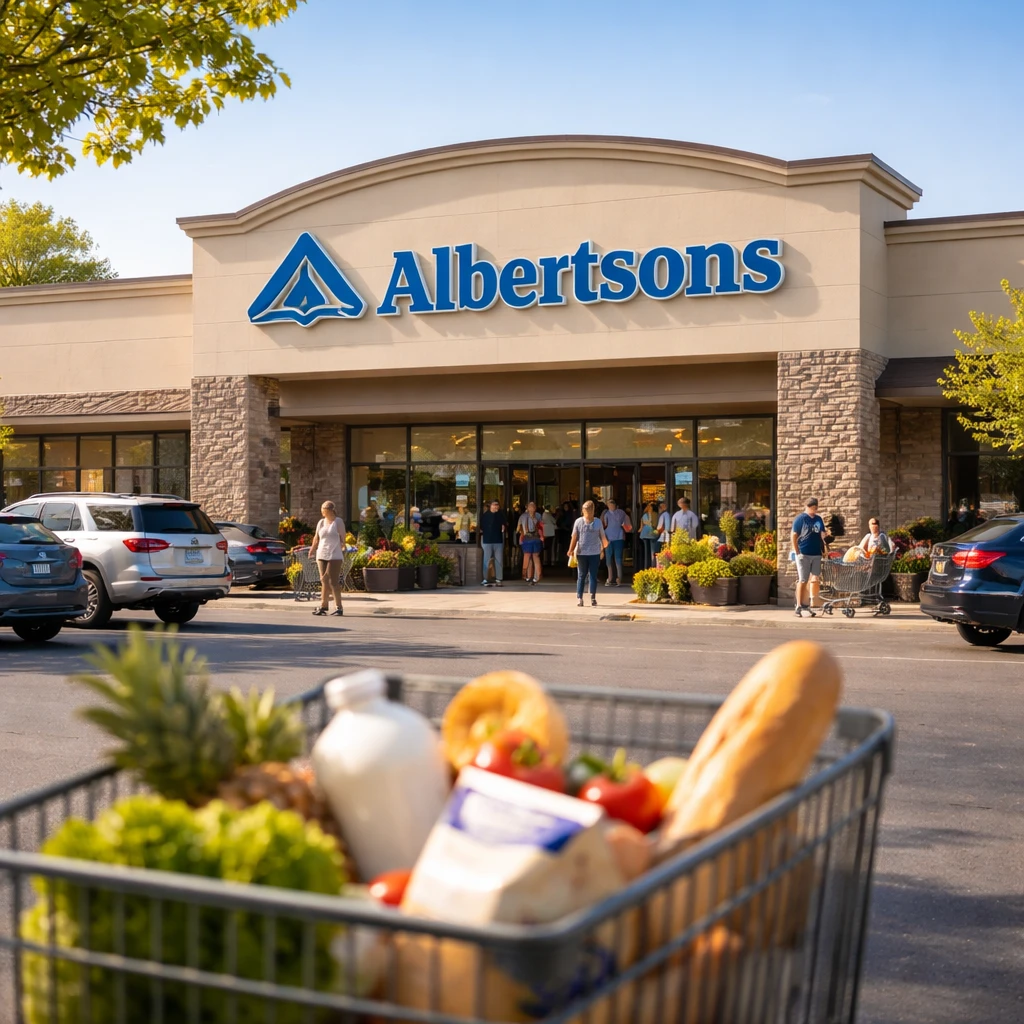
Albertsons (ACI) is a classic brick-and-mortar grocery cash-generator trading at a low multiple: the stock sits around $16.60 and carries a reported P/E near double digits and an EV/EBITDA around 5.1. Management has raised the dividend, expanded buyback capacity, and posted better-than-expected margins in recent quarters, suggesting operational durability. That combination makes ACI attractive as a mid-term trade if you believe margin strength sticks and the balance sheet shock from legal settlements is manageable.
That said, the story is not risk free. The company agreed to a $774 million opioid settlement that produced a roughly $600 million pre-tax charge and led to an operating loss headline in the most recent release. Coupled with a high debt-to-equity ratio and a thin liquidity profile, this is a trade that requires strict position sizing and a clear stop-loss.
What the company does and why it matters
Albertsons operates food and drug retail stores across multiple banners, with ancillary revenue from pharmacy, fuel and health-and-beauty categories. Grocery retail is structurally defensive: in inflationary or uncertain environments consumers shift spending back to home cooking, and grocery chains capture recurring, sticky spend. Albertsons is significant in that market and is generating free cash flow while returning capital to shareholders via dividends and buybacks.
Key fundamentals and why the market should care
- Market cap: roughly $8.53 billion and enterprise value about $17.22 billion.
- P/E is in the low double-digits (snapshot shows roughly 10.5) and EV/EBITDA is ~5.1, which is low for a stable consumer staple with recurring cash flow.
- Free cash flow was reported near $510.8 million and the company pays a quarterly dividend of $0.17 per share (ex-dividend date 04/24/2026; payable 05/08/2026).
- Profitability and leverage skew mixed: return on equity is a strong ~34.8% while return on assets is ~3.2% - a sign that leverage is amplifying returns. Debt-to-equity sits at around 3.6 and the current ratio is below 1 at 0.91, quick ratio 0.20, indicating constrained near-term liquidity.
Put simply: the business generates cash and returns it to shareholders, but the balance sheet is tight. That dynamic explains why the stock trades cheaply despite resilient operating performance.
Support from the tape and recent headlines
- Management has signaled confidence: the company increased buyback authority and lifted the dividend, moves that support the equity.
- Recent commentary highlighted better-than-expected margins in the latest reported quarter, which is critical for grocery chains that compete on low margins.
- On the negative side, Albertsons reported a $774 million opioid settlement that resulted in a pre-tax charge of roughly $600 million and materially impacted recent operating results.
Valuation framing
At a market value near $8.5 billion and EV of $17.2 billion, Albertsons is priced like a deeply cyclical retailer rather than a predictable grocery cash generator. Price-to-sales is about 0.10 and price-to-cash-flow about 3.49, metrics that suggest little premium for growth but significant room for upside if margins hold and the balance sheet stabilizes.
Compare that to historical logic: grocery chains typically trade at modest multiples but command higher valuations when they demonstrate durable margin expansion, deleveraging or aggressive buybacks. Albertsons has at least two of those levers available - margin improvement and buybacks - but the leverage and legal cash outflow make the path of execution uncertain. For traders, the present price embeds pessimism and leaves upside optionality if operational momentum continues.
Catalysts
- Clarity on the timing and cash-flow impact of the opioid settlement - smaller-than-expected cash hits will be a re-rating catalyst.
- Evidence of sustained margin expansion or better-than-feared gross margins in the next reported quarter.
- Execution of the expanded buyback program and any acceleration in repurchases; buybacks can support EPS even if sales are flat.
- Dividend continuity and minor increases could attract income-focused investors given the current yield profile and quarterly $0.17 payout.
Trade Plan (Actionable)
Trade idea: enter a long position with a mid-term horizon targeting recovery to the low $20s if margin resilience and buyback execution continue.
| Metric | Plan |
|---|---|
| Entry | $16.60 |
| Stop-loss | $15.30 |
| Target | $20.00 |
| Horizon | Mid term (45 trading days) - allow time for post-earnings digest, settlement details, or early buyback announcements to influence the stock. |
Rationale: The entry at $16.60 is effectively near current trading levels and offers a tight stop below the low-52-week area. The target of $20.00 is conservative relative to the prior 52-week high of $22.78 and reflects re-rating toward peer grocery valuations if leverage concerns ease or buybacks accelerate. The mid-term window of 45 trading days gives time for incremental news flow and for institutions to reposition; average daily volume and short activity mean the name can move quickly on headline changes.
Position sizing note: Given the legal overhang and elevated leverage, I recommend a modest position size and not allocating more than a small percentage of a diversified portfolio to this trade.
Risks and counterarguments
- Legal and cash outflow risk: The $774 million opioid settlement and the reported pre-tax charge of roughly $600 million materially affect earnings and could take more cash than currently expected if additional claims or related liabilities emerge.
- Balance-sheet leverage: Debt-to-equity is about 3.6 and the current ratio sits below 1; refinancing risk or covenant pressure could force asset sales or reduce the scope for buybacks and dividends.
- Competition and margin pressure: Kroger and other competitors, plus online players, are investing in e-commerce and hybrid fulfillment; intensified price competition could compress margins and invalidate the margin-resilience thesis.
- Execution risk on capital returns: Management has authorized buybacks, but if cash is diverted to legal settlements or debt reduction, repurchases may be delayed or reduced.
- Market and liquidity risk: Institutional ownership is high and short interest is meaningful (around 42.6 million shares, roughly 8.3% of outstanding shares), which can exacerbate volatility in both directions.
Counterargument
One valid counterargument is that the market is pricing in precisely the balance-sheet and legal concerns investors should worry about, leaving little downside while preserving upside. In that view, the low EV/EBITDA and modest P/E reflect appropriate conservatism and the stock is a reasonable buy-and-hold if management executes on deleveraging and buybacks. That is a credible case; the trade here treats that outcome as a base case and seeks to capture partial upside with a tight stop should the worst-case scenario materialize.
What would change my mind
I would upgrade the trade to a larger position if the company signals a clear deleveraging path (meaningful debt paydown timetable), shows recurring margin expansion for at least two consecutive quarters, or begins an aggressive and visible buyback cadence that materially reduces share count. Conversely, I would close or reverse the position if the company reports further unexpected legal charges, misses near-term guidance again, or if liquidity metrics deteriorate further such as downgraded credit facilities or covenant breaches.
Conclusion
Albertsons presents a defined-risk long trade for traders willing to take a mid-term view. The equity trades cheaply on several metrics, generates free cash flow, and returns capital through dividends and buybacks. Those positives are offset by a significant legal settlement and a capital structure that leans heavily on debt. For disciplined traders, an entry at $16.60 with a stop at $15.30 and a target at $20.00 over 45 trading days gives asymmetric upside while limiting downside on clear technical and fundamental grounds.
Key near-term items to watch: settlement cash timing, next quarterly margins, any announced repurchases, and the upcoming ex-dividend date of 04/24/2026 which could tighten the float temporarily.