
Hook / Thesis
AMREP Corporation (AXR) is not a high-flyer. It is a tight, capital-light land developer and small regional homebuilder that has shown it can generate free cash flow even when earnings swing. The company carries no debt, an enterprise value below $100 million, and a free cash flow figure of $13.11 million — characteristics that matter when the housing cycle gets choppy.
That combination argues for a protection-first trade: a measured long position entered near $27.50 with a strict stop at $24.00 and a mid-term target of $33.00. This is a swing trade sized for capital preservation, not an aggressive take on housing upside. The catalysts (insider buying, steady land sales, and a lean balance sheet) support an upside scenario, while a tight stop protects capital against execution or macro shocks.
What AMREP does and why the market should care
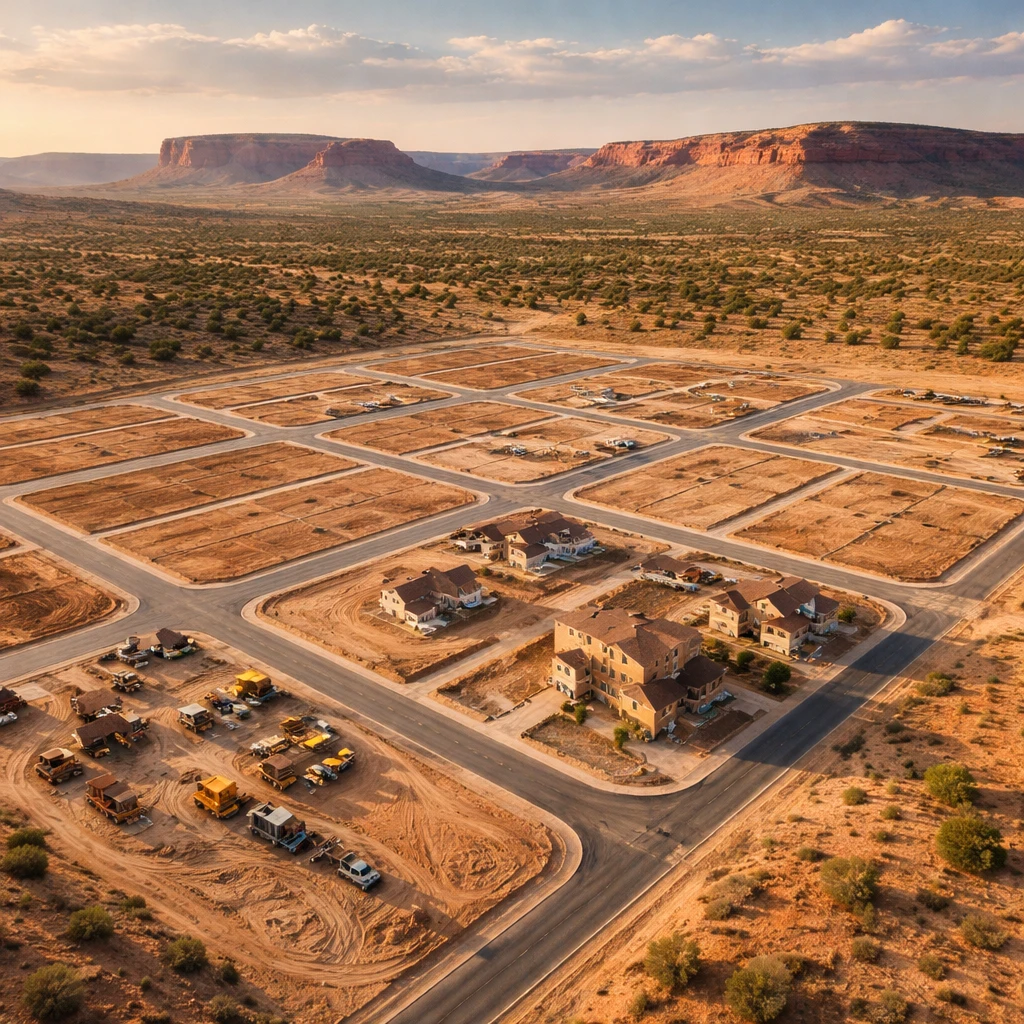
AMREP operates two core segments: Land Development and Homebuilding. The land development side sells developed and undeveloped parcels to national, regional and local builders, commercial and industrial developers, and others. The homebuilding segment runs a local homebuilder in New Mexico offering standard floor plans and elevations.
Why investors should care: AMREP is small, nimble, and conservatively capitalized. Its balance sheet metrics indicate low financial leverage and substantial liquidity, which matters in real estate where financing and project timing can be the difference between profit and loss. At a time when many builders carry higher leverage and larger land commitments, AMREP’s no-debt profile and positive free cash flow create a margin-of-safety for downside-focused trades.
Key fundamentals and recent performance
Use the numbers: market capitalization sits around $145.8 million and enterprise value is roughly $96.4 million, implying net cash or asset value beneath the surface. Trailing metrics show a price-to-earnings ratio near 11.3 and a price-to-book around 1.05 — not expensive for a real estate developer with tangible assets and recurring cash generation.
| Metric | Value |
|---|---|
| Market Cap | $145,839,948 |
| Enterprise Value | $96,446,492 |
| Free Cash Flow (annual) | $13,110,000 |
| P/E (trailing) | ~11.3 |
| P/B | ~1.05 |
| EV/EBITDA | ~6.84 |
| Debt to Equity | 0 |
| Current Ratio | ~25.6 |
| Quick Ratio | ~10.95 |
Recent reported results show volatility: for the quarter ended 01/31/2024 AMREP reported net income of $92,000, or $0.02 per diluted share, compared with $16.574 million, or $3.12 per diluted share, in the same period a year earlier. For the first nine months of that fiscal year the company reported net income of $2.546 million versus $22.107 million a year prior. Revenues in that comparable quarter were $12.689 million (up from $9.117 million year-over-year for the quarter), while first-nine-month revenues fell to $31.833 million from $35.975 million year-over-year.
These numbers show two things: sales activity can be lumpy but the company still converts a meaningful share of revenue into free cash flow; and earnings can swing materially year-over-year, which argues for capital protection when initiating exposure.
Valuation framing
At roughly $146 million market cap and $96 million enterprise value, the market is not pricing AMREP as a high-growth story. The stock trades around 11-12x reported earnings and roughly 1.05x book value. EV/EBITDA near 6.8 and price-to-free-cash-flow near 11.17 indicate the business generates real, investible cash relative to its market price.
Qualitatively, that places AXR in a value/defensive bucket among small-cap developers: not cheap enough to be a deep-value play, but cheap enough that downside is cushioned by liquidity, low leverage, and steady FCF. For a trader focused on limiting downside, those are the attributes that matter more than top-line growth narratives.
Catalysts
- Insider buying: public reports of insider purchases in 2024 signal management confidence and can buoy sentiment.
- Seasonal recovery in homebuilding activity in key markets — faster land sales would drive revenue and improve margins.
- Any strategic land monetizations or selective dispositions could convert asset value into cash, tightening the gap between EV and market cap and supporting the share price.
- Low leverage: the absence of debt reduces risk of distress financing and enhances the company's ability to act on selective opportunities.
Trade plan - entry, stops, targets and horizon
Trade stance: defensive long with strict risk controls.
- Entry: Buy at $27.50.
- Stop loss: $24.00 (if price closes below this level, exit to preserve capital).
- Target: $33.00 (first target where traders can take partial profits).
- Time horizon: mid term (45 trading days) - allow roughly seven to nine weeks for catalysts or re-rating to unfold; this timeframe captures seasonal improvements in builder activity and allows time for sentiment to respond to any operational updates.
Rationale: entry near current trading levels keeps the exposure modest and allows for a disciplined stop that limits downside to roughly $3.50 per share. The $33.00 target gives room for a move above the 52-week high ($29.00) if sentiment or a catalyst (insider buying follow-through or asset monetization) materializes. If the trade moves in our favor, consider trimming to cost and letting a remaining tranche run with a trailing stop.
Position sizing and risk framing
This trade is sized for capital preservation. Given historical earnings swings, keep a single-trade allocation small relative to your total portfolio (single-digit percent exposure of a risk capital sleeve). The stop is intended to capture adverse macro or execution shocks rather than normal intraday volatility; if the stock gaps below the stop on a news event, accept the loss and redeploy capital elsewhere.
Counterarguments
1) The housing cycle could weaken further: if regional demand for housing softens, AMREP’s land sales and local homebuilding business would be pressured, eroding revenue and margins. That could push cash flow down and invalidate the defensive thesis.
2) Earnings volatility is meaningful. The company reported only $92,000 net income in the quarter ended 01/31/2024 and a much larger prior-year comparator. This demonstrates sensitivity to timing of transactions and project recognition; one poor quarter could reignite selling pressure even if balance sheet metrics remain healthy.
Key risks (at least four)
- Cyclical housing demand: A downturn in housing activity or regional buyer weakness would reduce land sales and home closings, hitting revenue and cash flow.
- Execution and timing risk: Land monetizations and project deliveries can be lumpy; timing differences can materially swing quarterly earnings.
- Liquidity events / market re-rating: Small-cap stocks can gap lower on sentiment shifts, which is why a strict stop is crucial.
- Concentration risk: As a small operator with one homebuilding franchise and focused land holdings, local market problems can disproportionately affect results.
- Short interest and volatility: Elevated short activity on trading days can exacerbate intraday moves; while short interest has been variable, short-volume spikes have occurred in recent months.
What would change my mind
I would reduce conviction if I saw any of the following: management discloses material impairments or land writedowns; free cash flow materially weakens below the current run rate ($13.11 million); or a sustained deterioration in local housing demand where AMREP operates. Conversely, a stronger-than-expected rebound in land sales, repeatable quarterly cash conversion, or a strategic asset sale that meaningfully improves net cash per share would increase conviction and warrant a more aggressive position size.
Bottom line: AMREP is a small, conservatively capitalized player in land development with enough liquidity and free cash flow to offer a downside-cushioned trade. For traders focused on protection, buy at $27.50, use a tight stop at $24.00, and target $33.00 over a mid-term window of 45 trading days. Keep position sizes modest and respect the stop — the company’s small size and earnings lumpy nature make protection the right first priority.
Quick reference trade checklist
- Entry: $27.50
- Stop: $24.00
- Target: $33.00
- Horizon: mid term (45 trading days)
- Risk level: medium
Note: This trade is structured to prioritize capital protection given AMREP's earnings variability despite attractive balance sheet characteristics. Respect the stop and let the trade unfold over the stated mid-term horizon.