
Stock Markets May 4, 2026 11:49 AM

Spirit Seeks Court OK to Pay $10.7M in Retention Bonuses as Operations Wind Down

Bankrupt carrier requests payouts to remaining staff and asks permission for expedited asset sales after ceasing flights

By Nina Shah FLYYQ
Spirit Seeks Court OK to Pay $10.7M in Retention Bonuses as Operations Wind Down
FLYYQ

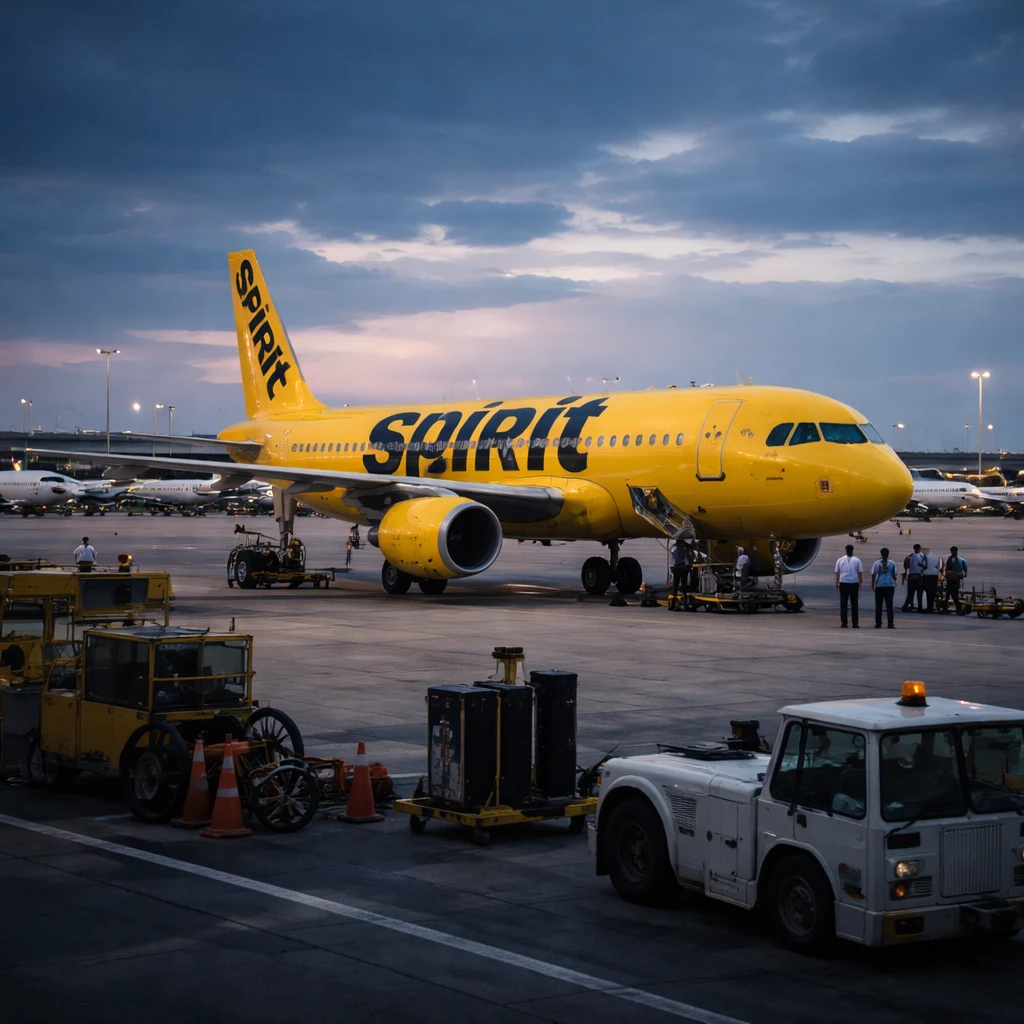
Spirit Airlines has petitioned a U.S. bankruptcy court to authorize $10.7 million in retention bonuses for employees who remain through the carrier's orderly wind-down after flights stopped. The company says it has no feasible path to restructure or continue operations, lacks funds to run an organized auction of aircraft and equipment, and is seeking authority either to sell assets quickly or to abandon them so lenders can repossess them.

Key Points

  • Spirit asked a U.S. bankruptcy court to approve $10.7 million in retention bonuses averaging about $76,000 per participant for employees who remain through the shutdown - impacts airline operations and labor.
  • The carrier says it lacks funds for an organized auction of aircraft, engines and equipment and seeks court permission for expedited sales or to abandon assets so lenders can repossess them - affects aviation asset markets and secured lenders.
  • Negotiations over a proposed $500 million government bailout that would have given the government up to 90% of Spirit’s equity collapsed after creditor objections; the carrier also reported $100 million in additional fuel costs since March 1 - relevant to government policy, creditor recoveries, and energy-driven operating costs.

Spirit Airlines asked a U.S. bankruptcy court on Monday to approve $10.7 million in retention bonuses for employees who remain to assist with the company's wind-down following the cessation of flights on Saturday. The request comes as the discount carrier moves to orderly end operations after concluding it cannot continue as a going concern.

Under the proposal, the retention payments would be paid to staff who stay on during the shutdown, averaging roughly $76,000 per participating employee. The carrier is also seeking approval to provide additional, unspecified sums to its top three executives. Those executive payments are intended to replace compensation that would have been payable under annual incentive and pre-bankruptcy cash incentive plans.

Chief Financial Officer Fred Comer said in a court filing that Spirit no longer has viable avenues to either reorganize or resume operations. Comer wrote that the company had spent months attempting a reorganization and came close to success, but ultimately concluded that an orderly wind-down was the only remaining alternative.

Spirit told the court it does not have the funds necessary to run an organized auction for its aircraft, engines and other equipment. Because of that funding shortfall, the carrier is seeking permission to conduct expedited sales of those assets or, alternatively, to abandon assets so that secured lenders can take repossession.

The carrier had been negotiating with the Trump administration over a proposed $500 million government bailout that would have supported an exit from bankruptcy and provided the government with as much as 90% of Spirit’s equity. Those discussions fell apart after objections from certain creditors.

Spirit’s financial position had been under pressure even before the recent surge in fuel costs. The company disclosed an incremental $100 million in fuel expenses since March 1, which it attributed to higher jet fuel prices following U.S.-Israeli strikes on Iran that disrupted traffic through the Strait of Hormuz. Those elevated fuel costs were cited as an additional strain on an airline already struggling to return to profitability.

The company’s court filing frames the requested retention payments as necessary to staff the wind-down process and complete required tasks during the cessation of operations, while the asset-sale authority would provide mechanisms to monetize assets despite the lack of funds for a traditional auction.


Contextual note: The filing lays out both the financial constraints and the operational steps Spirit says are required to implement an orderly wind-down, including staffing incentive payments and alternatives for disposition of aircraft and other equipment.

Risks

  • Failure of the proposed bailout and the lack of other restructuring options increase the likelihood of an orderly wind-down rather than a restart - risk to employees, creditors, and market participants in the aviation sector.
  • Absence of funds to run an organized auction could lead to faster, potentially lower-yield asset sales or lender repossession, creating uncertainty for asset recoveries and secured creditors.
  • Rising jet fuel expenses, including $100 million in incremental costs since March 1 tied to disruptions in shipping routes, continued to pressure margins and were cited as a material financial strain on the carrier.

More from Stock Markets

U.S. Futures Largely Flat as Hormuz Clashes and Oil Spike Temper Appetite May 4, 2026 Regis and Vault agree all-share merger to form A$10.7 billion gold producer May 4, 2026 Brockman Reveals Near-$30 Billion OpenAI Stake and Financial Links to Altman During Musk Trial May 4, 2026 California Launches Probe into Federal Deal That Scrapped Central Coast Offshore Wind Project May 4, 2026 Pilots Union Praises Kirby’s Merger Vision, Stops Short of Endorsing Deal May 4, 2026