
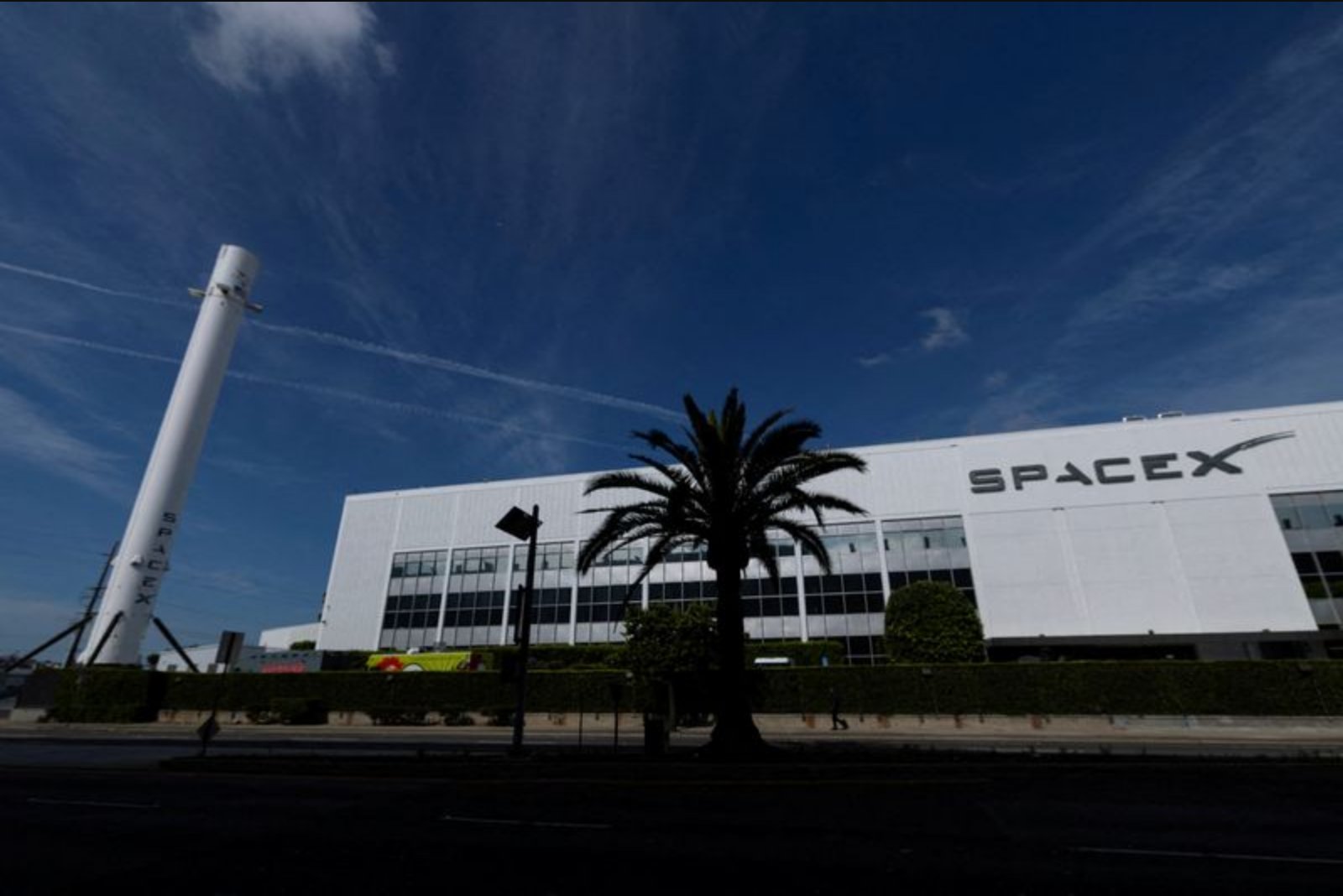
SpaceX has disclosed in a confidential IPO filing that it has spent more than $15 billion to develop its next-generation Starship rocket, a figure that dwarfs the roughly $400 million the company invested in creating its Falcon 9 workhorse. The filing frames Starship as the focal point of SpaceX’s future growth strategy as the company edges toward public markets with an asserted valuation of $1.75 trillion.
Starship is a towering two-stage vehicle that SpaceX says will enable a range of new capabilities - from launching larger numbers of Starlink satellites per mission to carrying humans to the moon and Mars, and ultimately hosting thousands of satellites designed to run artificial intelligence workloads as an alternative to terrestrial data centers. The IPO registration underscores that the company’s most lucrative businesses and many of its long-term ambitions are tightly coupled to Starship’s successful development and operational scaling.
Spending shift and timelines
The $15 billion total, not previously reported, eclipses earlier development outlays for Falcon 9 and highlights the markedly different scale and complexity of the Starship program. In the company’s most recent full year, SpaceX allocated $3 billion to research and development in its space segment, and the filing indicates that the entirety of that R&D spending went to Starship. That $3 billion in 2025 is a pronounced increase from $1.8 billion spent in the space segment the year prior, signaling that Starship now consumes the lion’s share of SpaceX’s development budget.
SpaceX told investors in the filing that it has pursued ‘‘full and rapid reusability at scale, including investing over $15 billion in our next-generation rocket, Starship.’’ The company also set a target for launching its next-generation Starlink satellites, known as V3, in the second half of 2026. The filing indicates that V3 satellites were designed with Starship’s payload bay in mind, and that a single Starship flight could carry up to 60 of the upgraded satellites - a notable rise from the roughly two dozen smaller Starlink units typically lofted by Falcon 9.
Testing record and technological hurdles
Since 2023, SpaceX has flown Starship 11 times in test missions, producing both high-profile failures and technical advances. Among the program’s achievements has been a successful catch of the Super Heavy booster on return, using large mechanical arms intended to speed turnaround and enable the vehicle’s reusability promise. Even with such milestones, the filing is candid that several unprecedented technical and operational obstacles remain before the company could approach what it describes as Musk’s objective of ‘‘thousands of launches per year.’’
Industry observers quoted in the filing emphasize the gap between recent progress and the level of repeatability the program will require. ‘‘They’re getting really close,’’ said Chris Quilty, president of Quilty Space. ‘‘But what we still don’t know, and won’t know for a while is, can they do it repeatedly?’’
The filing and independent analysis highlight multiple scaling challenges. A high flight cadence will require substantial ground infrastructure - including massive fuel supplies and extensive water systems - and a heat shield for the ship capable of surviving many atmospheric re-entries. The Federal Aviation Administration has estimated a single Starship launch uses the energy equivalent of 244 tanker trucks of natural gas. Water usage is also significant; about one million gallons are consumed to suppress intense acoustic vibrations during liftoff. ‘‘There is not enough water in the water system to support the launch of Starship’’ at the scale envisioned, Quilty said.
Another critical technical hurdle identified by the filing is in-orbit refueling, an unproven and delicate operation where Starships would dock with tanker variants of the vehicle to transfer propellant. This maneuver is described as essential for deep-space missions and would itself require multiple Starship launches to accomplish. Hans Koenigsmann, former SpaceX Vice President of Flight Reliability and one of the company’s early employees, called in-orbit refueling ‘‘probably the last big challenge.’’ He added: ‘‘If that happens, then I think from then on it should be more or less, success.’’
The filing notes the propellant handling complexities. Liquid oxygen must be maintained at extremely low temperatures and sealed to prevent boil-off and leakage in space. ‘‘In-orbit refueling is complex, and we have not yet demonstrated or attempted it,’’ SpaceX states in the document. The company cautioned investors that it ‘‘may not be able to develop, commercialize, scale, or successfully implement these or other strategic initiatives on the timelines we currently anticipate, or at all.’’
Manufacturing and the Texas development hub
SpaceX has concentrated Starship development and manufacturing at an extensive site in South Texas known as Starbase. The facility is organized to support a production rhythm more akin to commercial aircraft manufacturing than that of traditional expendable rockets, reflecting the program’s ambition to build and fly Starships at high cadence.
Koenigsmann warned of the risks of scaling factory capacity while the vehicle is still changing. ‘‘When you build up your production before you actually have the product, you obviously run the risk that if you change your mind... every change on the rocket has a change on the factory now too,’’ he said. Testing setbacks have driven hundreds of design changes to Starship, underscoring the degree to which the vehicle differs from Falcon 9.
SpaceX is preparing for its first Starship test launch since October, marking the program’s longest gap between flights. The upcoming mission will debut a V3 prototype of Starship. Company engineering leadership describes Version 3 as a substantial redesign from prior ship variants. ‘‘Version 3 is basically a clean-sheet design of the ship,’’ Charlie Cox, Director of Starship Engineering, said in a video posted by SpaceX. Cox added that the V3 configuration incorporates dozens of key upgrades and is intended for orbital flight, longer-duration demonstrations in space, and crewed lunar missions - the latter being the most exacting mission type the company envisions.
NASA has already contracted SpaceX for human lunar landings under its Artemis program, paying at least $3 billion toward such work. Kent Chojnacki, Deputy Manager of NASA’s Human Landing System program, told SpaceX that ‘‘a lot’s gonna be dependent on this first flight’’ of V3, and that the Version 3 design will form the basis for the Human Landing System.
Key points
- SpaceX has invested over $15 billion in Starship development, far exceeding the roughly $400 million spent on Falcon 9.
- Starship now accounts for the majority of SpaceX’s space-segment R&D, with $3 billion spent in 2025 compared with $1.8 billion in the prior year; the vehicle is central to Starlink V3 deployments and human lunar landing ambitions.
- Major technological and infrastructure challenges remain - including in-orbit refueling, heat-shield durability for repeated reentries, and massive ground systems for fuel and water - that will affect launch cadence and operational economics.
Risks and uncertainties
- Schedule and technical risk - Starship has undergone 11 test flights since 2023 with mixed results, and SpaceX warns it may not meet current timelines or achieve full commercialization of planned capabilities.
- Infrastructure constraints - Ground support limitations, notably water supply and fuel logistics, could impede the ability to sustain a high launch rate, impacting satellite deployment plans and related commercial opportunities.
- Unproven in-space operations - In-orbit refueling has not yet been demonstrated; failure to develop reliable refueling would restrict deep-space missions and the operational profile assumed for many Starship-based ambitions.
SpaceX’s IPO filing presents Starship as both the company’s largest near-term investment and its keystone for future business lines. The filing makes clear that while technical breakthroughs such as booster recovery have advanced the program, substantial work remains before the company can claim routine, high-frequency reusability at the scale envisaged in its strategic plans.