
Stock Markets May 1, 2026 12:55 PM

Saks Global Moves Restructuring Plan to Creditor Vote After Court Approval

Plan would eliminate existing equity, grant control to senior lenders following $1.5 billion in committed financing tied to Chapter 11 exit

By Hana Yamamoto
Saks Global Moves Restructuring Plan to Creditor Vote After Court Approval

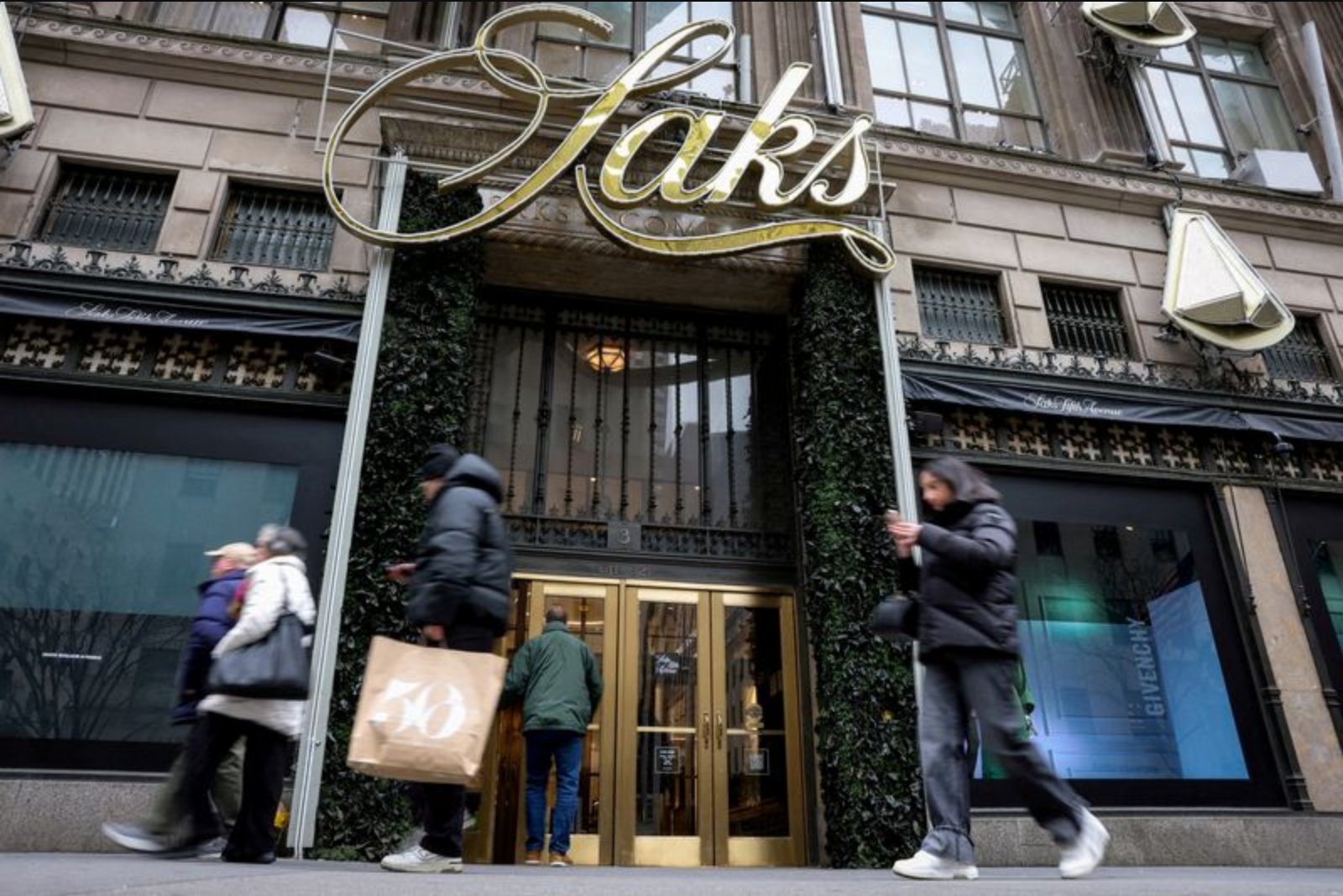
A U.S. bankruptcy judge has cleared Saks Global to solicit creditor votes on a Chapter 11 restructuring that would extinguish current equity and transfer control to senior lenders who have committed new financing. The plan, which reduces most prepetition debt and follows store closures and repaired vendor relationships, faces a creditor vote due by June 1.

Key Points

  • U.S. Bankruptcy Judge Alfredo Perez approved Saks Global's disclosure statement and authorized solicitation of creditor votes at a Houston hearing.
  • The restructuring would cancel existing equity and place control with senior lenders after they provide $1 billion in bankruptcy financing and pledge $500 million post-emergence.
  • Saks used Chapter 11 to resolve vendor relationships, close its off-price chain, and shutter over half of Saks Fifth Avenue stores; creditor votes are due by June 1.

Saks Global received judicial authorization on Friday to send its Chapter 11 restructuring plan to creditors for a vote, moving a proposed recapitalization one formal step closer to implementation. U.S. Bankruptcy Judge Alfredo Perez approved the company’s disclosure statement and permitted the company to solicit creditor ballots at a hearing held in Houston, Texas.

Under the restructuring proposal, Saks Global’s existing equity would be canceled and governance would shift to the company’s senior lenders. Those lenders have committed to provide $1 billion in new financing through the bankruptcy process and have pledged an additional $500 million following the company’s planned emergence from Chapter 11.

The bankruptcy plan is structured to eliminate most of Saks Global’s prepetition indebtedness and to reduce the company to a smaller operating footprint. The company has already used the protections of Chapter 11 to address strained relationships with key luxury vendors, to wind down its off-price retail banner, and to shutter more than half of its Saks Fifth Avenue locations.

Creditors must cast their votes on the plan by June 1. To win the support of junior creditors, Saks Global has agreed to establish a litigation trust funded initially with $20 million. Court filings indicate the litigation trust is intended to pursue potential claims in the hope of generating recoveries for unsecured and subordinated creditors. The junior creditor group, which is collectively owed about $1.5 billion, would in all likelihood recover nothing without the litigation trust, according to the filings.

Saks Global entered bankruptcy on January 13 with $3.4 billion in debt. Court documents attribute the cash shortfalls that precipitated the filing to complications stemming from its merger with Neiman Marcus, which hindered the company’s ability to reliably restock store inventory and impaired relationships with important suppliers including Chanel, LVMH and Kering.

The court’s approval to move forward with a creditor vote formalizes the timetable for a potential reorganization that relies on new secured financing and the creation of a litigation vehicle to address creditor recoveries. The outcome now turns on creditor ballots and the steps the debtor and lender groups must complete under the Chapter 11 roadmap.

Risks

  • Creditor vote outcome is pending - the plan's implementation depends on ballots being returned by June 1, creating near-term uncertainty for the company's reorganization and stakeholders (impacts: retail and credit markets).
  • Junior creditors face the prospect of no recovery absent the litigation trust; their potential recoveries hinge on litigation outcomes and the $20 million initial trust funding (impacts: unsecured creditors, legal services, and financial markets).
  • The company’s prior inventory and vendor disruptions tied to its merger with Neiman Marcus highlight operational vulnerabilities that affected supplier relationships with high-end brands such as Chanel, LVMH and Kering (impacts: luxury goods suppliers and retail distribution).

More from Stock Markets

U.S. Futures Largely Flat as Hormuz Clashes and Oil Spike Temper Appetite May 4, 2026 Regis and Vault agree all-share merger to form A$10.7 billion gold producer May 4, 2026 Brockman Reveals Near-$30 Billion OpenAI Stake and Financial Links to Altman During Musk Trial May 4, 2026 California Launches Probe into Federal Deal That Scrapped Central Coast Offshore Wind Project May 4, 2026 Pilots Union Praises Kirby’s Merger Vision, Stops Short of Endorsing Deal May 4, 2026