
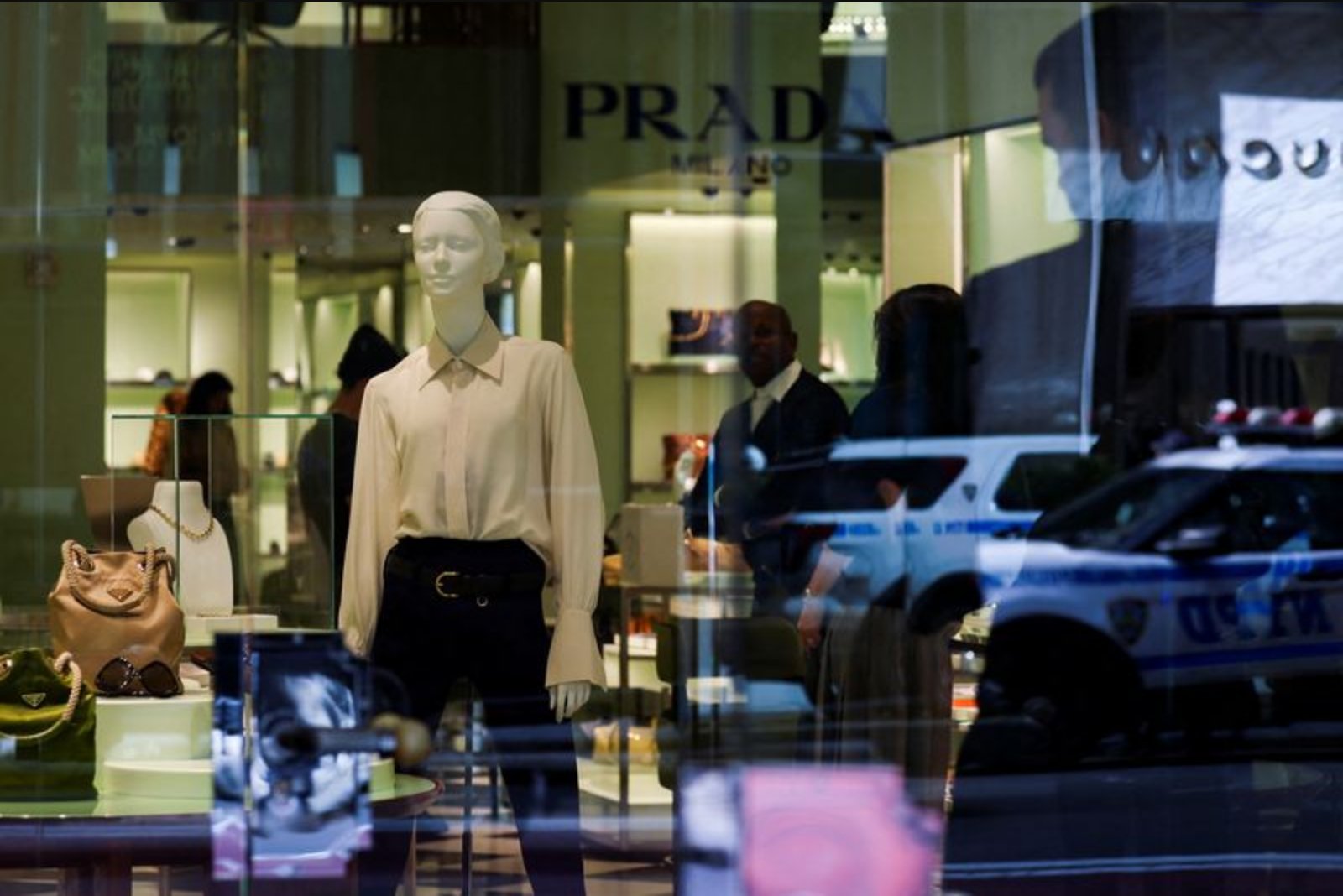
Italian luxury conglomerate Prada said first-quarter revenues rose 3% at constant exchange rates when excluding the contribution from Versace, a brand it acquired last year that is currently being integrated and relaunched. Group sales for the January-March quarter amounted to 1.3 billion euros, slightly below the analysts' consensus of 1.4 billion euros compiled by Visible Alpha (exchange rate used in the report: $1 = 0.8541 euros).
Versace accounted for 143 million euros of the quarter's revenues. The company said the Medusa-head label, which recently appointed Pieter Mulier as its creative director, performed in line with expectations during the period as Prada works through integration and relaunch activities.
Miu Miu, the group's smaller label that was a key driver of top-line growth in the prior year, showed a clear deceleration with sales rising 2.4% in the quarter. Management highlighted the uneven momentum across the portfolio and regions.
Prada cited robust retail demand in the Americas, where organic retail sales grew 15% and supported the group's overall performance. Asia Pacific retail sales increased 5%, with China and South Korea specifically identified as drivers of that growth. Europe, by contrast, recorded a 6% decline in sales, attributed in part to reduced spending by travellers as well as a modest fall in local demand. Sales in the Middle East dropped 22%, a decline the group linked to the conflict affecting that region.
Commenting on the results, Prada CEO Andrea Guerra said: "The group delivered another quarter of growth in a disrupted environment and against the most challenging comparison base of the year," and added that the group aims to deliver above-market growth.
The quarter's figures reflect a mix of positive and negative regional dynamics: strong local demand in the Americas and steady gains in parts of Asia Pacific balanced softer performance in Europe and the Middle East. The contribution from Versace appeared to meet internal expectations as the brand moves through integration and creative leadership changes.
Context and implications - Prada's Q1 performance underscores how concentrated regional strengths can offset localized weakness for global luxury groups. The results also show the potential near-term drag from brands or regions facing conflict or reduced travel-related spending, even as management seeks to expand faster than the market.