
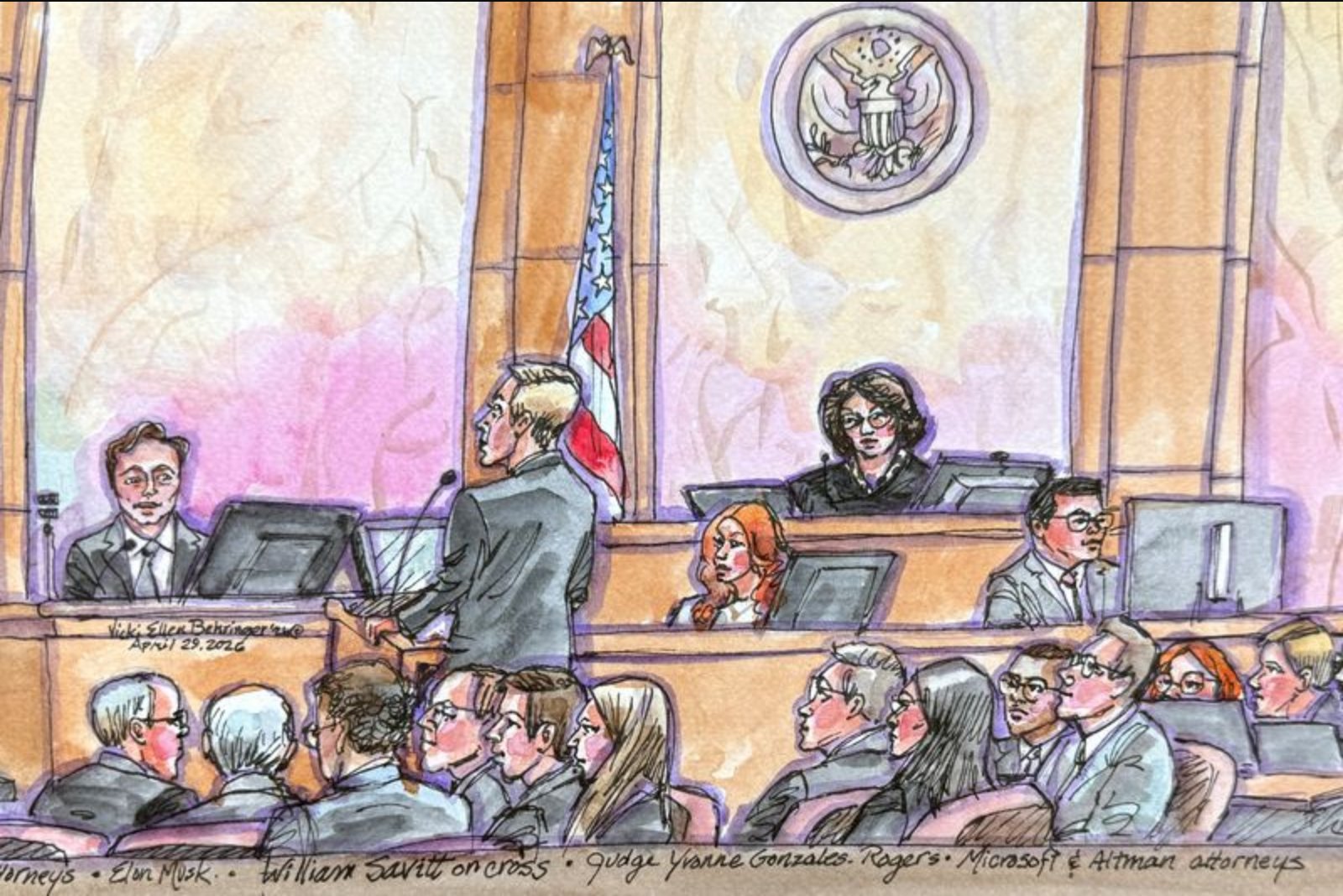
OAKLAND, California - Elon Musk is slated to return to the witness stand on Thursday for a second day of cross-examination in the civil trial he initiated against OpenAI, a case that centers on whether the organization abandoned its stated mission to develop artificial intelligence for the benefit of humanity.
Musk, described in court filings as the world’s richest man, claims that OpenAI, co-founder and CEO Sam Altman and President Greg Brockman persuaded him to provide $38 million in donations by representing the organization as a nonprofit committed to safety. He contends that the group later pivoted to create a for-profit entity that he says benefited its leaders financially.
OpenAI has rebutted those assertions in court filings and testimony, arguing that Musk is motivated by a desire to control the organization and by resentment over its success after his departure from the board in 2018. The company has also told jurors that Musk did not emphasize safety concerns while he was on the board and suggested his lawsuit may be related to competitive aims tied to his own AI efforts through a SpaceX unit, xAI, which OpenAI says trails in user adoption.
During contentious exchanges on Tuesday, William Savitt, representing OpenAI, Altman and Brockman, questioned Musk about text messages and emails that Savitt said showed Musk at times signaled openness to establishing a for-profit vehicle. Savitt also pointed to communications in which Altman kept Musk informed about Microsoft’s investments in OpenAI.
Jurors were shown an email that Musk sent in 2017 to Altman and Brockman in which he described himself as a "fool" for having provided funding to what he believed at the time was a nonprofit endeavor. That email was introduced as part of evidence the defense used to challenge Musk’s claims about what he was promised.
Under questioning by his own lawyer, Steven Molo, Musk testified: "I felt like they had not been honest with me." He added, "What they really wanted to do was create a for-profit where they had as much shareholder ownership as possible." OpenAI has countered that the for-profit structure was created to permit private investment that would help the organization secure computing power and hire leading scientists.
Savitt is expected to resume his cross-examination of Musk for approximately an hour on Thursday. A lawyer representing Microsoft also plans to question Musk during that session. The trial began on Monday and court sources say it is anticipated to last several weeks.
Following Musk’s testimony, the court is expected to hear from a sequence of witnesses that includes Musk’s top aide, Jared Birchall, OpenAI President Greg Brockman, and AI safety expert Stuart Russell.
Context and process
The proceedings have focused on the nature of communications between Musk and OpenAI leadership, the intent behind OpenAI’s structural choices and the motivations each side attributes to the other. Evidence introduced so far includes emails and text messages intended to illuminate what promises were made to Musk and how OpenAI’s strategic direction evolved.
With jurors still hearing testimony and more witnesses to come, the factual record will continue to develop over the coming weeks as both sides present documents and witness accounts.