
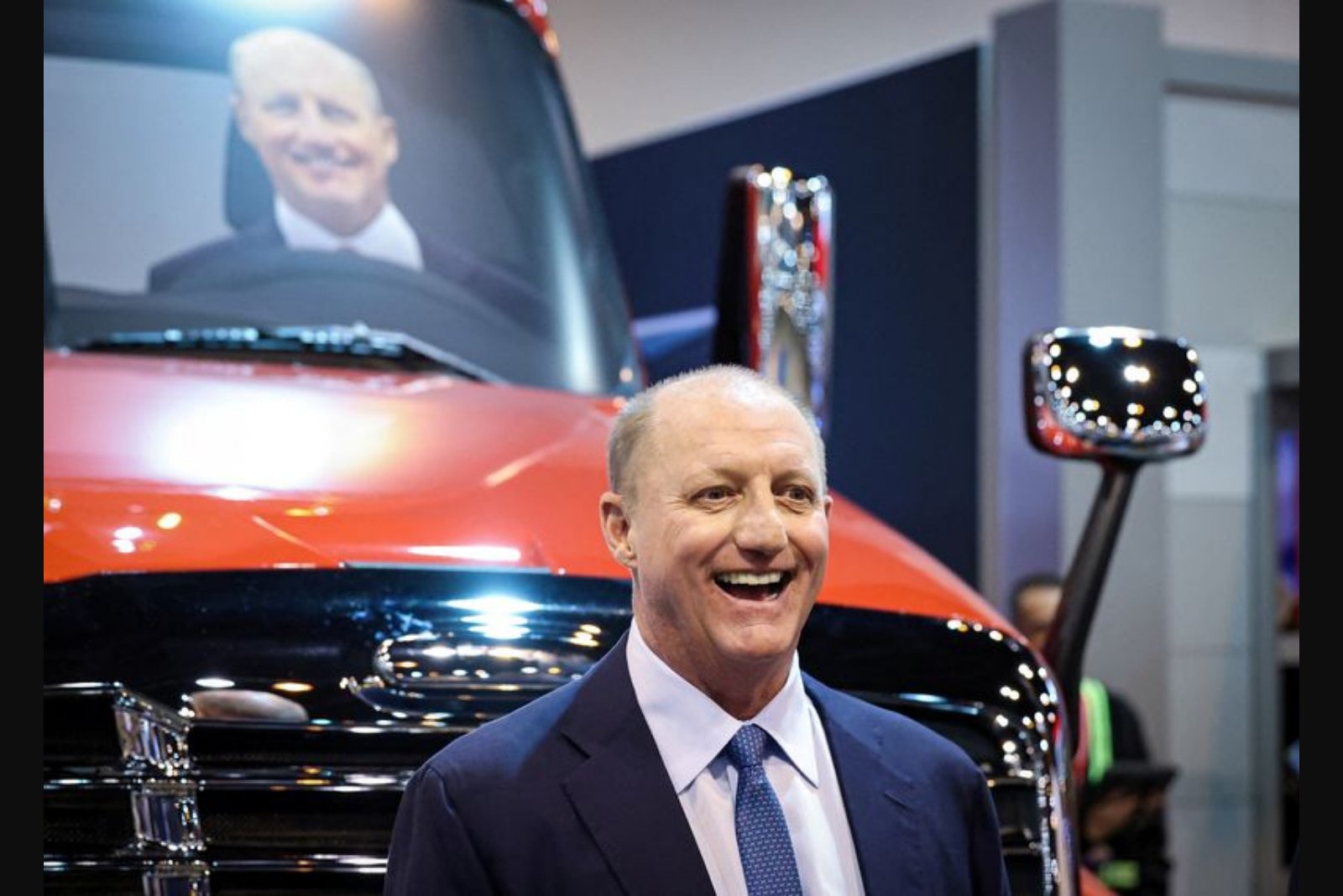
Greg Abel will take the stage for his first official Berkshire Hathaway annual meeting on Saturday, facing a shareholder base eager for a clearer picture of how the conglomerate founded by Warren Buffett will move forward and how management plans to revive a stock that has substantially underperformed major market benchmarks.
Abel, 63, who assumed the role of chief executive in January, must build investor confidence as market attention shifts toward technology and artificial intelligence - areas that differ from Berkshire’s core mix of insurers, retailers, energy assets, industrials and manufacturing businesses. Berkshire’s equity performance has lagged the Standard & Poor’s 500 by 39 percentage points since Buffett announced at last year’s meeting that he would step down. Buffett remains chairman.
Though Buffett had designated Abel as his eventual successor in 2021, the handoff announcement surprised many. The 95-year-old Buffett is expected to watch the proceedings from the audience in an arena in downtown Omaha, Nebraska, as Abel and other senior executives review Berkshire’s operations and respond to shareholder questions.
Longtime shareholder Paul Lountzis, attending his 34th Berkshire annual meeting, described the task ahead bluntly: "Greg has a formidable challenge, replacing the greatest investor who ever lived." He added, "Berkshire is not snazzy, it’s not exciting ... It’s not a fast-growing technology stock. That’s what people are jumping on today."
The broader market backdrop underlines that sentiment. The U.S. Commerce Department’s advance estimate attributed a 2 percent gain in first-quarter gross domestic product in part to AI-related investment, reflecting investor and corporate attention to technology themes. At the same time, the company has several open questions entering the meeting: how higher inflation and weaker consumer sentiment may have affected demand for products and services sold by Berkshire subsidiaries, and how management will allocate the company’s substantial liquidity.
Berkshire is expected to release first-quarter financial results before the meeting begins. Analysts and shareholders will look for confirmation of several billion dollars in operating profit, disclosure of the size of the conglomerate’s large cash stake, detail on the amount of Berkshire’s own stock repurchases, and any changes to its nearly $300 billion equity portfolio.
A concentrated leadership lineup and a revised meeting format
The structure of this year’s meeting will be different from past gatherings. Abel is slated to present for an hour and then take questions for two and a half hours. Joining him in the question-and-answer segment will be insurance chief Ajit Jain and, for the first time, Katie Farmer and Adam Johnson - respectively the CEO of the BNSF railroad and a Berkshire president overseeing the conglomerate’s consumer, services and retail operations.
Tom Russo, a money manager who began attending Berkshire shareholder meetings in 1985, framed the event as a generational turning point: "It’s watching history unfold, a reset for the next generation." Under Buffett and the late vice chairman Charlie Munger, meetings often wandered into broader conversations about the economy, markets and life lessons; the new format focuses more narrowly on Berkshire’s businesses and operational details.
The meeting also anchors a larger weekend of shareholder activity in Omaha, from investment conferences and private gatherings to a downtown exhibit hall where attendees can shop for items sold by Berkshire-owned companies. On Friday, some visitors bought mementos featuring both Abel and Buffett, including Squishmallows and spatulas. Lori Boyd, a retired special education teacher from Blue Springs, Missouri, expressed confidence in the succession: "Warren wouldn’t turn it over to somebody who wasn’t competent."
Capital allocation and portfolio management remain central
Among the most pressing challenges Abel inherits is deciding how to deploy Berkshire’s year-end $373 billion cash pile. The company resumed stock repurchases in March after nearly two years without buybacks, but it has not completed a needle-moving acquisition in about a decade. Several of Berkshire’s businesses have shown sluggish performance, with consolidated operating profit declining 6 percent in 2025 and revenue growth effectively flat.
Shareholders are also likely to press Abel on his stewardship of Berkshire’s massive equity holdings. Unlike Buffett, Abel does not have a public professional track record as a stock picker. By February, however, he was overseeing 94 percent of Berkshire’s stock investments, with investment manager Ted Weschler accountable for the remaining 6 percent. Buffett’s perspective on succession evolved over time; in 2024 he emphasized that someone who understands whole businesses can also understand stocks.
Governance votes and proxy items
After the question-and-answer session concludes, shareholders will cast non-binding votes on executive compensation and on whether such "say-on-pay" votes should recur every three years. They will also vote on whether Berkshire should publish a report describing oversight of its more than 387,000 employees. The board supports the say-on-pay measures and opposes publication of the employee oversight report.
The results of these votes, and the tenor of the Q&A, may shape investor views about management’s ability to execute on capital deployment, operational improvements and portfolio adjustments in the months ahead.
What to watch during and after the meeting
Investors will be watching disclosures in the first-quarter report and comments from Abel and the executive team for signals on several fronts: the precise size of the company’s cash reserves, the scope and pace of share repurchases, any appetite for larger acquisitions, and changes to the nearly $300 billion equity portfolio. Answers to those questions will factor into how the market judges Berkshire’s prospects under its new chief executive.