
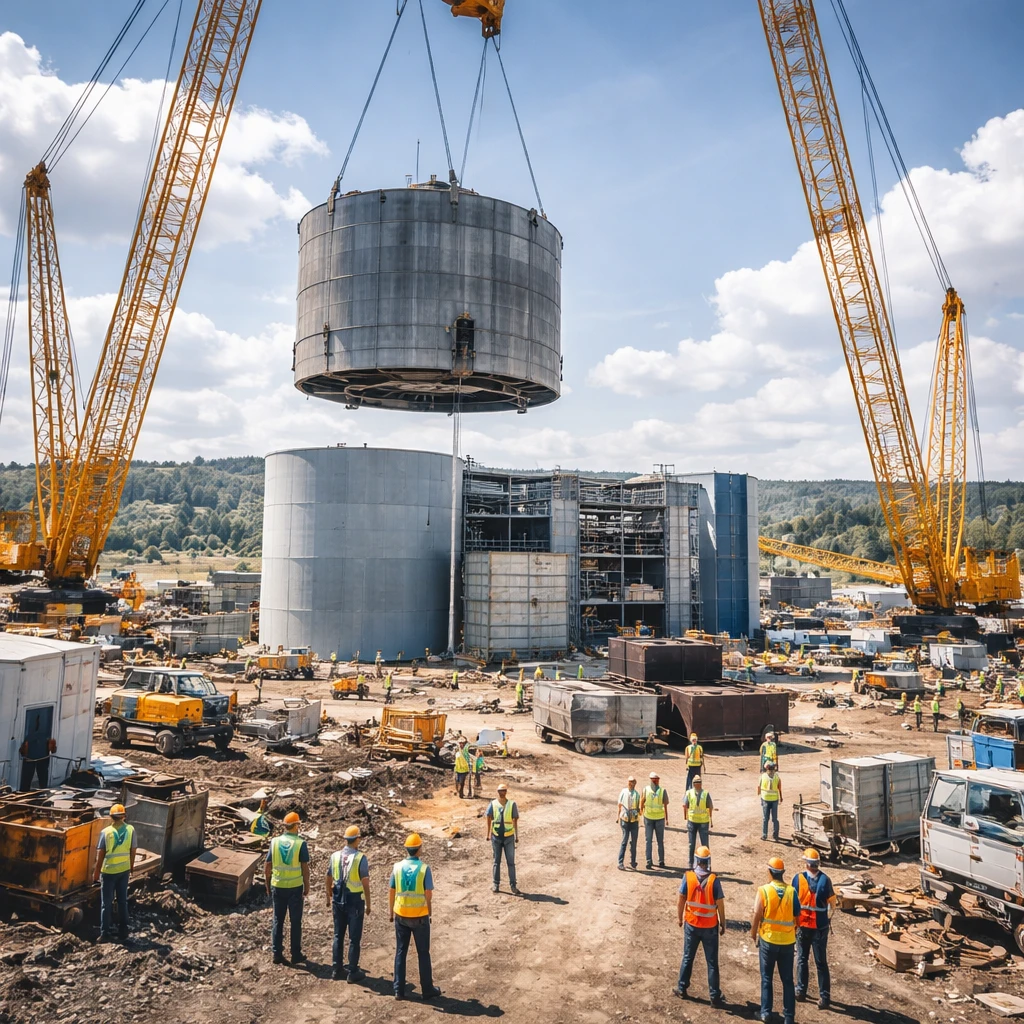
The White House announced that a joint venture between GE Vernova LLC (NYSE:GEV) and Hitachi Ltd (TYO:6501) will invest $40 billion to develop small modular reactors (SMRs) in Tennessee and Alabama. The disclosure appeared in a White House fact sheet issued on the same day President Donald Trump met with Japanese Prime Minister Sanae Takaichi in Washington.
This $40 billion commitment is included within a broader $73 billion energy agreement between Japan and the United States, according to the fact sheet. As part of that larger arrangement, Tokyo will also provide investment for gas-fired power plants located in Pennsylvania and Texas.
The fact sheet accompanying the announcement described expanded economic cooperation beyond specific power projects. It highlighted plans to strengthen critical mineral supply chains and to increase collaboration on technology and defense, indicating the energy commitments are one element of a wider bilateral economic agenda.
Officials said the push for additional energy infrastructure, and for unconventional sources such as SMRs, is occurring alongside rising electricity demand tied to the artificial intelligence industry. The fact sheet linked that growing demand with the need to expand electricity generation capacity.
Small modular reactors differ from conventional nuclear plants in scale and development profile. As noted in the White House document, SMRs generally have lower generation capacity than traditional reactors but can be manufactured and deployed more quickly than larger units. The joint venture, operating under the name GE Vernova Hitachi Nuclear Energy, had earlier in the week indicated plans to build SMRs in Southeast Asia.
The $40 billion announcement had been largely signaled earlier in the week, and the White House fact sheet formalized the scope of the projects and their place within the bilateral energy package. The document was released just hours after the leaders met in Washington, underscoring the investments as a central component of the Japan-U.S. economic cooperation laid out by both governments.
The combination of direct investment in U.S. nuclear SMR projects and parallel investments in gas-fired generation in Pennsylvania and Texas reflects a multi-pronged approach within the $73 billion agreement. The fact sheet framed these energy projects alongside initiatives to shore up supply chains for critical minerals and deepen technology and defense partnerships between Tokyo and Washington.