
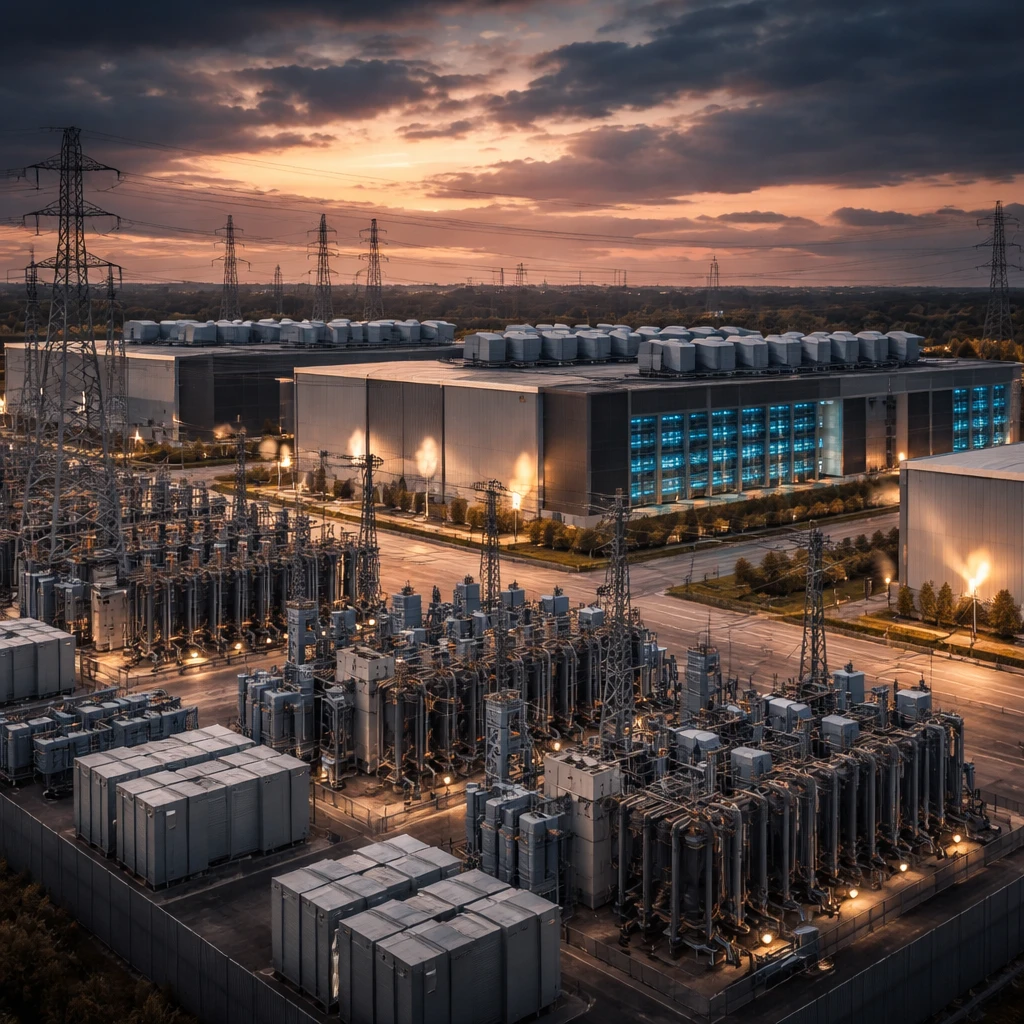
Investors and analysts are increasingly viewing a group of ex-Bitcoin mining operators as attractive plays on the AI infrastructure cycle, driven by a simple but scarce input - reliable access to electricity. Market participants say demand for data center capacity dedicated to artificial intelligence is accelerating faster than supply, and firms that secured large power footprints during their crypto-mining phase could find those assets suddenly much more valuable.
Jefferies initiated coverage on five companies that have been transitioning from cryptocurrency mining toward developing data centers tailored for AI workloads. The investment bank assigned Buy ratings to Cipher Mining Inc (NASDAQ:CIFR), Hut 8 Corp (NASDAQ:HUT), Terawulf Inc (NASDAQ:WULF), and Core Scientific Inc (NASDAQ:CORZ). Riot Platforms (NASDAQ:RIOT) was started with a Hold rating.
In its research, Jefferies identified power availability as the binding constraint on AI data center expansion, estimating that North America will add roughly 66 gigawatts of new data center capacity between 2025 and 2030 - a figure the analysts believe will still fall short of anticipated demand.
The analysts pointed to a pronounced gap between leasing activity and actual capacity deliveries. Jefferies estimated that in 2025 alone more than 15 GW of colocation leases were executed while just 3.3 GW of new capacity was delivered, underscoring the imbalance between tenant demand and construction completions.
Jefferies projects that the North American colocation data center market could grow from about $30 billion in annual revenue in 2025 to roughly $92 billion by 2030. That expansion, the firm argued, would greatly exceed the economics available from Bitcoin mining and shift the revenue profile for operators holding large power footprints.
Among the companies under coverage, analysts highlighted several factors they see as key differentiators: the quality of tenants a company can attract, the ability to finance new builds, and execution on delivering capacity. Firms that secure investment-grade hyperscaler tenants - including deals tied to major cloud providers such as Amazon and Google - are expected to benefit from lower financing costs and higher market valuations.
Jefferies expressed particularly favorable views on Cipher Digital and Hut 8, citing their established relationships with hyperscalers and connections to a Google-backed cloud provider, Fluidstack. Core Scientific was singled out for having already delivered 243 megawatts of AI infrastructure capacity, the most among the peer group covered by the bank.
Riot Platforms, despite a sizable footprint in Texas, received a more cautious assessment. Jefferies noted investor skepticism about Riot's ability to land a major hyperscaler lease beyond an existing retrofit agreement tied to AMD equipment.
The analysts also flagged regulatory uncertainties as a potential constraint on expansion. Multiple U.S. states are either considering or moving forward with limits on new data center developments amid concerns around electricity demand, water consumption, and environmental impacts; states referenced include Virginia, Georgia, Pennsylvania, and Maine.
These dynamics place energy-intensive infrastructure players at the intersection of technology demand and power availability. Companies that converted cryptocurrency-era power contracts and sites into colocation-ready or hyperscaler-ready data centers may find themselves competing for a rapidly tightening resource - electric supply capacity - as AI workloads proliferate.
Investors assessing this group should weigh which operators can secure high-quality tenants and financing, and which can deliver capacity on schedule, while monitoring regulatory measures at the state level that could constrain future development.