
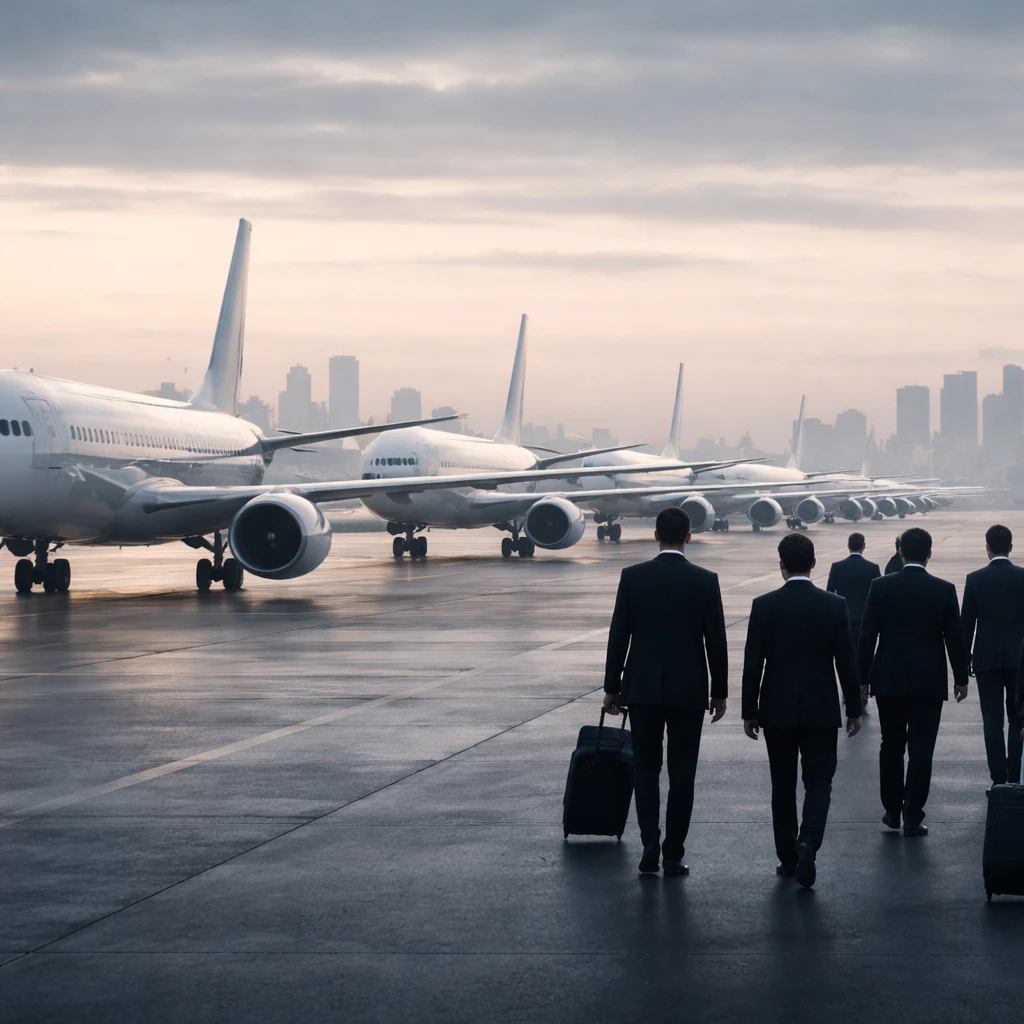
Shares of Boeing Co. slipped approximately 4.4% midday on Thursday despite an announcement by President Donald Trump that China agreed to purchase 200 Boeing jets after his meeting with China's leader Xi Jinping in Beijing. The transaction, as described by the U.S. president, would represent Boeing's first sizable order in China in nearly a decade.
The announcement and what is known
President Trump said the agreement included 200 "big" Boeing aircraft and noted that Boeing had sought 150 but secured 200. The precise models and the breakdown of narrowbody versus widebody planes were not disclosed publicly, leaving the aviation community and investors without clarity on the order's composition.
Market commentary has pointed to the lack of detail as a possible driver of the stock's weakness, particularly since some expectations ahead of the announcement had suggested Chinese carriers might order as many as 500 Boeing 737 Max jets in addition to some widebody aircraft. The disparity between those earlier expectations and the announced 200-plane deal may have influenced investor sentiment.
Context of the talks
The announcement followed bilateral talks between President Trump and President Xi, which covered a range of issues between the two largest economies. U.S. Treasury Secretary Scott Bessent had said earlier on Thursday that he anticipated a headline-making order for Boeing during the U.S. visit. He also indicated discussions around broader purchases, including energy and agricultural goods, plus potential Chinese investment in non-strategic areas within the United States.
For Boeing, the agreement marks the end of a prolonged negotiation period with Chinese carriers and concludes what has been described as an extended order drought in the country's aviation market. China had not unveiled a major Boeing order since President Trump's previous visit in 2017. Historically, Beijing has tended to procure aircraft in bulk and allocate them among state-owned airlines.
Unfulfilled prior commitments
The article notes that in January 2020 China committed to buying $77 billion in U.S.-made goods, including aircraft, but that pledge did not materialize after the Covid pandemic curtailed air travel. That earlier commitment and its subsequent non-fulfillment are part of the background to the current announcement and investor expectations.
At present, important details about the 200-plane agreement remain unspecified, leaving market participants to assess the development with incomplete information.