
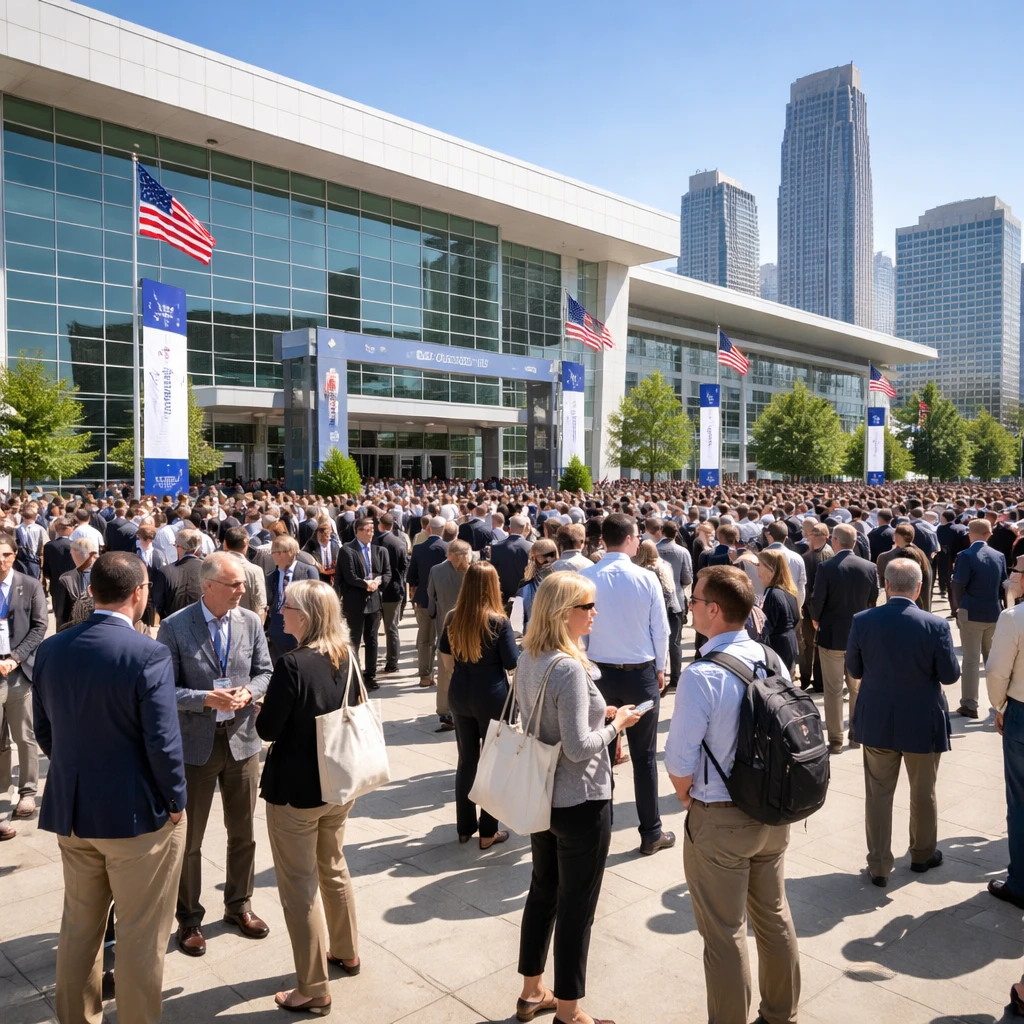
Berkshire Hathaway’s flagship shareholder weekend is taking place in Omaha, Nebraska, marking the first large-scale meeting since Warren Buffett ended his 60-year run as the conglomerate’s chief executive. The event - the largest annual corporate gathering in the United States - culminates with Berkshire’s annual meeting on Saturday, where management will lay out business progress and answer investor questions.
Greg Abel, Berkshire’s new CEO, is scheduled to speak for about one hour on the company’s businesses and then field shareholder questions for 2-1/2 hours. Three other senior leaders at Berkshire will also answer questions from shareholders: Ajit Jain, who runs the company’s insurance operations; Katie Farmer, chief executive of BNSF railroad; and Adam Johnson, CEO of NetJets and the company officer responsible for consumer products, services and retailing subsidiaries. The meeting will be livestreamed on cnbc.com.
This profile summarizes the key facts about Greg Abel, Warren Buffett and Berkshire Hathaway that frame the meeting and the leadership transition under way.
Greg Abel
Gregory Edward Abel was born on June 1, 1962, in Edmonton, Alberta, and is a University of Alberta graduate. He joined Berkshire in 2000 when Berkshire acquired a majority stake in MidAmerican Energy - today known as Berkshire Hathaway Energy - where Abel previously worked. He became CEO of that business in 2008 and held the role for a decade.
Abel was promoted in 2018 to vice chairman of Berkshire with oversight of all non-insurance subsidiaries. Shareholders were alerted in 2021 that he was Buffett’s expected successor after late Vice Chairman Charlie Munger let the information slip at that year’s annual meeting. Buffett announced his own planned retirement as CEO and the timing at last year’s meeting.
Residing in Des Moines, Iowa, Abel regularly commutes roughly 135 miles (217 km) west to Berkshire’s Omaha headquarters. He is a hockey fan who coaches his son’s team. In 2022 he sold his 1% stake in Berkshire Hathaway Energy to Berkshire for $870 million, a transaction that makes him widely believed to be a billionaire. Abel owns about $179 million of Berkshire shares, including $14.6 million he bought in March with his after-tax salary, and he has said he intends to purchase additional shares with future pay.
Warren Buffett
Warren Edward Buffett, born August 30, 1930, in Omaha, remains Berkshire’s executive chairman. Buffett took control of Berkshire in 1965 after prevailing in a dispute with prior management of the then-troubled New England textile company; that original textile business closed in 1985. Buffett continues to go to the office daily and is available to advise or assist Abel on investments, though the final decision-making authority rests with the CEO.
Forbes estimated Buffett’s net worth at $140.7 billion as of Wednesday, a ranking that put him 12th globally, despite his having donated more than half of his Berkshire shares to charity since 2006. Those donations include more than $47 billion to the Gates Foundation and more than $17 billion to four family charities. Buffett’s remaining Berkshire holdings - which constitute nearly all of his wealth - are to be distributed by his three children after his death. Donations to the Gates Foundation are expected to stop after Buffett’s death; when asked on March 31 on CNBC whether the donations might cease sooner, Buffett demurred.
As of March 4, Buffett owned 13.7% of Berkshire’s stock and controlled 30.2% of its voting power. His son Howard Buffett is expected to assume the role of non-executive chairman after Warren Buffett dies or is no longer able to serve.
Key facts about Berkshire Hathaway
Leadership
- Greg Abel - chief executive, with day-to-day oversight of Berkshire Hathaway Energy, the BNSF railroad, industrial and building products businesses, the Pilot truck stop business, and the McLane grocery distributor.
- Warren Buffett - executive chairman.
- Ajit Jain - vice chairman, with day-to-day oversight of Berkshire’s insurance businesses.
- Adam Johnson - president and CEO of NetJets, with day-to-day oversight of Berkshire’s consumer products, service and retailing businesses.
Financials
Berkshire Hathaway reported net income of $66.97 billion in 2025, down 25% from a record $89 billion in 2024. Operating profit from Berkshire’s businesses decreased 6% to $44.49 billion from $47.44 billion. Revenue was essentially unchanged at $371.44 billion. The reported net income figure included both realized and unrealized gains on Berkshire’s stock investments, and it also incorporated $8.26 billion of writedowns related to two investments - Kraft Heinz and Occidental Petroleum.
Through Wednesday, Berkshire shares were down more than 5% in 2026 while the S&P 500 was up 4%. Across the long sweep from 1965 through 2025, Berkshire shares delivered compounded annual gains of 19.7%, outpacing the S&P 500’s 10.5%. Investors who owned Berkshire continuously over that entire period would have seen a total gain of 6,099,294%, versus a 46,061% gain for the S&P. The bulk of Berkshire’s outperformance occurred in earlier decades when the company was smaller; more recently, long-term performance has tended to resemble the index, with occasional periods of notable over- or underperformance over shorter horizons.
Operating businesses and equity holdings
Among Berkshire’s operating companies are: Alleghany, Benjamin Moore, Berkshire Hathaway Automotive, Berkshire Hathaway Energy, BNSF, Borsheims Fine Jewelry, Brooks, Business Wire, Clayton Homes, Duracell, Forest River, Fruit of the Loom, Geico, General Re, HomeServices of America, IMC International Metalworking, International Dairy Queen, Jazwares, Johns Manville, Lubrizol, Marmon, McLane, National Indemnity, Nebraska Furniture Mart, NetJets, Oriental Trading, Pampered Chef, Pilot Travel Centers, Precision Castparts, See’s Candies, Shaw Industries.
At the end of 2025, Apple was Berkshire’s largest single stock holding. Other sizable investments included American Express, Bank of America, Chevron and Coca-Cola. In his first annual letter to shareholders as CEO, Abel suggested that Berkshire regards American Express, Apple, Coca-Cola and Moody’s as core long-term holdings.
Select acquisitions
- See’s Candies, $25 million (1972)
- Geico, $2.3 billion (1996)
- Dairy Queen, $590 million (1998)
- General Re, $15.9 billion (1998)
- NetJets, $725 million (1998)
- Clayton Homes, $1.7 billion (2003)
- PacifiCorp, $5.1 billion (2006)
- Iscar, $6.1 billion (2006-2013)
- Marmon, $8.9 billion (2008-2014)
- Burlington Northern Santa Fe, $26.5 billion (2010)
- Lubrizol, $9 billion (2011)
- NV Energy, $5.6 billion (2013)
- H.J. Heinz, $12.1 billion (majority stake, 2013; now part of Kraft Heinz)
- Van Tuyl (now Berkshire Hathaway Automotive), $4.1 billion (2015)
- Precision Castparts, $32.1 billion (2016)
- Duracell, $2.9 billion (2016)
- Pilot Travel Centers, $13.6 billion (2017-2024)
- Alleghany, $11.5 billion (2022)
- Occidental Petroleum chemical business, $9.5 billion (2026)
Employees and attendance
At the end of 2025 Berkshire employed 387,815 people. Its main office was staffed by 28 people, including Greg Abel and Warren Buffett.
Attendance at Berkshire’s annual meetings has grown dramatically over time: 12 in 1965; about 24 in 1979; 1,000 in 1986; 4,100 in 1995; 13,000 in 2000; 21,000 in 2005; and 42,000 in 2015, which coincided with Buffett’s 50th anniversary running the company.
This year’s meeting is being watched as the company demonstrates its leadership transition in a public forum while managing significant operating scale across industries ranging from insurance and railroads to energy, manufacturing and consumer goods.