
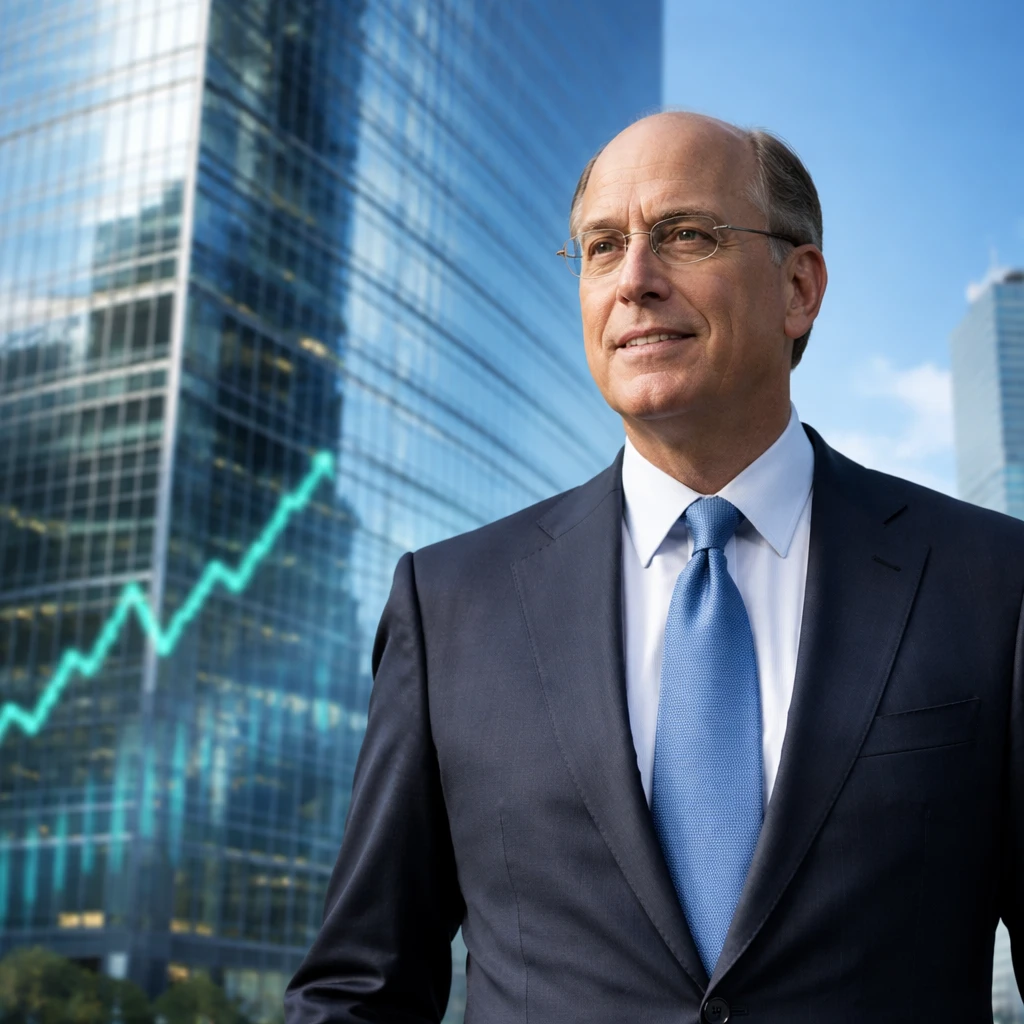
In a significant move involving top-level leadership at one of the world's largest asset managers, BlackRock, Inc. (NYSE: BLK) Chairman and CEO Laurence Fink has divested a portion of his holdings in the company. According to regulatory filings made public on April 29, 2026, Mr. Fink sold a total of 33,900 shares through four separate transactions conducted on April 28, 2026.
The total value of these disposals reached approximately $35.6 million. The execution of these trades spanned a price range between $1,049.6061 and $1,052.4959 per share. A detailed breakdown of the transaction sequence reveals the following specifics:
- First Transaction: 9,715 shares were sold at a weighted average price of $1,049.6061 per share, with individual trade prices ranging from $1,049.01 to $1,050.01.
- Second Transaction: 13,834 shares were sold at a weighted average price of $1,050.4405 per share, with prices fluctuating between $1,050.02 and $1,051.02.
- Third Transaction: 8,225 shares were sold at a weighted average price of $1,051.3548 per share, involving trades priced from $1,051.03 to $1,052.02.
- Fourth Transaction: 2,126 shares were sold at a weighted average price of $1,052.4959 per share, with prices ranging from $1,052.04 to $1,053.03.
Following these disposals, Mr. Fink maintains a direct holding of 230,516 shares of BlackRock common stock. This remaining position is comprised of both common stock and Restricted Stock Units (RSUs). These RSUs are set to vest over a timeframe of one to three years, with the terms specifying that each unit will be settled exclusively through the delivery of an equivalent number of common stock shares.
Market Context and Valuation
The sale occurs while BlackRock's stock is trading at $1,040. This current market price sits below the Fair Value estimate provided by InvestingPro, which suggests that the company's shares may be undervalued at present levels. BlackRock, a firm with a market capitalization of $170 billion, has seen its stock deliver a 15% return over the previous year. Furthermore, the company has demonstrated long-term capital return discipline, having raised its dividend for 16 consecutive years to reach a current yield of 2.21%.
Analyst Outlook and Strategic Developments
Despite the insider selling, recent analyst commentary remains largely optimistic regarding BlackRock's growth trajectory. Following the company's first-quarter performance, several major financial institutions updated their outlooks:
- Morgan Stanley: Established a new price target of $1,393, citing a positive outlook for the company's growth.
- UBS: Raised its price target to $1,270, noting that BlackRock achieved 8% annualized organic base fee growth, which exceeded internal targets.
- Keefe, Bruyette & Woods: Increased its target to $1,240, highlighting the firm's ability to outperform expectations through organic base fee growth.
In addition to these valuation updates, BlackRock has been active in expanding its institutional product ecosystem. The company recently entered into a partnership with OKX and Standard Chartered to introduce a framework that enables institutional clients to utilize BlackRock’s tokenized short-term U.S. Treasury fund as collateral on the OKX trading platform.
Broad market trends also provide context for these movements. Bank of America has noted shifts in equity flows, reporting that they turned positive in April, driven by expectations regarding a potential US-Iran peace deal, even as bond and money market flows showed weakness or negativity.
Key Points
- Insider Divestment: The CEO's sale of $35.6 million in stock represents a significant liquidity event for top management. This can impact investor sentiment within the financial services sector.
- Strong Organic Growth: Analysts from UBS and Keefe, Bruyette & Woods point to organic base fee growth as a primary driver for higher price targets, which impacts the broader asset management industry's valuation models.
- Strategic Tokenization: The partnership with Standard Chartered and OKX regarding tokenized U.S. Treasury funds indicates a move into digital asset infrastructure, impacting the fintech and institutional trading sectors.
Risks and Uncertainties
- Valuation Discrepancies: While analysts have set high price targets, the current trading price remains subject to market volatility, which affects the financial sector's stability.
- Shifting Capital Flows: As noted by Bank of America, changes in equity, bond, and money market flows can create uncertainty for large-scale asset managers like BlackRock.
- Dependency on Organic Growth: The positive analyst outlook is heavily predicated on the company's ability to maintain organic base fee growth; any deceleration here could impact the broader financial markets.