
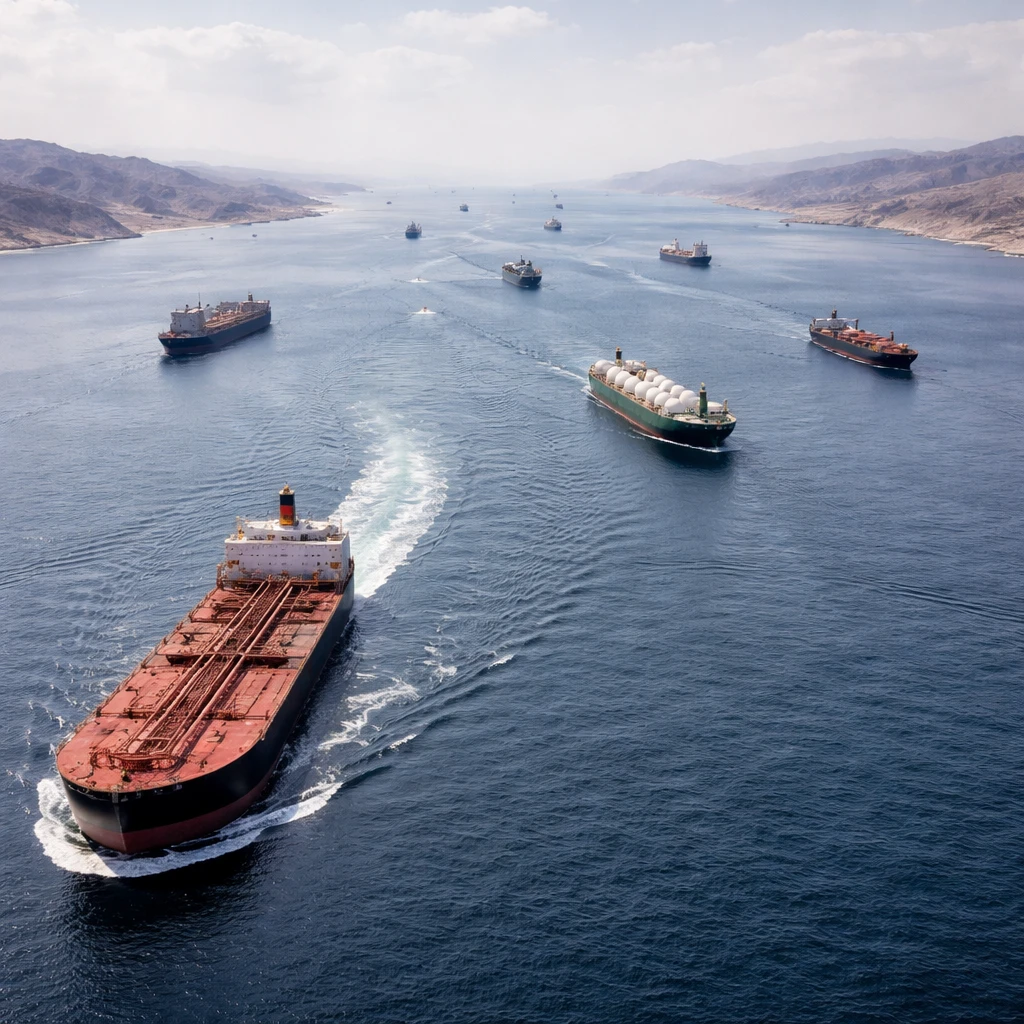
The U.S. Treasury on Friday issued a formal warning to maritime operators and other entities that consider paying Iran for passage through the Strait of Hormuz, saying such payments could expose them to punitive sanctions. The advisory, published by the Treasury's Office of Foreign Assets Control - OFAC - makes clear that authorities are monitoring reported Iranian demands for payments in exchange for safe transit.
The Strait of Hormuz is one of the world's most strategically important shipping lanes, with roughly 20% of global seaborne crude oil and liquefied natural gas flows transiting the narrow waterway. Iran has put forward proposals to charge fees or tolls on vessels moving through the Strait as part of broader proposals it has made in negotiation efforts to end the ongoing conflict with Israel and the United States.
OFAC's advisory states that Tehran's payment demands may take multiple forms. Listed options include conventional fiat currency, digital assets, offsets, informal swaps, and other in-kind payments. The advisory also notes that payments described as charitable donations would not necessarily prevent enforcement - naming the Iranian Red Crescent Society, Bonyad Mostazafan, and accounts held at Iranian embassies as examples of recipients that could be used in such schemes.
The release coincided with a diplomatic development: Iran submitted its latest proposal for negotiations with the United States to Pakistani mediators. The advisory notes this submission as a contemporaneous event and suggests the new proposal could affect prospects for resolving the current impasse over ending the conflict. OFAC emphasized that U.S. authorities are aware of Iranian threats to shipping and the reported demands for payments in exchange for safe passage.
The advisory is aimed at deterring a range of potential payment mechanisms that could be used to secure transit through the Strait, and it underlines that nominally charitable donations are among the payment types under scrutiny. Entities involved in shipping, payment processing, and other related services are advised to take the advisory into account when evaluating requests or pressures to remit funds to Iranian-controlled recipients.
Summary
The U.S. Treasury's OFAC warned that shippers paying Iran tolls for passage through the Strait of Hormuz risk sanctions. The advisory lists multiple payment options Iran might demand and singles out certain charitable and embassy accounts as potential conduits for such payments.
Key points
- OFAC issued an advisory warning that payments to Iran for safe passage through the Strait of Hormuz could trigger punitive sanctions.
- Approximately 20% of global seaborne crude oil and liquefied natural gas flows pass through the Strait, underscoring the route's strategic importance.
- Payment forms cited by OFAC include fiat currency, digital assets, offsets, informal swaps, and in-kind payments - including nominally charitable donations to groups such as the Iranian Red Crescent Society.
Risks and uncertainties
- Entities that comply with Iranian payment demands - regardless of form - may face U.S. sanctions, creating legal and financial risk for shippers and intermediaries.
- The potential for Iranian demands to interfere with a strategic energy corridor adds uncertainty for global crude oil and LNG flows, with implications for energy and shipping markets.
- Payments routed through seemingly charitable organizations or embassy accounts may not shield payers from enforcement, increasing compliance risk for financial institutions and payment processors.