
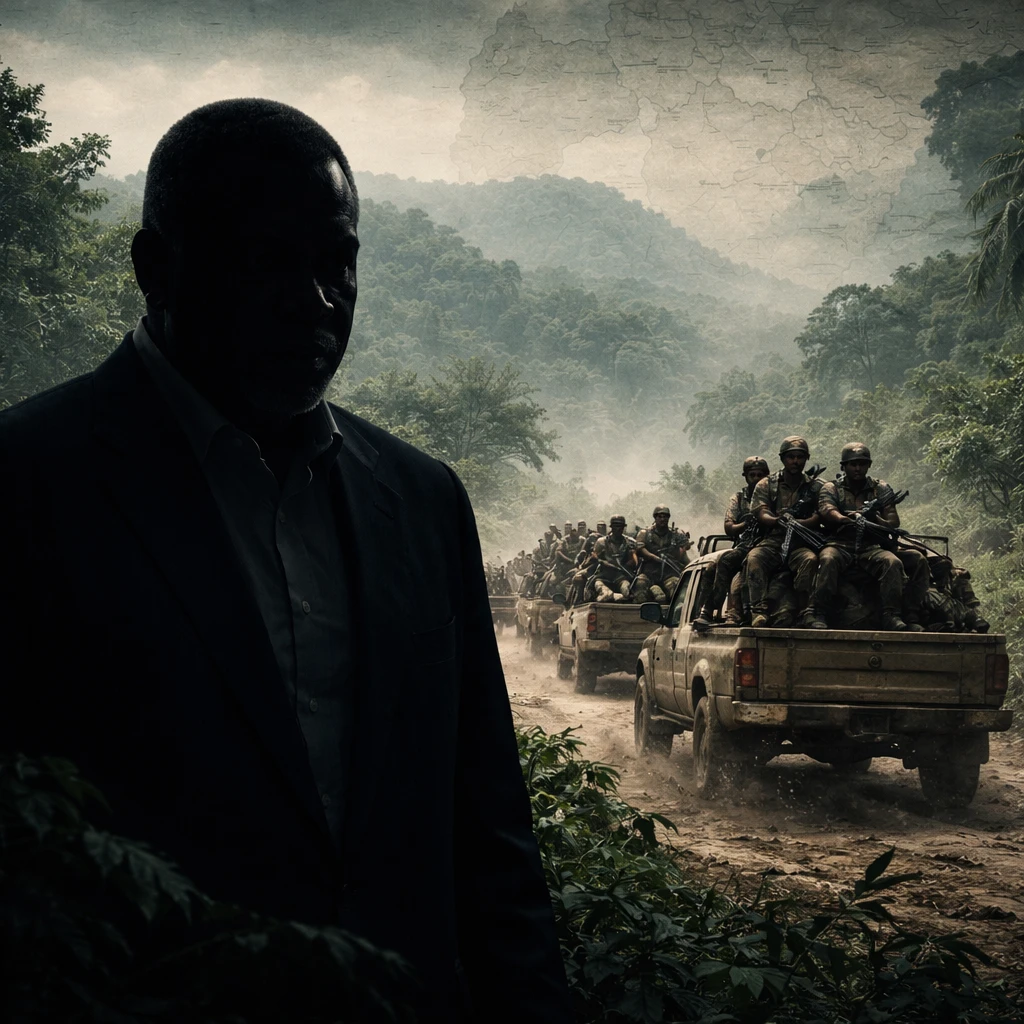
The U.S. Department of the Treasury’s Office of Foreign Assets Control on Thursday imposed sanctions on former Democratic Republic of the Congo (DRC) President Joseph Kabange Kabila, accusing him of materially supporting armed actors that are attempting to unseat the incumbent government.
The Treasury said the sanctions are directed at Kabila because of his involvement with the March 23 Movement, commonly known as M23, and the Congo River Alliance - a political-military coalition aligned with M23’s efforts to topple the DRC government. M23 is described by the Treasury as a Rwanda-backed armed group operating in eastern DRC, while the Congo River Alliance serves as the coalition’s political-military vehicle.
"President Trump is paving the way for peace in the Democratic Republic of the Congo, and he has been clear that those who continue to sow instability will be held accountable," Treasury Secretary Scott Bessent said.
The Treasury statement noted the action aligns with the Washington Accords for Peace and Prosperity, which were signed by the heads of state of the DRC and Rwanda on December 4, 2025.
According to the announcement, M23 has seized substantial areas of territory in eastern DRC, including the provincial capitals of North Kivu and South Kivu - Goma and Bukavu. The Treasury tied M23’s advances to direct military, financial, and logistical support from the Rwanda Defence Force, which itself was sanctioned on March 2, 2026.
The sanctions document lays out specific allegations about Kabila’s conduct. It says Kabila provided financial backing to the Congo River Alliance and encouraged members of the Armed Forces of the DRC to defect and join the coalition’s forces operating in eastern DRC. The Treasury also stated that Kabila attempted, unsuccessfully, to launch attacks on government forces from outside the country.
Background details included in the Treasury notice describe Kabila’s time in office and movements since leaving the presidency. Kabila served as DRC president from 2001 until 2019. The statement says he extended his second term beyond its scheduled 2016 conclusion by delaying elections. It adds that in 2025 he traveled to Goma, where he has resided under the protection of M23.
The sanctions freeze any property and interests in property of Kabila that are located in the United States or are in the possession or control of U.S. persons. The regulations accompanying the designation prohibit U.S. persons from engaging in any transactions involving property or interests in property of the blocked individual.
The Treasury’s action is presented as part of broader diplomatic efforts referenced in the Washington Accords, while the announcement underscores the U.S. intention to hold accountable those identified as contributing to instability in the eastern DRC.
Key points
- The U.S. Treasury sanctioned former DRC President Joseph Kabange Kabila for supporting M23 and the Congo River Alliance.
- The measures block Kabila’s property in the United States and bar U.S. persons from transacting with him.
- According to the Treasury, M23 has taken significant territory in eastern DRC with support from the Rwanda Defence Force; the move is tied to the Washington Accords signed on December 4, 2025.
Risks and uncertainties
- Uncertainty over the practical impact of sanctions while Kabila is reported to be living under M23 protection in Goma.
- Ongoing military activity and territorial gains by M23, supported by the Rwanda Defence Force, increase regional instability.
- The Treasury said Kabila attempted external attacks that were unsuccessful, highlighting continued efforts to challenge the government despite sanctions.