
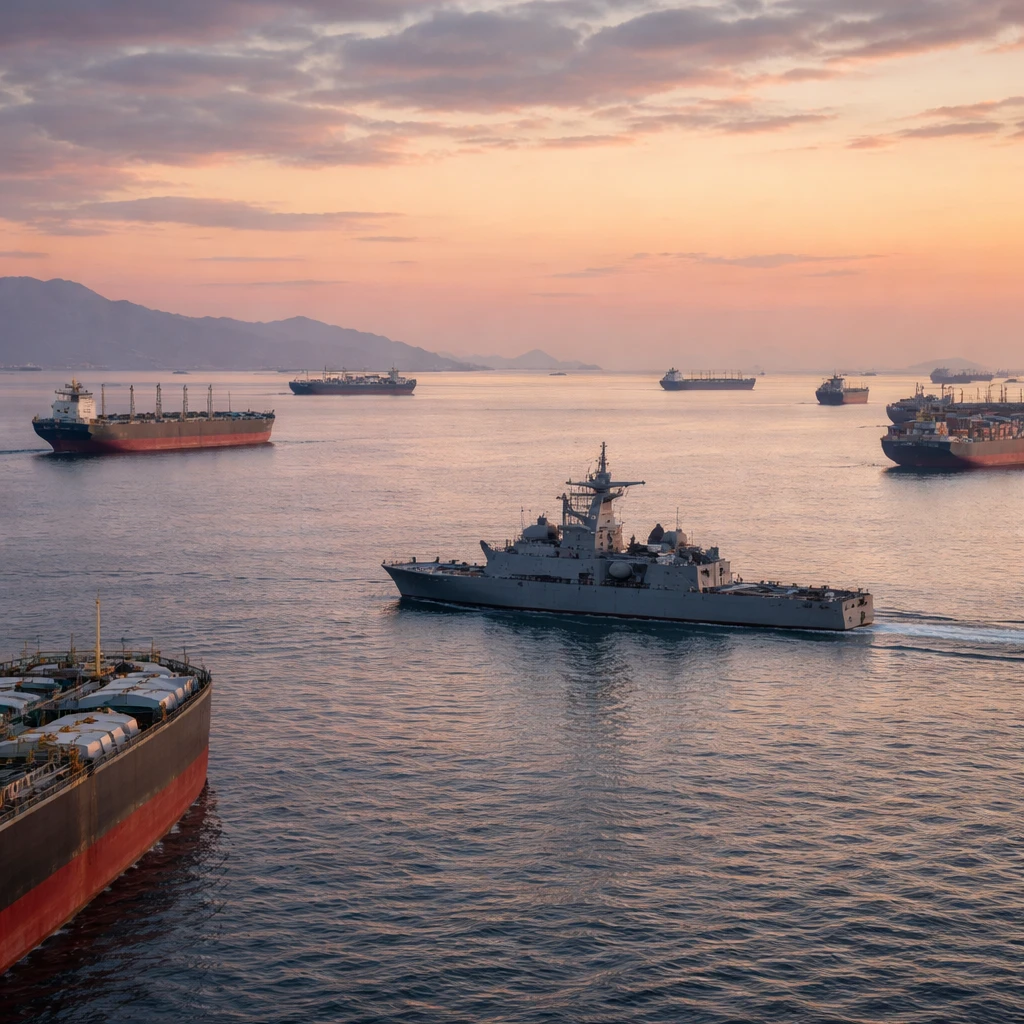
U.S. officials are pressing international partners to sign on to a coordinated effort intended to reopen and secure shipping through the Strait of Hormuz, according to a report citing an internal State Department cable. The proposal, described to diplomats as a "Maritime Freedom Construct," aims to reestablish safe passage and create a framework for responding to incidents that have stalled traffic through the strategically vital waterway.
The plan, as outlined in the cable, would center on sharing operational information, aligning diplomatic responses and enforcing sanctions where appropriate. It could see participation from both diplomatic channels and military forces, depending on how partner governments choose to engage. Diplomats have reportedly been instructed to encourage foreign governments to consider joining the effort.
The move comes amid a period of recurring disruption in the Strait of Hormuz, where Tehran has been accused of targeting commercial vessels. At the same time, U.S. authorities are maintaining a broad blockade on ships with links to Iranian ports. Those developments have left traffic through the chokepoint stalled and made safe navigation an urgent international concern.
Officials say the proposed construct is intended to coordinate responses to such disruptions, although details on membership, command arrangements and specific operational roles were not outlined in the reporting. The issue of securing the Hormuz passage has also become entangled in stalled negotiations between Washington and Tehran, feeding broader anxiety about potential impacts on global energy supplies and oil prices.
The reported push to involve allies more directly in patrols and diplomatic coordination follows public criticism from President Donald Trump of some partners for not doing enough to protect the waterway. Advocates of greater multinational involvement say that a formalized coalition could improve information flow and collective action in response to incidents that threaten commercial navigation.
How many countries will join, what precise mix of diplomatic and military tools will be deployed, and how the construct would interact with existing sanctions regimes remain matters that the reporting did not specify. For now, the proposal represents Washington's effort to build a more structured international response to recurring disruptions in one of the world's most important maritime chokepoints.
Summary
A U.S. initiative, labeled the "Maritime Freedom Construct" in an internal cable cited by a report, seeks international partners to restore safe shipping through the Strait of Hormuz via information-sharing, diplomatic coordination and sanctions enforcement, with possible military involvement. The proposal responds to disruptions attributed to Iran and a U.S. blockade on vessels linked to Iranian ports, and comes as Hormuz remains a focal point in stalled U.S.-Iran talks.