
Economy April 30, 2026 10:14 AM

Trump Rebukes Merz, Urges German Chancellor to Prioritize Russia-Ukraine Over Iran

President says Germany should focus on ending the Russia-Ukraine war and domestic issues rather than intervening on the Iran nuclear threat

By Nina Shah
Trump Rebukes Merz, Urges German Chancellor to Prioritize Russia-Ukraine Over Iran

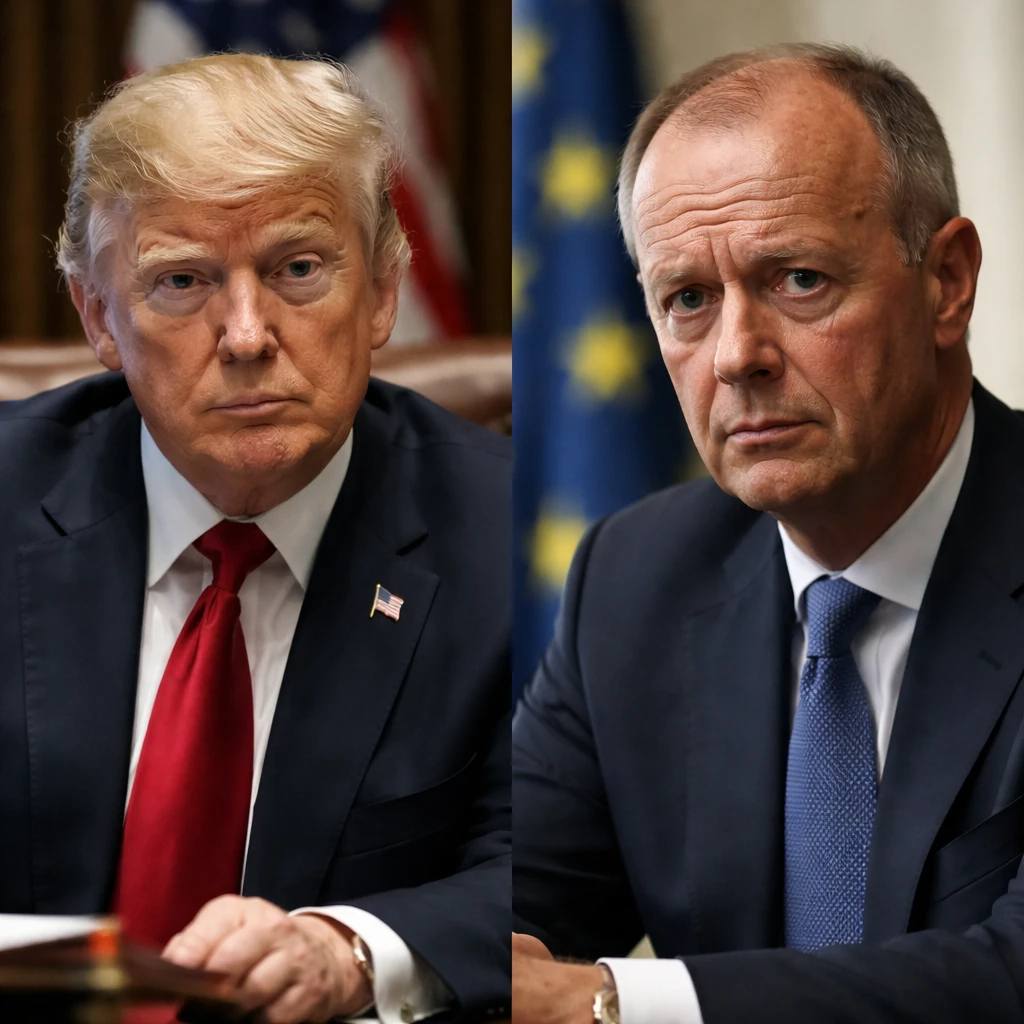
President Donald Trump publicly chastised German Chancellor Friedrich Merz, telling him to concentrate on resolving the Russia-Ukraine conflict and addressing domestic problems instead of involving himself in efforts aimed at the Iran nuclear threat. The remarks, posted on Truth Social, followed an earlier exchange in which Merz said Iranians were humiliating the U.S. in talks to end the two-month-old war.

Key Points

  • President Trump publicly criticized German Chancellor Friedrich Merz in a Truth Social post, urging him to focus on ending the Russia-Ukraine war and on domestic issues rather than intervening on the Iran nuclear threat.
  • The exchange follows an earlier comment by Merz that said Iranians were humiliating the U.S. in talks to end the two-month-old war, and a Tuesday retort from Trump saying Merz did not know what he was talking about.
  • This instance is described as the latest public disagreement between the two leaders over foreign policy matters. The article does not specify direct economic or market effects tied to the exchange.

U.S. President Donald Trump criticized German Chancellor Friedrich Merz on Thursday, urging the German leader to devote more attention to ending the Russia-Ukraine war and to domestic challenges rather than intervening in efforts to counter the Iran nuclear threat.

Trump published his remarks on Truth Social after recent friction between the two leaders over the war in Iran. The president referenced comments made by Merz earlier in the week about negotiations involving Iran.

"The Chancellor of Germany should spend more time on ending the war with Russia/Ukraine (Where he has been totally ineffective!), and fixing his broken Country, especially Immigration and Energy, and less time on interfering with those that are getting rid of the Iran Nuclear threat, thereby making the World, including Germany, a safer place!"

The post follows an exchange that unfolded earlier in the week when Merz said Iranians were humiliating the U.S. in talks to end the two-month-old war. Trump responded on Tuesday by saying Merz "didn’t know what he was talking about," escalating the public disagreement between the two leaders.

The president's message framed his criticism around two themes: urging Merz to pursue a stronger role in resolving the Russia-Ukraine conflict and pointing to internal German issues such as immigration and energy. Trump characterized Merz's record on the Russia-Ukraine war as "totally ineffective" and positioned involvement against the Iran nuclear threat as contributing to global and German security.

Observers will note the exchange is the latest instance of public policy disagreement between the two leaders on foreign affairs. The article does not provide additional detail on subsequent diplomatic exchanges or on direct responses from Chancellor Merz following Thursday's post.

Beyond the posted remarks and the earlier comment by Merz, the report contains no further information on negotiations, timelines, or policy actions related to the Russia-Ukraine war or the Iran nuclear threat.

Risks

  • Heightened diplomatic friction - The article documents a public policy disagreement between the U.S. president and the German chancellor, which could contribute to strained bilateral relations; the article does not describe direct policy consequences.
  • Uncertain negotiation dynamics - The report references comments about talks involving Iran and a two-month-old war but provides no further details on negotiation outcomes or timelines, leaving the state of talks unclear.
  • Domestic and geopolitical focus - Trump urged attention to Russia-Ukraine and to German domestic issues including immigration and energy; the article does not indicate specific policy responses or market impacts stemming from these suggestions.

More from Economy

Yen Holds Near Two-Month High as Dollar Strengthens on Middle East Tensions May 4, 2026 Venezuela’s Monthly Inflation Falls to 10.6% in April, Central Bank Reports May 4, 2026 Customs Agency Says First Electronic Refunds for Trump's Tariffs Could Begin May 12 May 4, 2026 Iran's Araghchi Says Military Action Won't Resolve Hormuz Standoff, Voices Cautious Hope on Pakistan-Brokered Talks May 4, 2026 Westpac’s H1 profit underperforms as margins and credit charges weigh May 4, 2026