
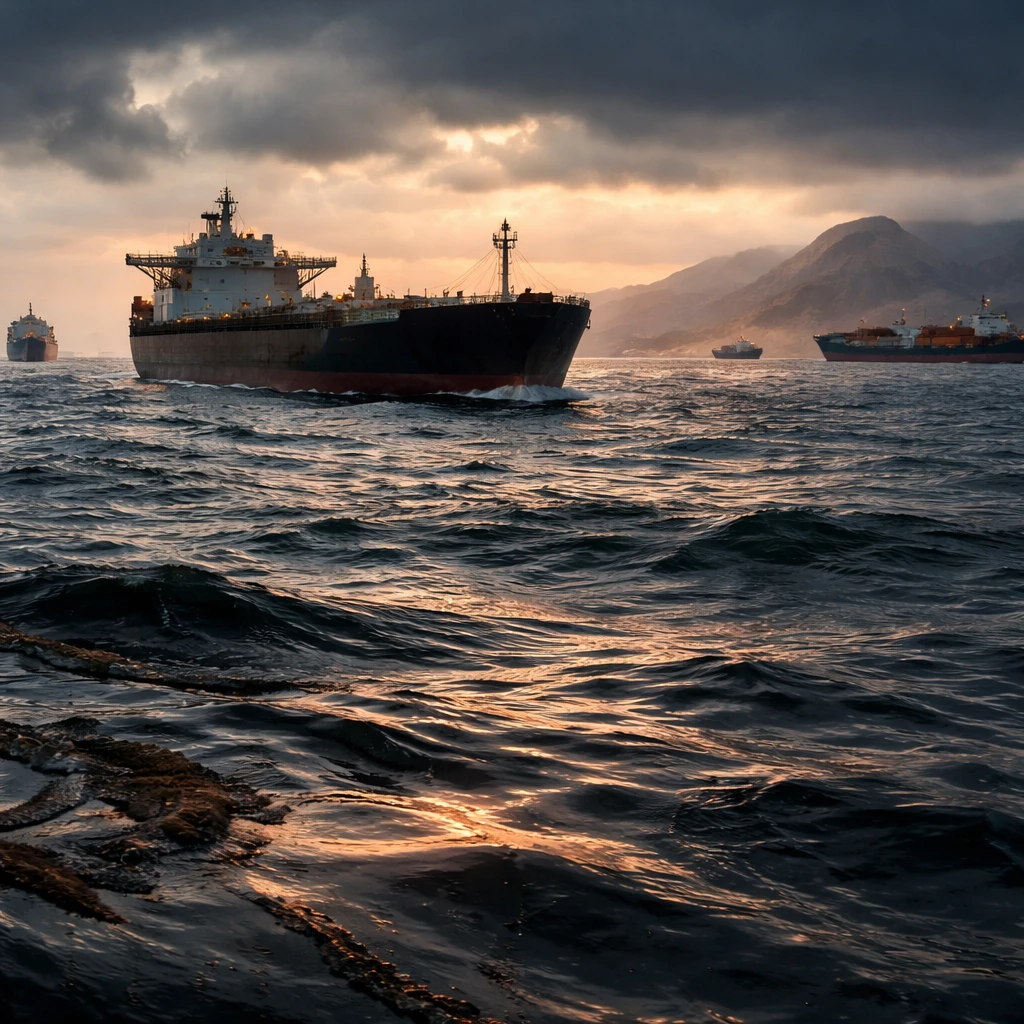
Financial markets are increasingly focused on the economic fallout from the ongoing closure of the Strait of Hormuz as the disruption to global energy flows extends into its third month. With crude prices significantly elevated and commodity costs spilling into industrial and consumer channels, analysts say the global economy faces a difficult combination of slowing activity and persistent inflation - the classical stagflation scenario.
Oil remains the primary gauge
Brent crude is trading at around $112 a barrel, a level that is more than 50% above prices before the conflict began, and prices have continued to trend higher while the disruption persists. Rising energy costs are compressing disposable income for households and raising operating expenses for businesses, while also feeding through to headline inflation readings. Natural gas prices across Europe and Asia have climbed, and fertilizer prices are experiencing a second substantial increase within four years. Some countries, including Sweden, have issued warnings about the potential for jet fuel shortages.
One major bank is modelling an adverse scenario in which Brent rises to $120 a barrel through the end of the year - a trajectory that would, in its view, reduce global growth to a range of between 1.5% and 2% and lift headline inflation to nearly 5%.
Financial conditions and market responses
Despite sharply higher borrowing costs, the shock from elevated energy prices has not yet produced a uniformly clear tightening in overall financial conditions. Market-based indices that measure how asset prices affect financing and prospective growth tightened in the United States to their most restrictive level since the previous spring in March, according to a widely followed index, but those measures have since stabilised, aided by an equity rally in April.
In the euro zone and Japan, financial conditions have tightened modestly, driven primarily by rising borrowing costs. The United Kingdom stands out for a much sharper tightening, which analysts view as a signal of a greater near-term growth hit for Britain compared with some other advanced economies.
United States - inflation pressures more pronounced than growth impact
The regional impact of the shock depends largely on exposure to flows transiting the Strait of Hormuz. In the United States, retail petrol prices are now below their pre-conflict levels, and the effect on growth appears smaller than in Europe, even as inflation pressures persist. "Inflation will still be higher in the U.S. but that’s an oil price impact, the impact on growth is much less in the U.S. than Europe," said Mohit Kumar, chief European economist at Jefferies.
U.S. business activity showed signs of pickup in April, although firms reported higher output prices. Consumer inflation expectations for the year ahead jumped to 4.7% this month from 3.8% in March, and market-implied inflation measures have moved higher as well. Executives at large banks have noted that the risk of stagflation remains a possible downside scenario. "The worst-case scenario of stagflation remained," said JPMorgan CEO Jamie Dimon this week.
Europe - acute vulnerability to energy supply disruption
Europe's dependence on imported energy flows exposes it to a pronounced stagflationary shock. Near-term data are pointing toward elevated price pressures alongside weakening activity. Official measures are expected to show euro zone inflation approaching 3% in the latest reading. Contracting business activity, tighter bank lending standards, and sharply higher inflation expectations are combining to increase strains on economic momentum.
Germany, the euro zone's largest economy, is facing notably higher recession odds. One research institute places the probability of a German recession in the second quarter at 34%, up from 12% in March. Analysts at another major bank have said that a further month of Hormuz disruption would likely suffice to produce at least a technical recession for the euro zone.
In Britain, business activity has been more resilient to date but downside risks have risen. The International Monetary Fund has applied its largest growth downgrade to the UK among advanced economies. Reflecting concerns about inflation, borrowing costs in Europe have climbed faster than elsewhere as markets price in higher policy rates for the UK and the euro zone; two-year gilt yields in Britain have risen about 90 basis points since the conflict began. Equity markets have diverged, with euro zone and UK stocks down about 4% and 5% respectively, while U.S. equities have moved higher.
Asia - broad exposure, uneven impact
Asia takes a large share of Gulf oil and LNG exports, and the region is therefore among the most exposed to supply disruption. Roughly 80% of Gulf oil exports and 90% of liquefied natural gas shipments typically flow to Asian markets, and parts of South and Southeast Asia are already experiencing energy shortages. Financial flows have shifted as foreign investors withdraw from some markets - for example, capital outflows have been notable in Thailand - and several economies in the region are feeling acute stress. The Philippines is cited among the hardest hit, and Indian companies could be placed under pressure as energy costs rise.
Monetary policy responses in the region are diverging. The Bank of Japan has raised its inflation forecasts and appears set to lift rates, while China stands apart: backed by substantial oil reserves and a diversified energy mix, China expanded by 5% in the first quarter. Low domestic inflation has supported gains in Chinese bonds even as other fixed income markets have fallen. Investors have been favouring Chinese battery and electric vehicle firms. Nevertheless, rising energy costs could compress thin manufacturing margins in China at a time when demand for exports is softening.
Bottom line
The persistence of the Horn of Hormuz closure is reshaping risk assessments across markets. Elevated oil and gas prices are feeding inflation while weighing on growth in many places, with Europe and parts of Asia particularly exposed. The United States faces a stronger inflation impulse than a growth shortfall, while China displays resilience but remains vulnerable to margin pressure in export-oriented manufacturing. As the disruption continues, analysts warn that recession probabilities are rising in energy-importing regions and that financial conditions may tighten further if asset repricing extends.