
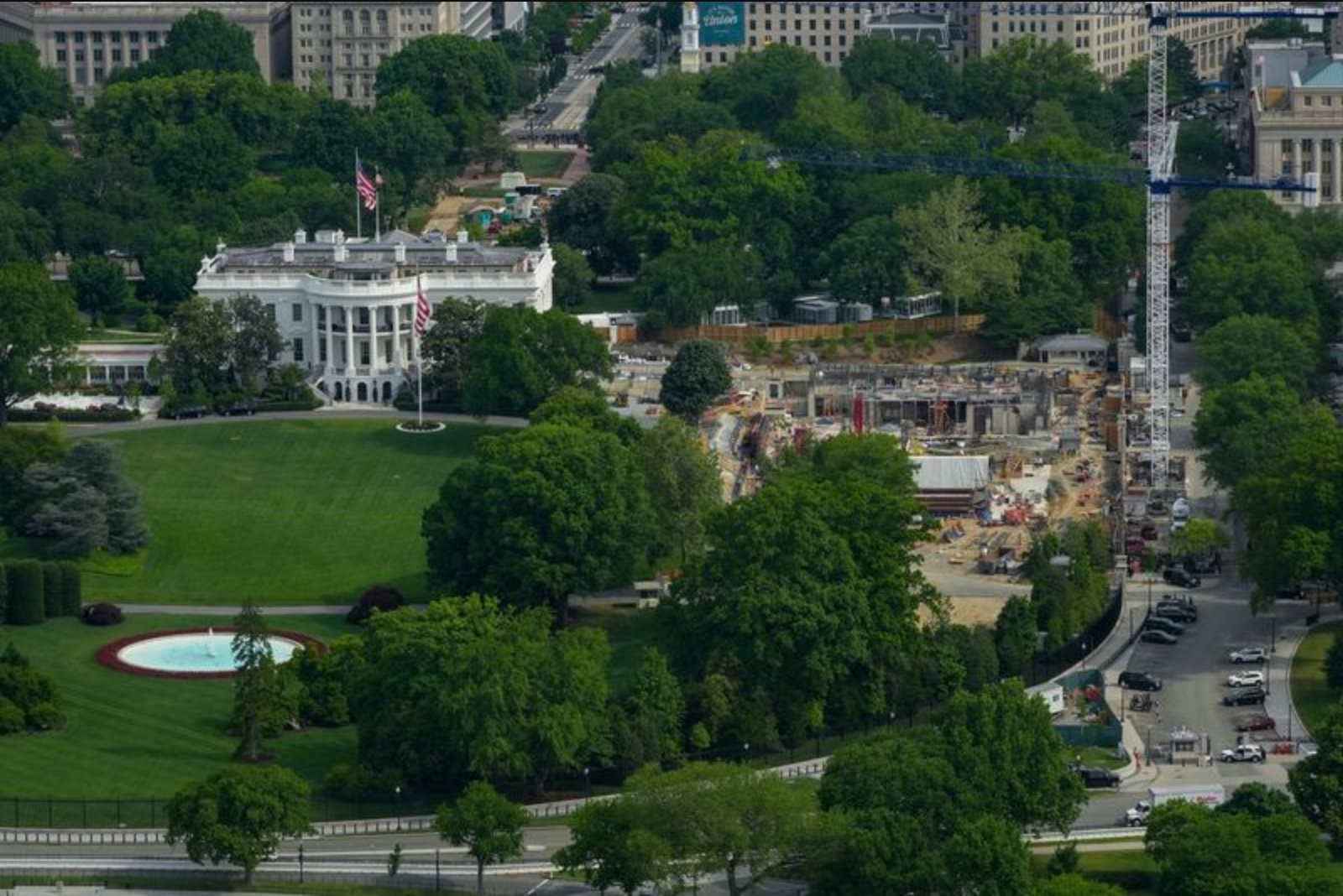
Senate Republicans are advancing a plan to provide $1 billion in taxpayer funding to the U.S. Secret Service this year to support security upgrades that would include the White House ballroom, according to language in a package released late Monday. President Donald Trump has previously said private donations would cover the approximately $400 million ballroom project. The funding package text does not specify how much of the proposed new Secret Service funds, if any, would be applied to the ballroom.
The proposed Secret Service infusion appears inside a broader legislative effort that would commit nearly $72 billion to support Immigration and Customs Enforcement and Customs and Border Protection through 2029. The measure moved forward on a party-line vote.
Committee proposals differ on the scale of funding for immigration agencies. The Senate Homeland Security and Governmental Affairs Committee presented a plan that includes $19 billion earmarked for CBP personnel and $7.5 billion for ICE’s Homeland Security Investigations. Separately, the Senate Judiciary Committee produced a bill allocating nearly $3.5 billion to CBP and roughly $31 billion to ICE for immigration enforcement.
In addition to the sums directed to CBP and ICE, the package language would provide additional resources to the Department of Justice, the Department of Homeland Security and the Secret Service, as well as funding designated for border security measures and technology investments. The exact distribution among the various accounts and priorities is set out across the committee bills that together form the larger package.
The proposal comes after President Trump signed legislation on Thursday that funded most of the Department of Homeland Security through September. That action ended a 76-day partial government shutdown over immigration enforcement concerns that followed the deaths of two Americans in Minneapolis.
Republican leaders in Congress have initiated a reconciliation process to fund ICE and CBP without Democratic support. Reconciliation allows Senate Republicans to bypass the chamber’s 60-vote threshold for advancing most legislation.
Pressure to move funding for a White House ballroom project intensified days after an alleged gunman was apprehended at last month’s White House Correspondents' dinner, an event where President Trump had been scheduled to speak. Republican lawmakers argued that expedited construction and funding were necessary to bolster security.
Senator Chuck Grassley of Iowa, the Republican chair of the Judiciary Committee, placed blame for the recent historic government shutdown on Democrats, saying in a statement that they are "the party of open borders and 'defund the police.'" Grassley added that his panel will "help provide certainty for federal law enforcement and safer streets for American families."
Senator Dick Durbin of Illinois, the top Democrat on the judiciary panel, criticized the Republican approach, saying his colleagues are sidestepping the traditional appropriations process to push through policies he described as unpopular ahead of the end of the president’s term. Durbin said Republicans are acting because they fear losing control of Congress in the November midterm elections and sought to draw a contrast with Democrats' focus on affordability.
Durbin emphasized that "While Americans are struggling to make ends meet as a result of President Trump’s failed policies, Republicans are focused on providing tens of billions of dollars for the president’s vanity ballroom project and cruel mass deportation campaign," in a statement articulating Democratic objections to the funding strategy.
This package and the associated political debate underscore competing priorities within Congress over funding allocations for homeland security and law enforcement, the procedural routes chosen to pass such measures, and disputes over transparency in how taxpayer dollars would be used for high-profile projects.