
World May 5, 2026 03:16 PM

U.S. Describes Strait of Hormuz Mission as Limited, Defensive and Temporary

Defense chief says Project Freedom aims to safeguard commercial ships without seeking confrontation or entering Iranian territory

By Sofia Navarro

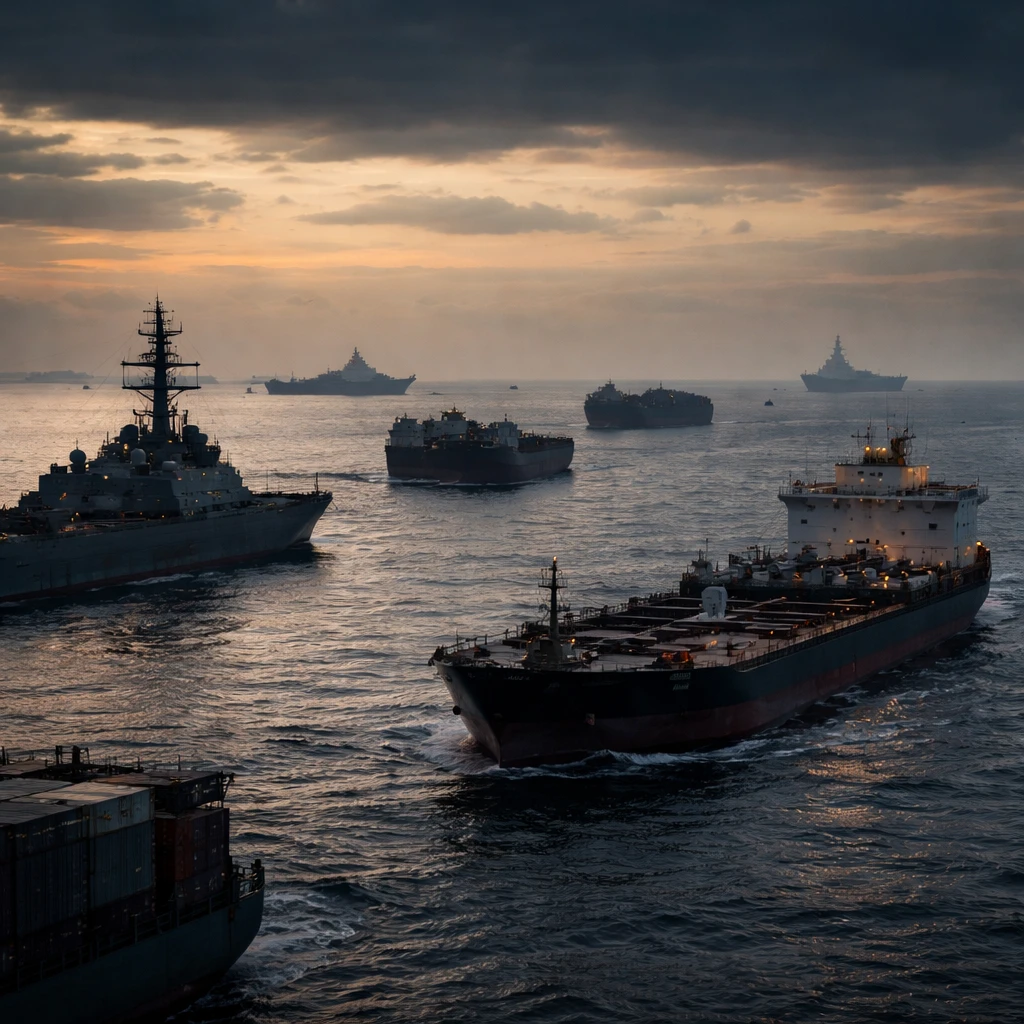
U.S. Defense Secretary Pete Hegseth characterized a newly launched operation to protect commercial vessels in the Strait of Hormuz as a narrowly focused, temporary and defensive effort. Launched by President Donald Trump as Project Freedom, the operation follows Iran's closure of the strait after the conflict began on February 28. U.S. and Iranian forces exchanged fire in the Gulf as both sides vied for control of the waterway.

U.S. Describes Strait of Hormuz Mission as Limited, Defensive and Temporary

Key Points

  • U.S. defense leadership frames Project Freedom as a temporary, defensive mission focused on protecting commercial shipping; sectors potentially affected include maritime shipping and energy transport.
  • Project Freedom was launched by President Donald Trump to secure the Strait of Hormuz from Iran after Iran closed the strait following the start of the conflict on February 28; implications are directly linked to control of a strategic shipping route.
  • The exchange of fire between U.S. and Iranian forces in the Gulf indicates active hostilities even as U.S. officials emphasize a limited, non-escalatory mission; relevant market sectors include shipping, insurance, and energy logistics.

U.S. Defense Secretary Pete Hegseth told reporters Tuesday that a recently announced military effort to shield commercial vessels transiting the Strait of Hormuz is intended to be temporary and defensive in its purpose.

During a briefing, Hegseth said, "Project Freedom is defensive in nature, focused in scope and temporary in duration, with one mission, protecting innocent commercial shipping from Iranian aggression. American forces won’t need to enter Iranian waters or airspace. It’s not necessary. We’re not looking for a fight."

The operation, identified by the White House as Project Freedom, was launched on Monday by President Donald Trump to secure control of the strategic waterway from Iran. The move follows Iran’s closure of the Strait of Hormuz after the U.S. and Israel started the conflict on February 28.

Standing by that description of restraint, U.S. officials emphasized the limited objective: protect merchant traffic from actions described as Iranian aggression without conducting operations inside Iranian territorial waters or airspace.

Despite the stated defensive posture, tensions in the region have been active. The U.S. and Iran exchanged fire in the Gulf on Tuesday as both nations sought control over the strait, underscoring the volatile and contested nature of the area.

Hegseth’s remarks framed Project Freedom as mission-specific and time-bound, with an explicit refrain that U.S. forces do not intend to pursue a larger confrontation. At the same time, the exchange of fire reported in the Gulf demonstrates that hostilities are ongoing between the two countries as they vie for influence over the waterway used by commercial shipping.


Summary of events and official statements:

  • Defense Secretary Pete Hegseth described the operation as defensive, focused, and temporary.
  • The White House identified the effort as Project Freedom, launched by President Donald Trump to secure the Strait of Hormuz from Iranian control.
  • Iran had closed the strait after the conflict began on February 28, when the U.S. and Israel started hostilities.
  • The U.S. and Iran exchanged fire in the Gulf on Tuesday amid competing efforts to control the strait.

Risks

  • Escalation risk: The reported exchange of fire between U.S. and Iranian forces in the Gulf points to ongoing hostilities and the potential for further military confrontations - this could affect sectors tied to the strait such as maritime shipping and energy transport.
  • Operational uncertainty: Although officials describe Project Freedom as temporary and defensive, the duration and ultimate scope are not specified in statements, creating uncertainty for stakeholders in shipping and insurance markets.
  • Control of transit routes: Iran’s closure of the Strait of Hormuz after the conflict began on February 28 and competing efforts to control the waterway introduce risk to logistics and trade flows through the region, impacting maritime commerce and energy distribution.

More from World

James Murdoch Proposes $300 Million Bid for New York Magazine and Podcast Assets May 5, 2026 Lula to Raise Organized Crime Cooperation with Trump During Upcoming Meeting May 5, 2026 Georgia Supreme Court Sanctions Prosecutor After AI-Generated Fake Citations Surface in Murder Case May 5, 2026 Sudan Army Alleges UAE and Ethiopia Involvement in Drone Strikes on Khartoum May 5, 2026 Beirut school turned shelter spotlights sectarian strain as displacement rises May 5, 2026