
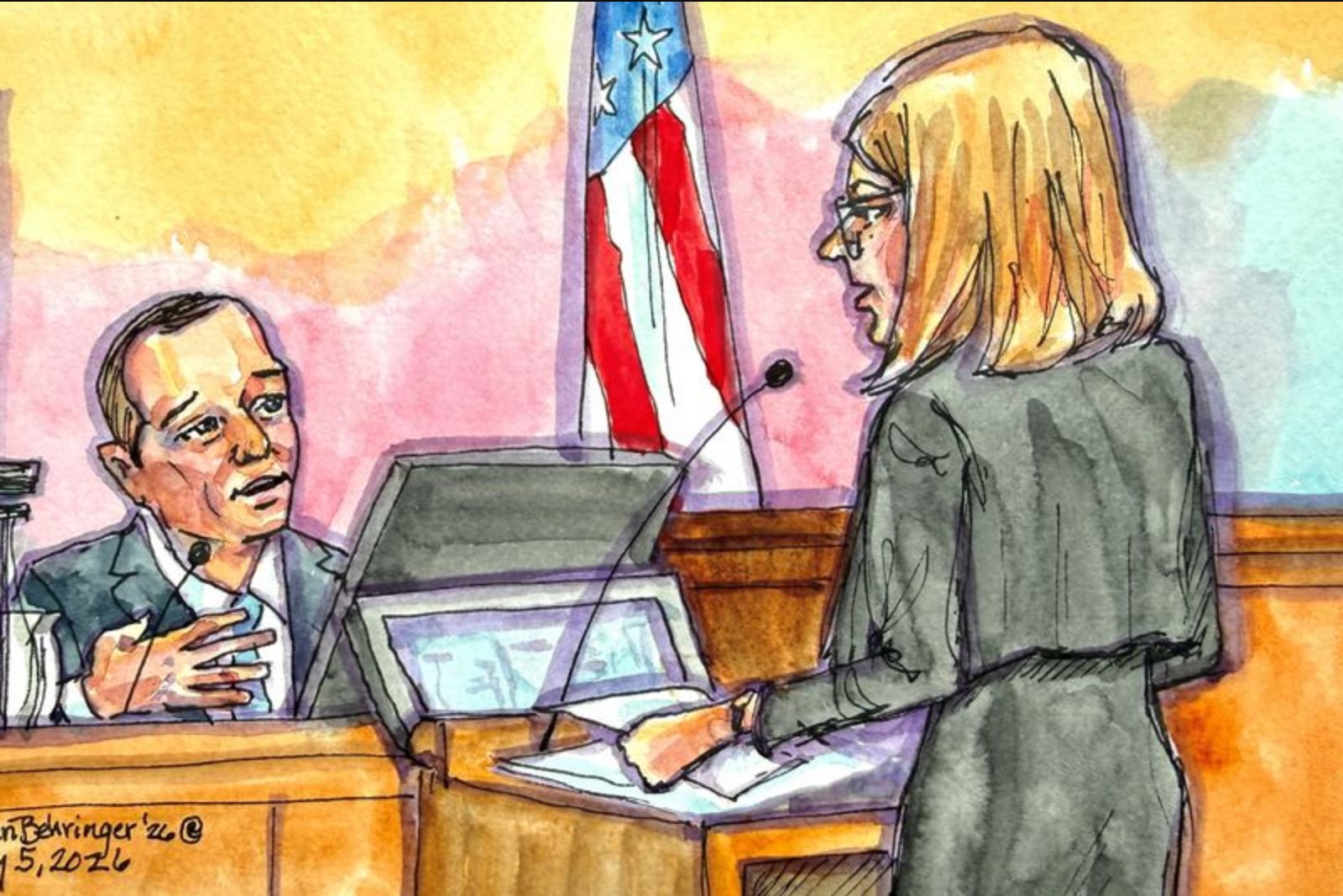
Greg Brockman, president of OpenAI, told a California court on Tuesday that Elon Musk supported restructuring the artificial intelligence research organization as a for-profit company but sought to own and control it, in part to amass what Musk described as roughly $80 billion to build a city on Mars.
Under questioning by OpenAI counsel, Brockman said that in 2017 Musk wanted the company to change its corporate form because raising the capital needed for advanced AI development would be too difficult under a nonprofit model. Brockman said Musk made clear he would become OpenAI’s leader under such a structure, with Sam Altman named as the only other candidate for that role.
Brockman described a particularly intense August 2017 meeting that began cordially. He testified that Musk had recently gifted some Tesla vehicles to OpenAI employees and that former chief scientist Ilya Sutskever had painted a portrait of a Tesla as a token of appreciation. According to Brockman, conversation turned to a proposed equity arrangement Musk disliked. At one point Musk said, "I decline," and abruptly rose from his seat.
Brockman said he feared Musk might strike him as he stood up quickly, but instead Musk grabbed Sutskever’s painting and left the meeting, telling those present he would withhold further funding until the dispute was resolved.
In court, Brockman relayed that Musk argued he deserved a majority stake in OpenAI because of his business experience and intended to use that stake to finance a self-sustaining city on Mars. Brockman quoted Musk as saying, "He said he needed $80 billion to create a city" on Mars, and added that Musk insisted on retaining full control and that Musk would determine when to relinquish it.
Musk, a co-founder of OpenAI, has sued the company alleging it wrongly converted into a for-profit entity, strayed from its charitable mission and should be returned to nonprofit status. He is seeking $150 billion in damages to be paid to the nonprofit and is asking for Sam Altman and Greg Brockman to be removed from their leadership posts. The litigation is now in its second week in a California courtroom and could influence the future direction of OpenAI, which rose to prominence after launching the ChatGPT chatbot in late 2022.
Brockman also testified about OpenAI’s planned spending and his personal stakes. He said OpenAI intends to spend $50 billion on computing resources in 2026. Brockman testified his own stake in OpenAI is worth almost $30 billion; he also said he holds stakes in two startups backed by Altman and a 1% stake in Altman’s family fund.
The court record includes a 2017 diary entry from Brockman that reads, "Financially, what will take me to $1B?"
OpenAI restructured in March 2019 into a for-profit unit overseen by a nonprofit parent, a move that allowed it to accept outside investor capital. Since that restructuring, OpenAI has raised in excess of $100 billion to hire researchers, purchase computing power and expand operations ahead of a potential initial public offering this year that the company views as possibly reaching $1 trillion in value.
SpaceX, the rocket company founded by Musk, may also pursue a public offering this year and could be larger than OpenAI. Public filings included in the evidence indicate that in January SpaceX’s board approved a plan to award Musk 200 million super-voting restricted shares if the company’s market value reaches $7.5 trillion and it establishes a permanent colony on Mars with at least 1 million people.
Musk’s complaint alleges that he was misled by Altman into contributing $38 million to OpenAI’s nonprofit entity, only to see the organization pivot away from charitable aims and toward a for-profit model that Musk contends enriched its leaders. OpenAI has responded by saying Musk was resentful after leaving its board before the company’s later achievements and that his lawsuit is motivated in part by a desire to gain control. OpenAI has also asserted that Musk’s legal action serves to bolster his own AI venture, xAI, which the company says is now part of SpaceX.
The trial’s testimony has focused on boardroom dynamics, funding promises and the governance choices that allowed OpenAI to accept large sums of outside capital. The case will continue to explore whether the nonprofit’s decision to create a for-profit arm complied with its founding commitments and whether any contributors were misled about the organization’s trajectory.