
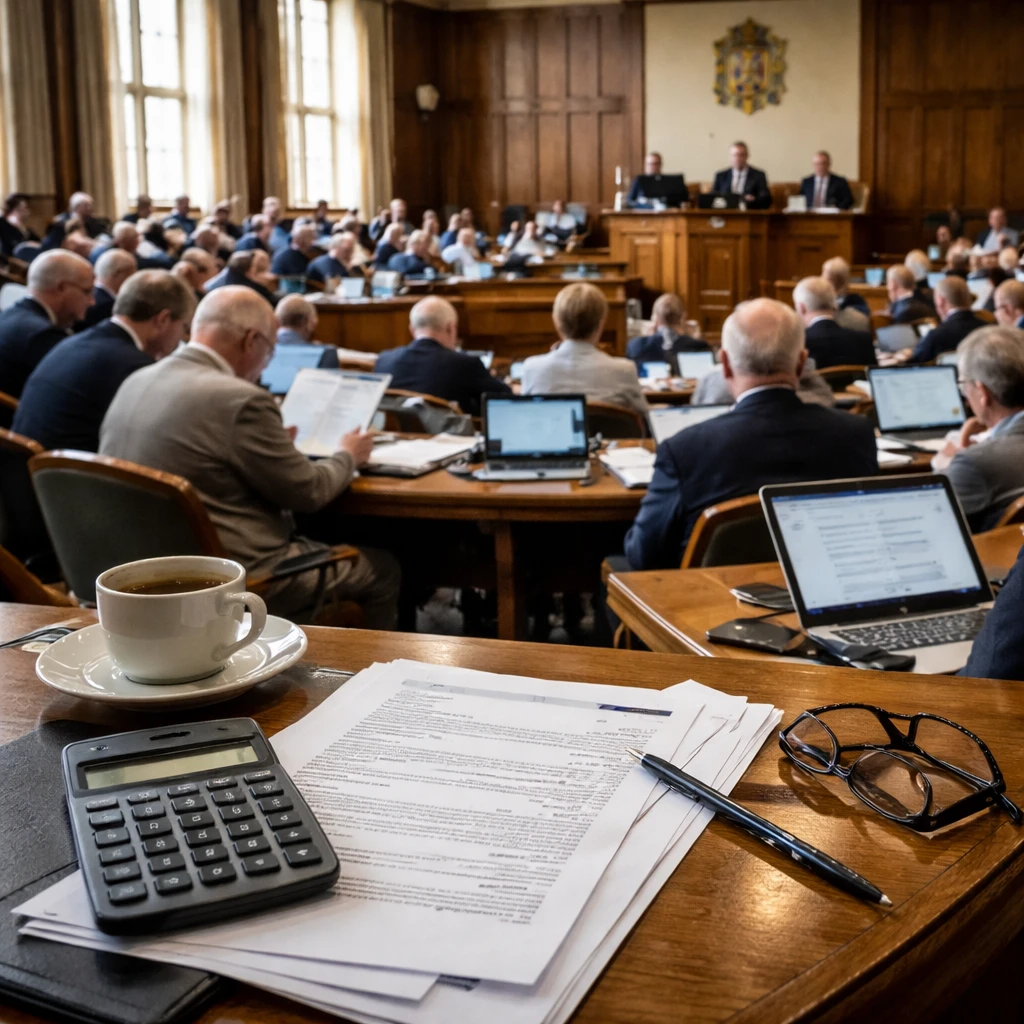
Reform UK has begun scaling back its headline fiscal promises as the party's first wave of local administrations confronts the practical limits of local public finances. What was prominent electoral rhetoric on tax cuts has collided with statutory spending obligations and material budget deficits, forcing a recalibration of both local decisions and national messaging.
Tax moves and local realities
Across the nine councils that Reform secured in last year's local contests, elected officials have approved council tax increases averaging 3.9% for the current financial year. Although those rises sit below the national average, some Reform-led authorities - including Derbyshire and West Northamptonshire - are opting to raise levies to the maximum threshold allowed before a referendum becomes necessary.
Local councillors point to the "sobering" constraints imposed by statutory duties and mandated services as a core reason they cannot deliver the sweeping cuts promised on the campaign trail. Several councils that had campaigned on freezing or cutting local levies have found those pledges difficult to reconcile with legally required spending and service delivery.
Council-level financial pressures
In Kent County, Reform-led officials have identified potential measures amounting to 87.6 million in savings and plan to increase some service fees for 2026/27. Despite those steps, adult social care costs remain a persistent pressure, such that the council projects a 24.7 million shortfall for the following year.
Elsewhere, Lancashire County Council's forward projections show a 17.3 million deficit in 2028/29, while North Northamptonshire faces a potential shortfall that could rise to 19 million by 2029. These gaps underscore the uneven fiscal headroom available to local authorities and the disproportionate share of budgets consumed by social care spending.
Campaign strategy shifts
With further local elections approaching on May 7, party organisers have instructed activists to eschew granular tax-cut commitments that proved difficult to implement for some sitting councillors. Instead of specific local fiscal pledges, Reform's national office has asked candidates to adopt a standard template emphasising national "talking points" such as immigration and crime.
Analysts interviewed by observers note that Reform's experience illustrates the challenge of converting national populist momentum into durable local governance. The party's emphasis on eliminating "waste" in public spending faces a reality check: the items labelled as waste represent a minor share of local budgets when compared with the outsized costs of adult social care.
As Reform seeks to broaden its local presence on May 7, its candidates continue to operate within the same fiscal constraints confronting councils across the country. The combination of statutory service obligations and significant social care expenditures appears to limit the scope for the large tax reductions that were a prominent part of the party's earlier messaging.