
Economy April 15, 2026 02:17 PM

Norway to Keep About Half of Sovereign Wealth Fund in U.S. Stocks Despite Middle East Conflict

Finance minister says the $2.1 trillion fund will remain a major investor in American equities while noting risks from higher energy prices and slower growth

By Maya Rios
Norway to Keep About Half of Sovereign Wealth Fund in U.S. Stocks Despite Middle East Conflict

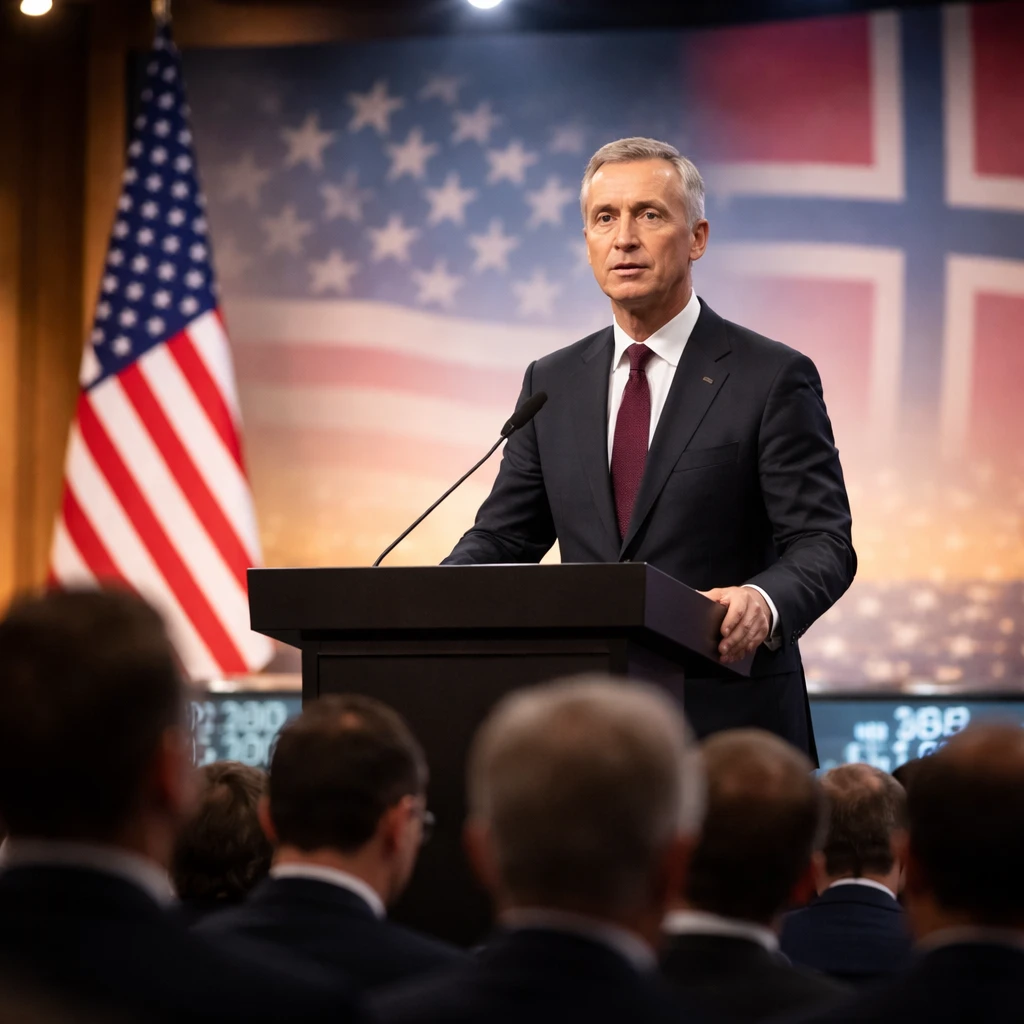
Norway’s $2.1 trillion sovereign wealth fund will continue to allocate roughly half of its assets to U.S. equities, Norwegian Finance Minister Jens Stoltenberg said at the Semafor World Economy conference. Stoltenberg cited the dynamism of the American stock market but warned the Iran war’s effects on energy prices could lift inflation and weigh on growth. He also addressed concerns about NATO cohesion amid tensions and criticized U.S. consultation practices around military action.

Key Points

  • Norway’s $2.1 trillion sovereign wealth fund will maintain roughly half of its assets in U.S. equities, reflecting the perceived strength and dynamism of the American stock market.
  • The finance minister warned the Iran war’s impact on energy prices could raise inflation and reduce economic growth, highlighting direct implications for energy and inflation-sensitive sectors.
  • Stoltenberg said he does not expect the United States to leave NATO despite tensions, but he noted the alliance faces serious challenges and criticized the U.S. for not consulting allies before military action.

Norway will maintain a substantial allocation to U.S. stocks despite the economic uncertainty stemming from the Iran war, Finance Minister Jens Stoltenberg said Wednesday at the Semafor World Economy forum in Washington, DC. The country’s sovereign wealth fund, valued at about $2.1 trillion, plans to keep roughly half of its holdings in American equities, he said.

"We plan to continue to be a big investor in US companies and to have roughly half of our investments there, because the American stock market is so dynamic and reflects the strength of the US economy," Stoltenberg said, explaining the rationale for the fund’s large U.S. exposure.

At the same time, Stoltenberg acknowledged the conflict in the Middle East presents risks to the global economy. He said the consequences of the Iran war - including higher energy prices - are worrying because they have the potential to increase inflation and reduce economic growth.

"But it makes us of course concerned when we see the consequences of the war in the Middle East, with increased energy prices that can increase inflation and push down growth," Stoltenberg said.

Stoltenberg, who served previously as NATO secretary-general, addressed alliance dynamics as well. He said he did not expect tensions around the US-Israeli war on Iran to lead the United States to exit the Atlantic alliance, despite public threats by President Donald Trump on several occasions.

Reflecting on NATO’s condition, he said the alliance faces significant problems and challenges but noted that disagreements have been overcome in the past. "We have been able to overcome disagreements before, and I really hope and believe that we can do that again," he added.

Stoltenberg also criticized the United States for not consulting allies before launching the military action against Iran. He said: "He’s not wrong in saying that NATO has not contributed actively to that military operation. But if you want NATO to contribute then at least you have to sit down with NATO allies as you did after 9/11," referring to NATO’s involvement following the 2001 attacks.

His remarks offered a mix of reaffirmation of Norway’s investment strategy and an explicit warning about geopolitical risks that could influence energy markets, inflation trajectories, and global growth.

Risks

  • Rising energy prices as a consequence of the Iran war could lift inflation and depress growth, affecting energy companies, consumer-facing sectors, and bond markets.
  • Strained relations within NATO and failure to consult allies on military operations could create geopolitical uncertainty, potentially influencing defense policy and related markets.
  • Heightened geopolitical volatility could weigh on investor sentiment in global equity markets, including U.S. equities, despite Norway’s continued allocation.

More from Economy

Markets Brace as Fed Leadership Shifts and Geopolitical Strains Loom Apr 29, 2026 White House Directs Preparations for Extended Iran Blockade Apr 28, 2026 Dollar Holds Firm Ahead of Fed Decision as Middle East Conflict Keeps Markets Cautious Apr 28, 2026 HHS Seeks Candidates to Reconstitute Preventive Services Panel After Year-Long Hiatus Apr 28, 2026 NIESR Cuts UK Growth Outlook, Warns Inflation Will Remain Above Target Until 2028 Apr 28, 2026