
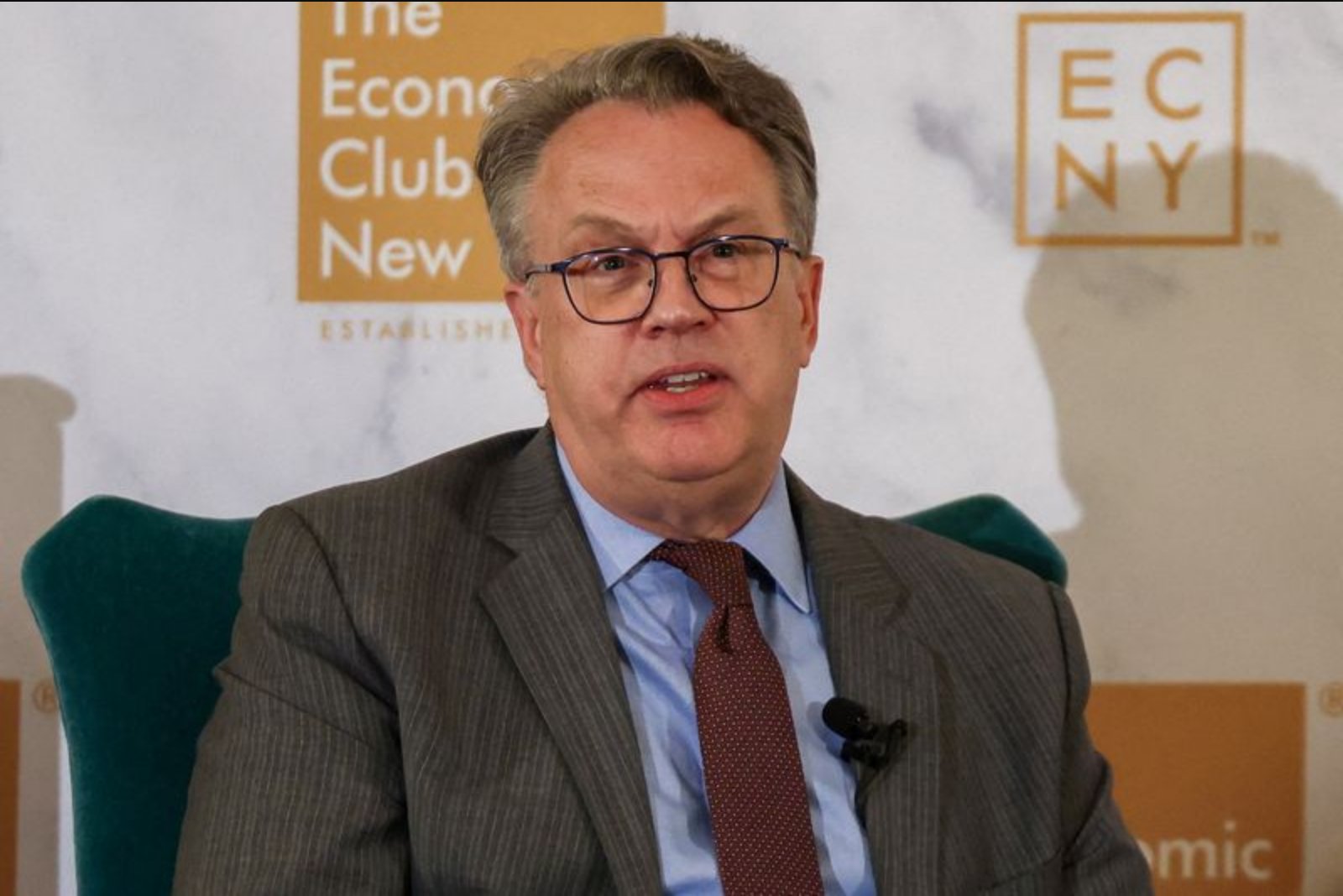
Federal Reserve Bank of New York President John Williams told attendees at the Federal Home Loan Bank of New York 2026 Member Symposium that the ongoing war in the Middle East is exerting upward pressure on energy prices and, by extension, on inflation.
"Developments in the Middle East are driving significant increases in energy prices, which are already lifting overall inflation," Williams said. He noted that if the disruptions subside quickly, energy costs should decline. But he cautioned that a prolonged conflict "could also result in a large supply shock with pronounced effects that simultaneously raises inflation - through a surge in intermediate costs and commodity prices - and dampens economic activity." Williams added that this process "has begun to play out already."
Williams highlighted specific channels through which higher fuel costs are making their way into consumer prices. He said there are growing indications of supply chain disruptions, and that rising fuel prices are appearing in the form of higher airfares, more expensive groceries, greater fertilizer costs, and elevated prices for other consumer products.
Against these developments, Williams reiterated what he called his "unwavering commitment" to bringing inflation back to the Fed's 2% target. He stopped short of providing firm guidance on the path of interest rates, instead describing policy as prepared to react to incoming economic information. In his remarks he said that amid an "unusual set of circumstances," Fed interest rate policy "is well positioned to balance the risks to our maximum employment and price stability goals."
Williams' comments follow a pattern he has maintained recently: the central bank is in a wait-and-see mode as it assesses how the conflict and the attendant surge in energy prices will influence growth and inflation dynamics. The Federal Reserve maintained its target range for the federal funds rate at its mid-March meeting, keeping the target between 3.5% and 3.75%. At that meeting, Fed forecasts included a view that penciled in one easing sometime later in the year.
The Fed's next policy meeting is scheduled for April 28-29, and no change in the interest-rate setting is expected for that meeting. In recent days, other Fed officials have echoed a cautious tone, offering limited firm guidance on the outlook for short-term interest rates. Williams' remarks were consistent with that approach. Separately, in a television interview, Cleveland Fed leader Beth Hammack said there are possibilities for the central bank to lower or to raise its target rate depending on how economic data evolve.
Williams described the central bank's key policy dilemma: the risk that an energy-driven spike in prices will force difficult choices. He said that Fed officials are monitoring whether the recent surge in energy prices is temporary or whether it will feed through to broader, more persistent inflation pressures. The danger is a scenario in which elevated inflation calls for tighter policy while those same price increases weigh on demand, which would argue for easing.
In his outlook, Williams provided specific projections for the near term. He said inflation is likely to rise to a range between 2.75% and 3% this year before moving back toward the Fed's 2% goal in 2027. On the labor market, he projected that unemployment will likely be between 4.25% and 4.5% this year. For economic growth, Williams saw GDP coming in between 2% and 2.5%.
Williams also referenced the current shock to energy prices as layered on top of already elevated price levels, noting that higher costs are appearing after previous policy changes that affected consumer import prices. Fed officials across the system are waiting to see how persistent the recent price spike will be, and whether it drives broader underlying price pressures higher as well.
Ultimately, Williams signaled that the central bank is prepared to respond to incoming data and evolving risks. He emphasized the Fed's dual mandate and framed current policy as calibrated to balance objectives for price stability and maximum employment while remaining responsive to the uncertain path of the conflict and its economic effects.