
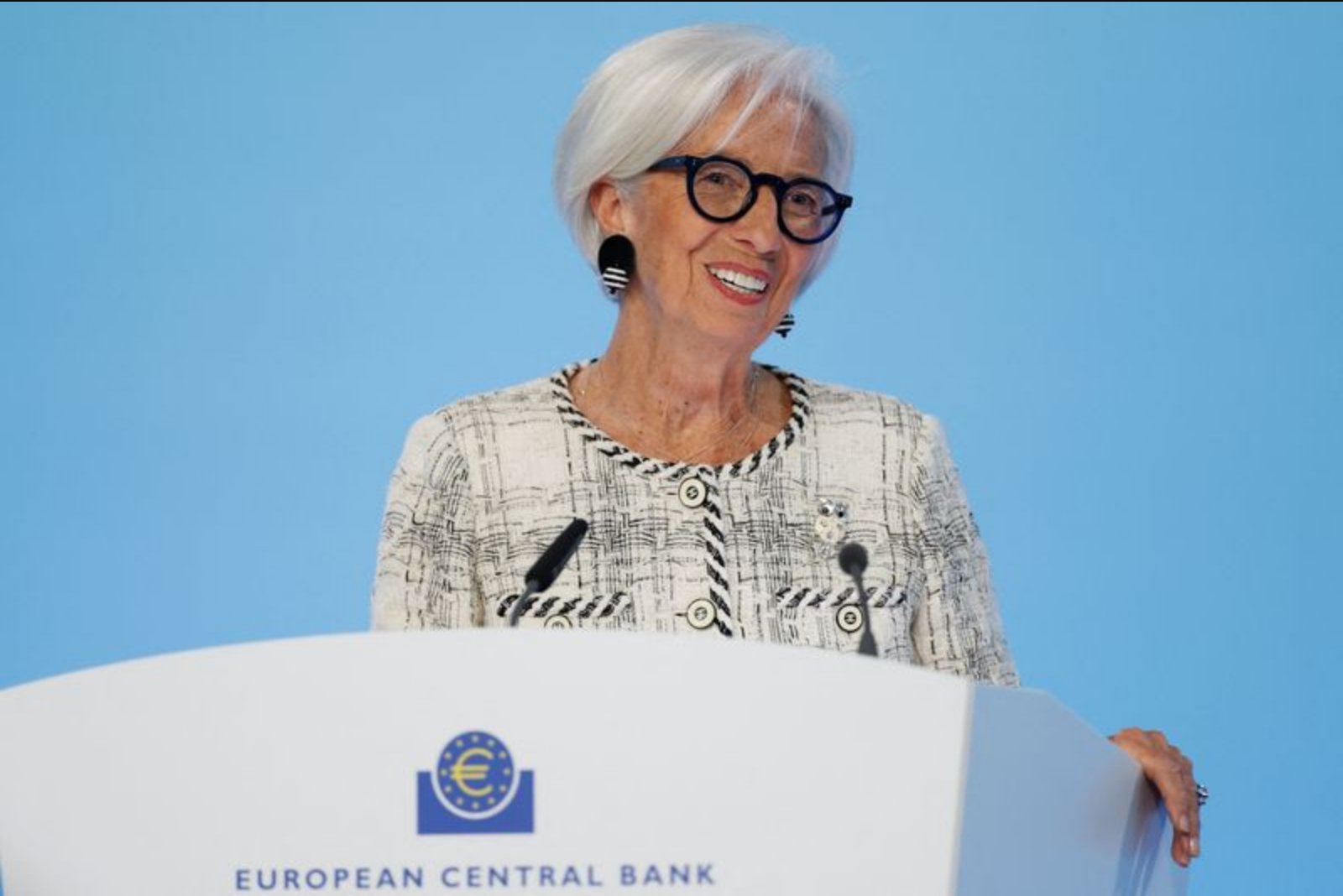
European Central Bank President Christine Lagarde said on Thursday that the term stagflation - commonly used to describe the 1970s when inflation and unemployment were both high - does not accurately portray the euro zone’s present economic situation, even as policymakers flagged stronger inflationary pressures and weaker growth.
Speaking to journalists after the ECB opted to keep policy rates steady, Lagarde contrasted today’s environment with that of the 1970s. "In the 70s, you had inflation continuing, continuing, continuing at a sort of sustainable and solid pace. You had very high unemployment. You had a monetary and fiscal framework that had nothing to do with what we have at the moment," she said.
"So we don’t apply stagflation, that flashy term, to the circumstances that we have."
The bank nevertheless signalled that risks have shifted. Officials said the upside risks to inflation - already well above the ECB’s target - and the downside risks to economic activity, which showed only marginal growth last quarter, have intensified.
Lagarde referred back to the ECB’s March projections when arguing that the baseline outlook does not point to stagnation. Those projections anticipated the euro area expanding 0.9% this year, 1.3% in 2027 and 1.4% in 2028.
"It’s lower growth granted in ’26, but we’re not in stagnation, let alone recession," Lagarde added. "Now you can imagine scenarios where we are heading towards those situations. But this is not what we are seeing for the moment."
She also noted that the economy appeared to be diverging from the March baseline. The ECB’s March assessment included a more adverse scenario in which oil averaged nearly $120 this quarter and natural gas prices were much higher than current levels - a scenario that projected growth of 0.6% this year, followed by 1.2% in 2027 and 1.6% in 2028. Oil briefly rose above that near-$120 level on Thursday before easing.
By maintaining rates at their current setting, the ECB signalled caution amid heightened uncertainty: inflation remains elevated relative to its target, and activity has shown only modest momentum. Lagarde’s message was clear - while the risk mix has become less favorable, the governing council does not view the euro zone as trapped in the kind of persistent inflation-plus-stagnation that defined the 1970s.
Context for markets and sectors
Financial markets, energy markets and sectors sensitive to demand growth - including manufacturing and transport - will watch ECB communications closely as they price the balance between inflation persistence and slowing activity. Energy price scenarios were explicitly highlighted in the ECB’s adverse forecast, underscoring how swings in oil and natural gas can alter growth trajectories in the near term.