
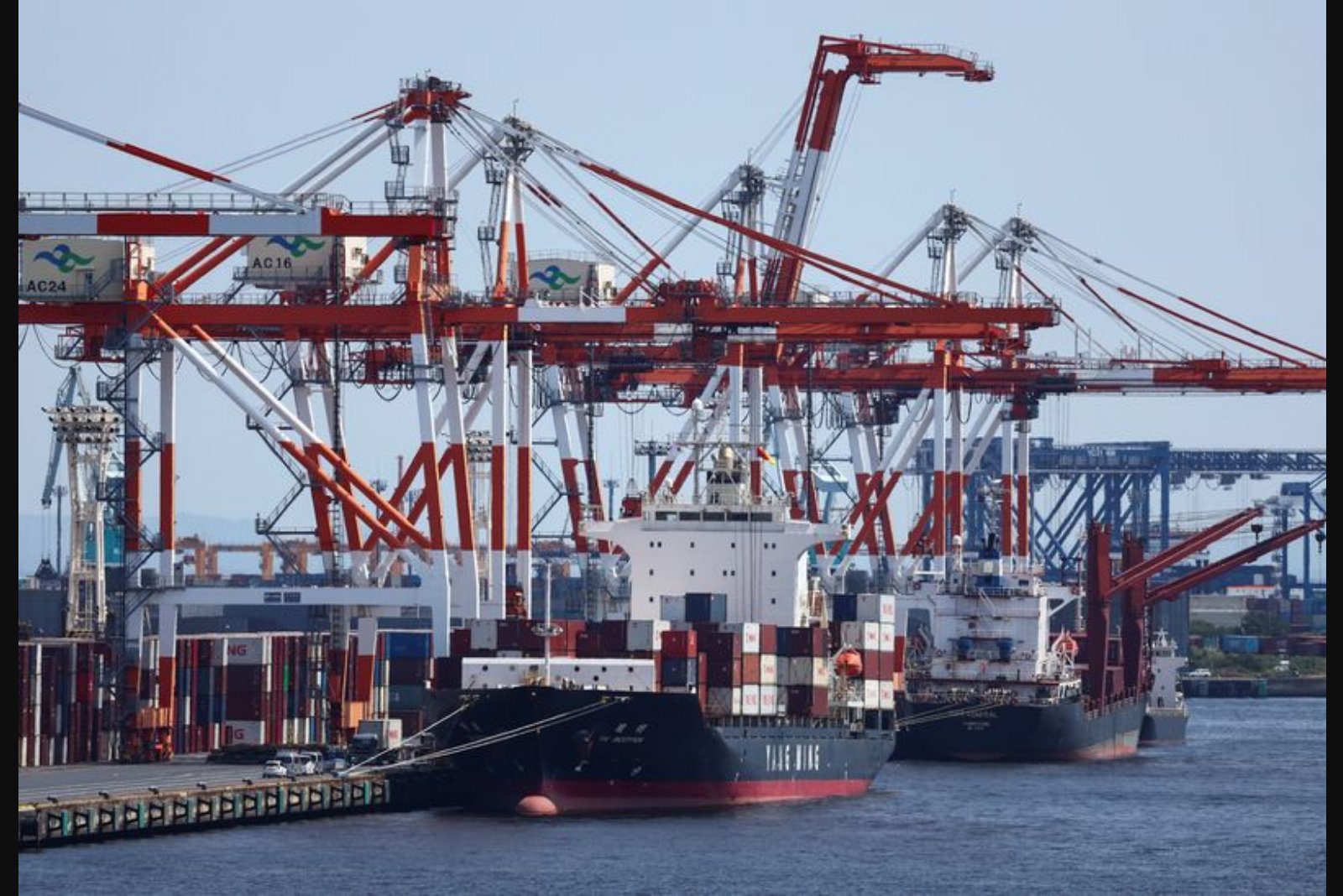
TOKYO, April 22 - Japan's export value continued its upward run in March, growing 11.7% from a year earlier to register a seventh straight monthly increase, according to official data released on Wednesday. The rise exceeded a median market projection for an 11% gain and reflected a combination of firm overseas demand and higher prices for outbound goods.
Regional breakdowns showed divergent trajectories: exports to the United States were up 3.4% year-on-year in March, while shipments to China climbed 17.7% over the same period. On the inbound side, imports expanded 10.9% year-on-year in March, notably above market forecasts that had pointed to a 7.1% increase.
As a result of the differing momentum between exports and imports, Japan posted a trade surplus of 667 billion yen ($4.18 billion) for March, a figure that fell short of consensus expectations for a 1.1 trillion yen surplus. The exchange rate used in the release was $1 = 159.4100 yen.
Officials and market participants noted that, while disruptions from the closure of the Strait of Hormuz have hampered Gulf energy flows and complicated global supply chains, upward pressure on export prices has helped sustain the trade sector for now. Nonetheless, manufacturing concerns have risen as surging energy costs and supply interruptions for oil and other materials threaten to erode export competitiveness over time.
Shortages of naphtha - a critical feedstock for petrochemical producers - and related materials have already forced dozens of companies to announce temporary stoppages of orders in recent weeks. Those stoppages came despite government assurances about the adequacy of strategic stockpiles.
Japan's broader economy has continued to display signs of a modest recovery, supported by resilient exports and solid business investment. Still, the recovery's pace is uneven as external headwinds persist.
Analysts have warned that higher oil prices linked to tensions in the Middle East could act as a drag on the economy by lifting import bills and reducing household purchasing power in a country that relies heavily on energy imports. These dynamics add to the inflationary environment confronting policymakers.
The Bank of Japan is widely expected to hold interest rates steady at its next policy meeting next week, while maintaining a tightening stance as a weak yen and rising energy costs add to inflationary pressure. That stance complicates the central bank's task of balancing price stability with support for economic growth.
Data snapshot
- Total exports: +11.7% year-on-year in March (median forecast +11%)
- Exports to the United States: +3.4% year-on-year
- Exports to China: +17.7% year-on-year
- Imports: +10.9% year-on-year (market forecast +7.1%)
- Trade balance: surplus of 667 billion yen (market forecast surplus 1.1 trillion yen)
- Exchange rate cited: $1 = 159.4100 yen