
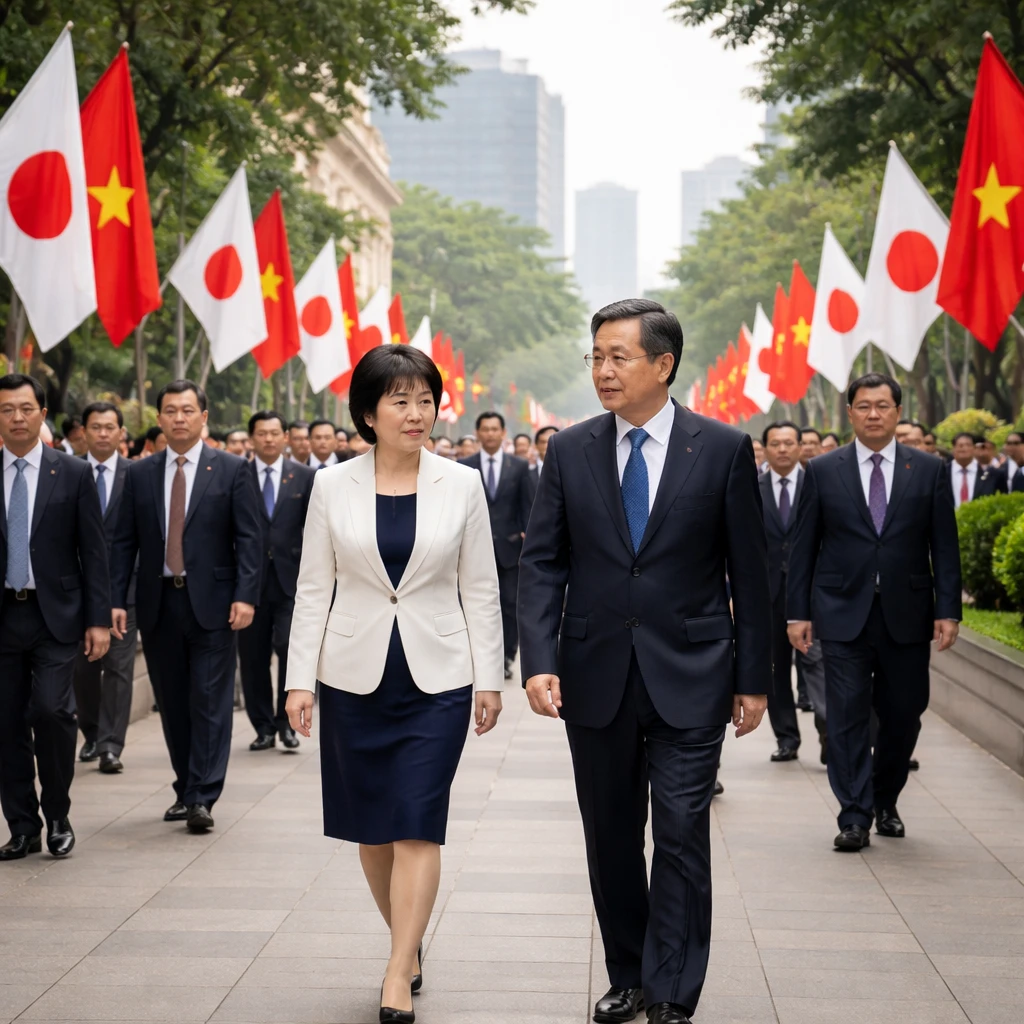
Japanese Prime Minister Sanae Takaichi is in Hanoi for a diplomatic visit centered on restoring momentum in ties with Vietnam after a marked reduction in Japanese capital flows to the country. The programme includes a meeting with Vietnamese leader To Lam on Saturday and other high-level engagements intended to breathe new life into the bilateral partnership established in 2023.
Officials say the talks will concentrate on a range of strategic topics, including energy, technology, critical minerals and regional security. Delegations from both sides are expected to press for steps that can revive investment and ease friction for corporations operating across borders.
Economic background
Although Japan remains among Vietnam's principal investors, recent official figures point to a sharp drop in fresh Japanese commitments. New investment pledges from Japan fell 75% on a year-on-year basis, slipping to $233 million in the first quarter. That decline has created urgency around addressing structural issues in Vietnam's business environment.
Takaichi is slated to press for improvements aimed at reducing specific complaints made by Japanese multinationals. Those grievances include delays in payment for completed work and obstacles to entering major infrastructure projects. Such operational difficulties have been flagged as factors weighing on corporate willingness to commit new capital.
The investment relationship has already faced tangible setbacks: Tokyo withdrew from a major nuclear power project last year, a move attributed to restrictive construction timelines. Despite these challenges on investment, bilateral trade has shown resilience, rising 12.3% in the first quarter to $13.7 billion.
In a development potentially aimed at lowering corporate tensions prior to the visit, Hanoi recently said it is reconsidering a proposed ban on petrol-powered motorcycles within the city centre. The measure had drawn strong opposition from a major Japanese manufacturer, Honda, and the rethink could be seen as an attempt to reduce industry pushback.
Regional strategy and engagements
Beyond the meetings with To Lam, Takaichi's schedule includes talks with Vietnamese counterpart Le Minh Hung and an address at Vietnam National University. The speech at the university is expected to outline the evolution of Japan's "Free and Open Indo-Pacific" strategy, with a stated emphasis on regional stability. Following her engagements in Vietnam, the prime minister will continue her tour to Australia.
The visit underscores Tokyo's intention to sustain its strategic footprint in Southeast Asian manufacturing centres even as headline capital flows shift. Discussions in Hanoi will focus on practical steps to address corporate concerns and shore up cooperation across energy, technology and critical mineral supply chains.