
Overview
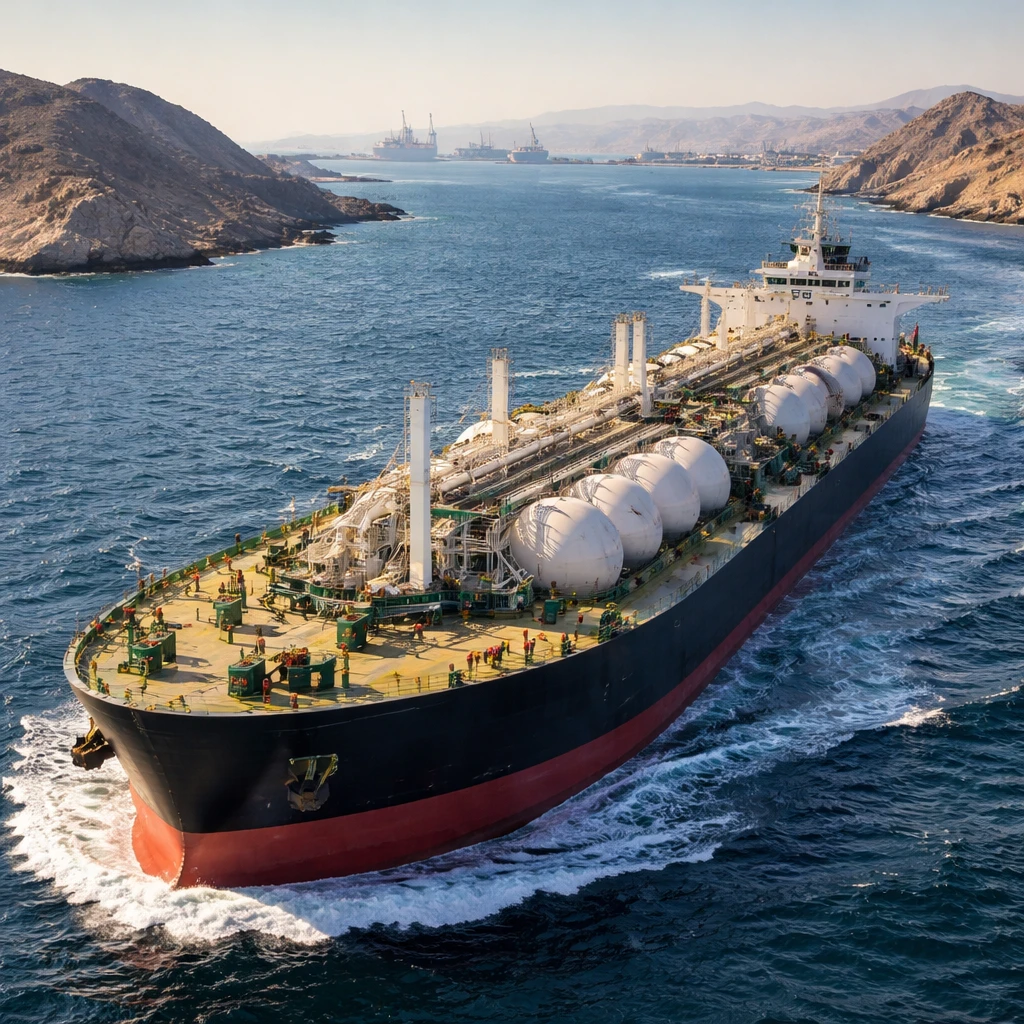
A Marshall Islands-flagged tanker with ties to India is making a high-risk passage through the Strait of Hormuz carrying 45,000 tons of liquefied petroleum gas (LPG). The vessel, named Sarv Shakti, is en route to the Gulf of Oman and its cargo was bought by state-run Indian Oil Corp. (IOC). The movement represents one of the largest single LPG shipments observed attempting to transit the waterway since restrictions on Iran-linked shipping tightened.
Transit details and on-deck safety signals
Ship-tracking data show the Sarv Shakti broadcasting an Indian crew status as it moves past Iran’s Larak and Qeshm islands. Broadcasting crew nationality has become a common safety protocol during the current period of heightened maritime tension. The cargo was reportedly loaded via a ship-to-ship transfer off Dubai before the tanker began its voyage through the strait.
Context of the blockade and prior negotiations
Passage through the Strait of Hormuz has been severely constrained since an April incident in which Iranian forces fired upon vessels that were attempting to cross a briefly reopened channel. The U.S. blockade on Iran-tied shipping has contributed to a near-standstill in traffic. India has managed to negotiate bilateral clearances for eight LPG vessels to pass through the strait, and the Sarv Shakti’s voyage is among the largest such transits since the blockade took effect.
India’s domestic supply squeeze and policy response
India, one of the world’s largest consumers of LPG, is confronting acute shortages of cooking fuel. Short supply has spurred panic buying and led households to cut back consumption. In reaction, the Indian government has directed ports to prioritize LPG tankers and pushed to raise domestic output.
According to Oil Minister Hardeep Puri, domestic LPG production has been increased by 60% to 54,000 tons. Even with that boost, reported daily consumption remains higher than supply, at around 80,000 tons per day, meaning a persistent shortfall. The Sarv Shakti’s successful exit from the Strait of Hormuz would offer a short-term easing of pressure, but it would not resolve the underlying imbalance between consumption and supply.
Implications for markets and supply chains
The arrival of a large, IOC-purchased cargo could temporarily alleviate local shortages and provide relief for households reliant on LPG for cooking. For companies focused on distribution and pricing power, any intermittent improvement in supply may affect short-term pricing dynamics and inventory strategies. However, the continued volatility of transits through Hormuz poses ongoing risks to supply chain reliability and inflation management.
Conclusion
The Sarv Shakti’s transit is a notable episode in India’s broader effort to secure fuel amid a supply disruption originating from constrained Middle Eastern shipments. While increased domestic production and port prioritization are being used to blunt the shortage, the situation remains fragile: daily consumption continues to outpace supply, and the strait’s instability could quickly reverse any temporary gains.