
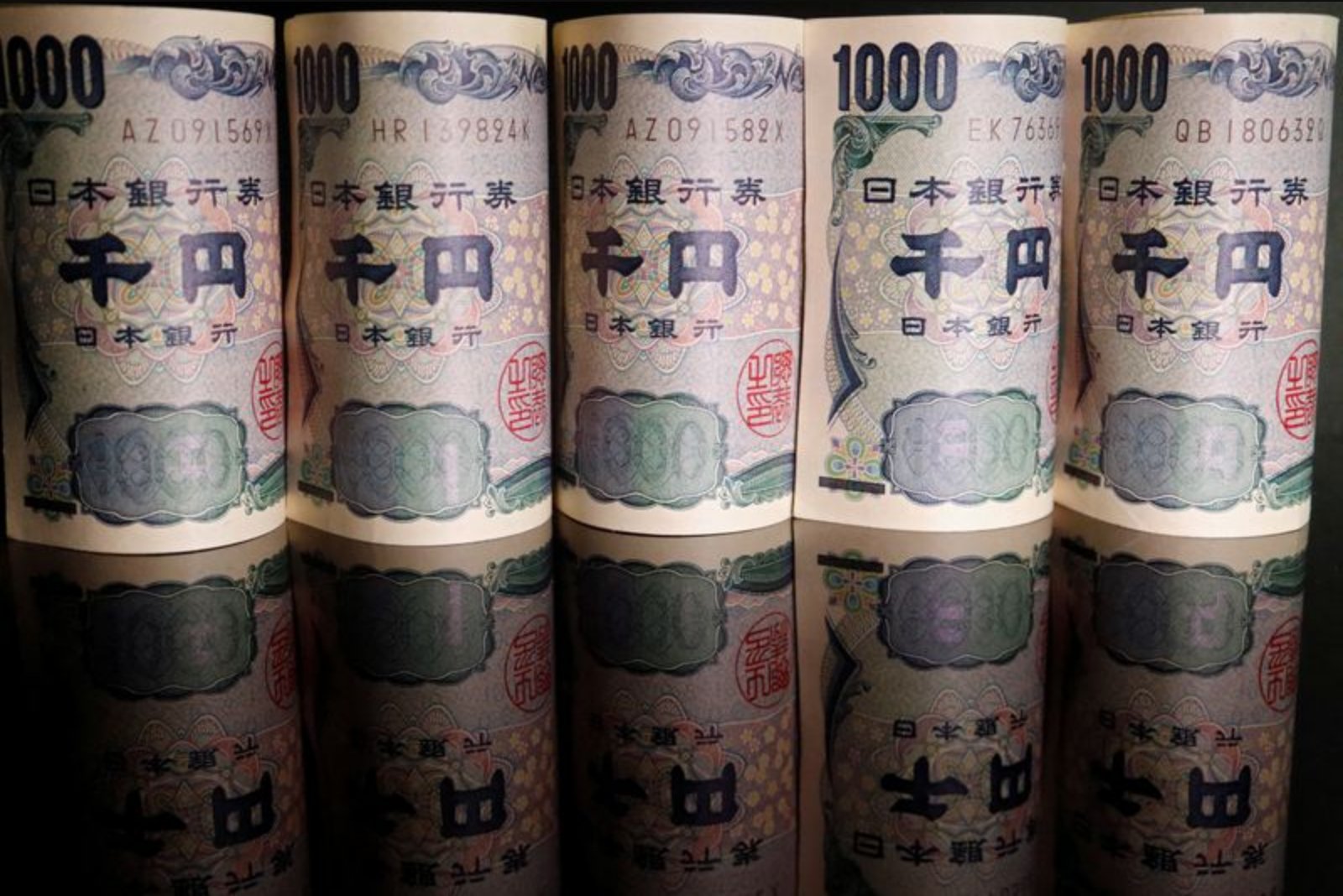
Japan intervened to support the yen against the U.S. dollar on Thursday, according to people familiar with the matter, in what authorities described as another effort to check a selloff that accelerated after oil prices rose amid the Iran war. Officials have also been reported to be weighing the possibility of stepping into oil futures markets as a way to blunt a speculative surge in energy costs that is adding pressure to the currency.
The yen has been under continued strain for several reasons, notably the Bank of Japan's gradual pullback from an ultra-easy monetary policy stance and investor concern over an expansive fiscal agenda proposed by Prime Minister Sanae Takaichi. Below is a breakdown of how yen-buying intervention works, why authorities decide to act, what Tokyo has done recently and the obstacles it faces.
When did Japan last intervene?
Tokyo carried out yen-buying intervention in September 2022 - the first time such action had been taken since 1998 - and has mounted four operations since then to address sharp depreciation driven by large interest rate gaps with the United States. The most recent prior step into foreign exchange markets came in July 2024, when authorities purchased yen after the currency touched a 38-year low of 161.96 per dollar.
Why is intervention being considered?
Historically, Japanese authorities more often sold yen to prevent excessive appreciation that might harm exporters by making their products less competitive overseas. The current concern is the inverse: a weak yen now poses problems because many Japanese firms have shifted production abroad and the economy is heavily dependent on imports for items ranging from fuel and raw materials to machinery components.
Rising oil costs have compounded the situation. Higher crude prices triggered by the U.S.-Israeli war with Iran are adding to import-driven inflation in Japan, which depends on the Middle East for roughly 95% of its oil imports. At the same time, the dollar's appeal as a safe haven during market stress has deepened downward pressure on the yen.
What happens before intervention?
Authorities typically move in stages. Strong verbal warnings are often the first step - language such as being "ready to act decisively" is a signal markets may see intervention as imminent. Another possible precursor is so-called rate checking by the Bank of Japan, when central bank officials contact dealers to ask for buy and sell rates for the yen. Traders view those calls as a sign that authorities are monitoring market levels closely. In January, U.S. officials took the unusual step of doing rate checks, which helped spur a brief rally in the yen.
What has Tokyo done most recently?
Japan's Finance Minister Satsuki Katayama has publicly said the government stands prepared to take decisive action against excessive currency swings and has noted continued close contact with U.S. counterparts. Market volatility rose after Prime Minister Takaichi's party won a February snap election on promises of "responsible, proactive" fiscal measures, injecting uncertainty into Japan's financial outlook.
In the run-up to Thursday's sudden moves in dollar-yen trading, Katayama warned that decisive steps were imminent. Japan's top currency diplomat, Atsushi Mimura, issued a blunt message to investors, saying: "This is our final evacuation warning to markets." Even after intervening on Thursday, Mimura emphasized officials remained ready to return to markets if speculation continued.
How does intervention work in practice?
There are two basic operational approaches for intervention depending on the objective. When the aim is to curb yen appreciation, the Ministry of Finance typically issues short-term bills to raise yen it can then sell into markets to weaken the currency. To support the yen - the reverse aim - authorities tap foreign exchange reserves: they use dollars to buy yen, thereby increasing demand for the domestic currency.
In both cases, the formal order comes from the finance minister and the Bank of Japan executes the transaction as the ministry's agent. If intervention involves the dollar, Japanese officials consider it important to seek the backing of Group of Seven partners, especially the United States. Washington offered tacit support when Tokyo intervened in 2022 and again in 2024. In a joint declaration signed in September, the two governments reiterated a preference for market-determined exchange rates while acknowledging interventions should be reserved for limiting excessive volatility.
What constraints and challenges exist?
Intervention is far from a guaranteed remedy. It is costly and can fail to change market direction because any single burst of yen buying is small relative to the vast daily churn in global foreign exchange markets - about $9.6 trillion changes hands each day. The underlying drivers of yen weakness include market expectations that Japan's interest rates will remain lower for longer relative to other countries, a structural factor not easily addressed by short-term market operations.
Authorities have nonetheless signaled they could operate on "all fronts." That language explicitly leaves open intervention in oil futures markets when large swings in energy prices spill over into currency trading. Japan could use its roughly $1.4 trillion stockpile of foreign exchange reserves to build short positions in oil futures if it chose to try to depress speculative energy prices. Analysts, however, have expressed skepticism about how effective such a step would be at halting the yen's decline.
How political is the decision to intervene?
The choice to move into markets is a political one as much as an economic calculation. When public anger over a falling yen and higher living costs rises, that increases pressure on the government to act. That dynamic was at play in Tokyo's decisions to intervene in both 2022 and 2024. Still, the trade-off is stark: intervention can be expensive and might not alter the broader trend driven by interest-rate differentials and other structural factors.
Bottom line
Thursday's intervention is the latest in a series of measures by Tokyo to defend the yen amid rising oil costs and worries about fiscal policy. Authorities retain a range of tools - from public warnings and rate checks to direct market operations and possible activity in oil futures - but each carries limits. Officials have made clear they are prepared to act again if markets remain volatile, even as the inherent challenges of moving large, liquid currency markets remain substantial.