
Economy May 13, 2026 12:57 PM

Honeywell Sees Demand Lift from Iran Conflict and AI, CEO Says

Vimal Kapur links geopolitical tensions and artificial intelligence to stronger prospects for the company’s automation and aerospace businesses

By Maya Rios

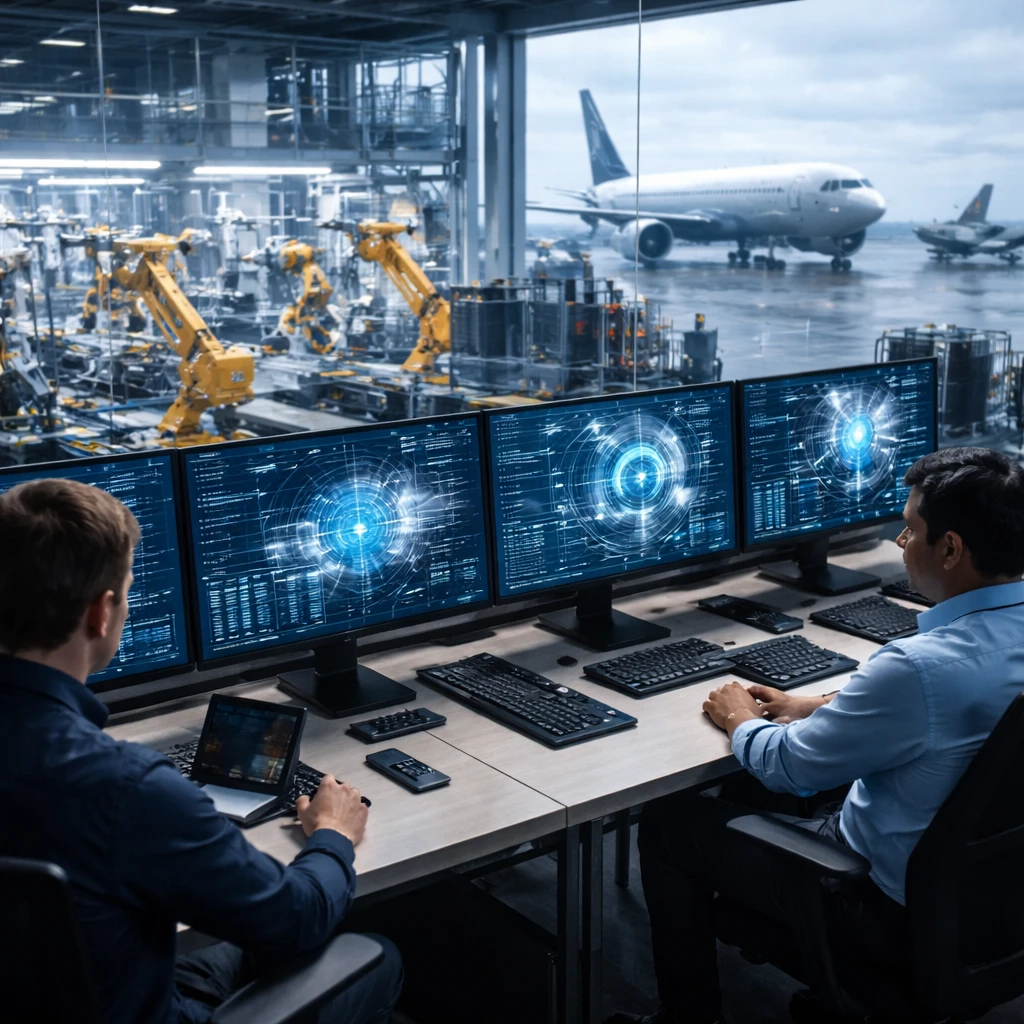
Honeywell Chief Executive Vimal Kapur told Bloomberg Television that rising defense-related demand tied to the Iran conflict and growing adoption of artificial intelligence in industrial settings are boosting near-term demand for the company’s products. Kapur said these developments did not drive the company’s decision to split its automation and aerospace operations in 2025, but both units now expect increased demand. He also addressed takeover pressure from an activist investor and outlined the automation unit’s acquisition strategy.

Honeywell Sees Demand Lift from Iran Conflict and AI, CEO Says

Key Points

  • CEO Vimal Kapur says the Iran conflict has generated additional defense-related demand for Honeywell’s businesses, on top of earlier geopolitical strains.
  • Artificial intelligence is increasingly relevant to the automation division, which produces significant data that can be used to boost customer productivity.
  • Honeywell moved forward with a corporate split in 2025 - aerospace and automation separate - with the aerospace unit finishing its separation next month under Jim Currier; Elliott Investment Management took a stake in 2024 and advocated for the split.

Honeywell International Inc. is experiencing an uptick in demand tied to both geopolitical tensions in the Middle East and increased use of artificial intelligence in industrial operations, Chief Executive Vimal Kapur said in an interview on Bloomberg Television.

Kapur noted that while external events were not the reasons behind Honeywell's plan to separate its automation and aerospace divisions in 2025, recent developments are boosting the outlook for both businesses.

"When the company made the decision to separate, there was the Ukraine war already, but the Iran war hadn't occurred at that time," Kapur said. "So now that generates the defense-related demand into our business." The CEO framed the Iran conflict as an additional source of defense-driven opportunities for Honeywell's operations.

On the technology front, Kapur said artificial intelligence has become a more prominent factor for the automation business than it was when he joined. "When I came to the automation business, AI was not this prominent play for automation companies," he said. He pointed out that the automation side of the company produces substantial volumes of data that can be leveraged to raise customer productivity. "That data can be used to make our customers more productive," he added.

Corporate restructuring at Honeywell has advanced over the past year. The company announced plans to separate its aerospace division from its automation business in February 2025, while the chemicals division was spun off in October 2025. The aerospace unit will complete its separation next month under the leadership of President and CEO Jim Currier. Kapur will remain at the helm of the automation business following the split.

Activist investor Elliott Investment Management, which acquired a stake in Honeywell in 2024, publicly pushed for the split. Kapur characterized Elliott's engagement as constructive, saying their input "had been productive and collaborative."

Looking ahead, Kapur said the automation business intends to pursue acquisitions with enterprise values in the $2 billion to $3 billion range. He indicated that such deals could strengthen earnings while limiting the amount of shareholder capital at risk.


Sectors impacted: aerospace, industrial automation, defense, and technology services that use AI-driven analytics.

Risks

  • Geopolitical uncertainty - further escalation related to the Iran conflict could alter demand patterns for defense-related products and services, affecting aerospace and midstream contractors.
  • Execution risk in integration and acquisitions - the automation business is targeting deals in the $2 billion to $3 billion enterprise value range, which carry integration and financial-risk considerations for industrial and technology providers.
  • Dependence on AI adoption - the anticipated productivity gains rely on customers deploying AI effectively; slower or uneven adoption could limit upside for automation-focused analytics and software offerings.

More from Economy

Bank of Canada Holds Rates but Flags Risk of Swift Change May 13, 2026 Kevin Warsh Poised to Lead Fed as Inflation Pressures Rise May 13, 2026 BoE Seen Pausing at 3.75% as Some Economists Shift Toward Hikes Amid Energy Shock May 13, 2026 Credit Agricole Sees Two 25bp SARB Hikes as Energy Prices Push Inflation Up May 13, 2026 Majority of U.S. Adults Say Their Finances Are Stable as Inflation and Job Fears Linger May 13, 2026