
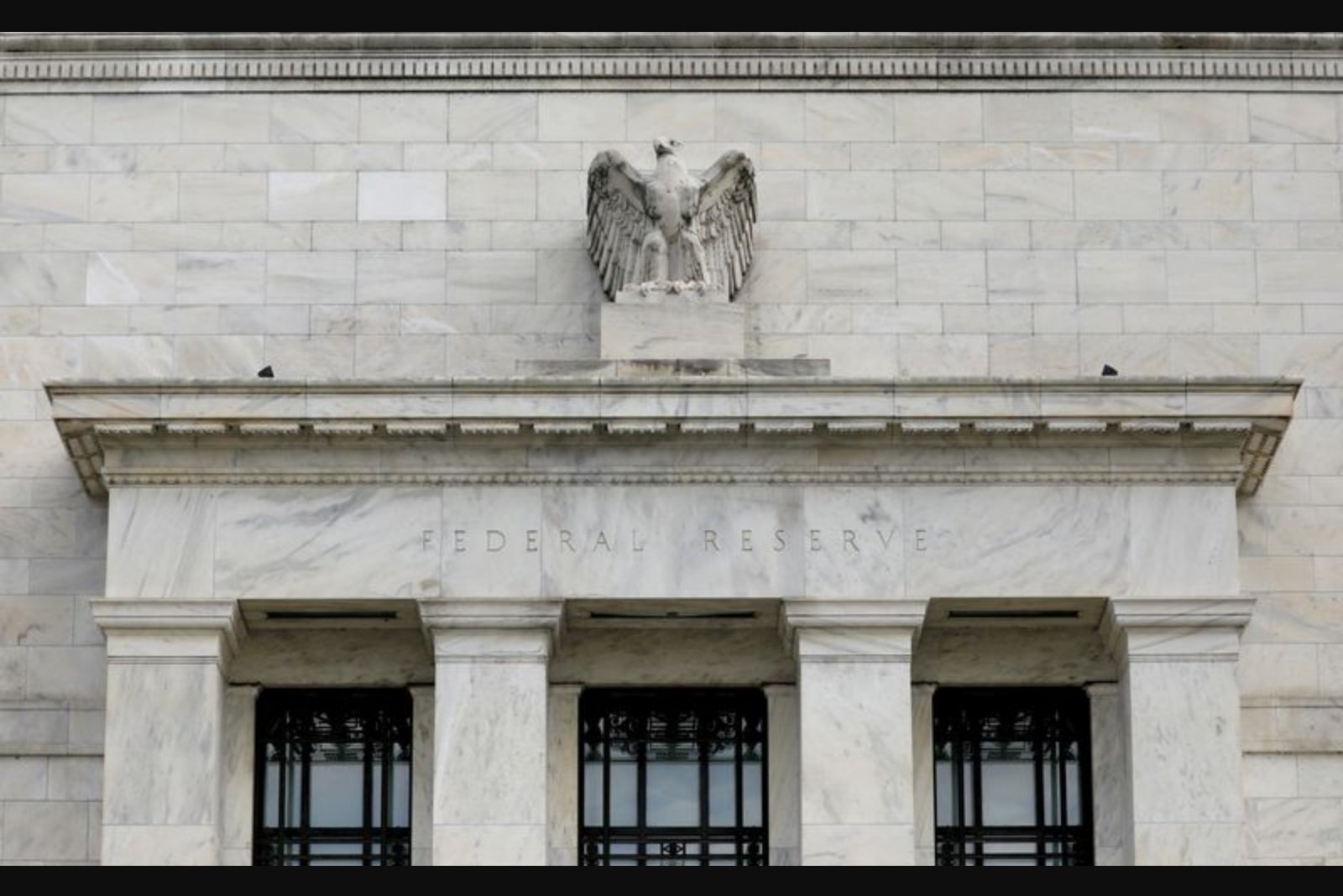
WASHINGTON, April 29 - The Federal Reserve opted to maintain its target range for the federal funds rate at 3.50%-3.75% on Wednesday, issuing a policy statement that underscored growing concerns about inflation and produced the central bank's most divided decision since 1992.
The 8-4 vote reflected sharp differences over how the Fed should signal future moves. The statement included new language saying, "Inflation is elevated, in part reflecting the recent increase in global energy prices," replacing prior wording that had described inflation as only "somewhat" elevated. It also noted that, "Developments in the Middle East are contributing to a high level of uncertainty about the economic outlook."
Despite retaining text that the Fed will assess the "extent and timing of additional adjustments" to its policy rate - language that had been interpreted as indicating future cuts - three policymakers dissented from the statement because they opposed explicitly including an easing bias at this time. The three dissenters were Cleveland Fed President Beth Hammack, Minneapolis Fed President Neel Kashkari and Dallas Fed President Lorie Logan. Each supported leaving the policy rate unchanged for now, but they did not back wording that suggested a tilt toward lower rates.
A fourth dissenting vote at the meeting favored a quarter-percentage-point rate cut. Fed Governor Stephen Miran again registered his preference for a 25-basis-point reduction, repeating the stance he has taken at every meeting since joining the central bank from his prior role as one of President Donald Trump's top economic advisers.
The vote tally and the split over language point to a Federal Reserve wrestling with competing risks. The statement observed that the unemployment rate "has been little changed in recent months" while the economy continues to expand "at a solid pace." Policymakers are weighing whether elevated inflation readings, partly linked to energy costs, will prove transitory or feed into broader price pressures.
Global crude oil prices remain elevated, with the statement noting that prices are lodged above $100 a barrel amid a U.S.-backed war against Iran. Officials are contending with the possibility that sustained high oil prices could move beyond a one-off shock and push up underlying inflation, a dynamic that has become more apparent since the Fed's March meeting when inflation began to show signs of rising.
The minutes of the Fed's March 17-18 meeting had already indicated a growing number of policymakers were open to the idea that the next move might be a rate increase rather than a cut. That shift in views, combined with the recent dissents, may encourage investors to raise bets that borrowing costs will climb later in the year.
The decision comes at a moment of leadership turnover at the central bank. The statement is likely the last to be issued under Chair Jerome Powell's stewardship; his term as central bank chief ends on May 15. Earlier on Wednesday, the Republican-controlled Senate Banking Committee voted 13-11 on party lines to advance Kevin Warsh's nomination to succeed Powell as Fed Chair. The full Senate is expected to consider Warsh's confirmation next month.
Powell is scheduled to hold a press conference at 2:30 p.m. EDT (1830 GMT) to discuss the policy decision and the economic outlook. He may also address whether he plans to continue serving on the Fed's Board of Governors in a separate term that runs through January of 2028.
Policy remains finely balanced. The statement kept language about how the Fed would evaluate the "extent and timing of additional adjustments" to rates, but the inclusion of an easing bias drew explicit opposition from the three regional presidents who voted against that element. Their objections underscore the breadth of opinion incoming Chair Kevin Warsh will inherit as he faces expectations from President Donald Trump for rate cuts from his chosen successor to Powell.
Since the March meeting, the trajectory of inflation and energy prices has complicated the Fed's task. Officials now flag the risk that persistent high global oil prices could morph from a one-time shock into an enduring source of inflationary pressure. At the same time, labor market indicators cited in the statement show little change in the unemployment rate while growth remains described as solid.
Investors and market participants will be parsing Powell's remarks for guidance on the Fed's next moves, especially in light of the recorded dissents and the evolving debate within the policy committee about whether the central bank's next adjustment may be higher rather than lower.
Key facts:
- Federal funds target range held at 3.50%-3.75% in an 8-4 vote.
- Statement language revised to say inflation is elevated partly due to recent increases in global energy prices and flagged Middle East developments as a source of uncertainty.
- Three regional Fed presidents - Beth Hammack, Neel Kashkari and Lorie Logan - opposed including an easing bias; Fed Governor Stephen Miran again dissented in favor of a 25 basis point cut.
- Senate Banking Committee advanced Kevin Warsh's nomination to be Fed Chair on a 13-11 party-line vote; full Senate expected to consider confirmation next month.