
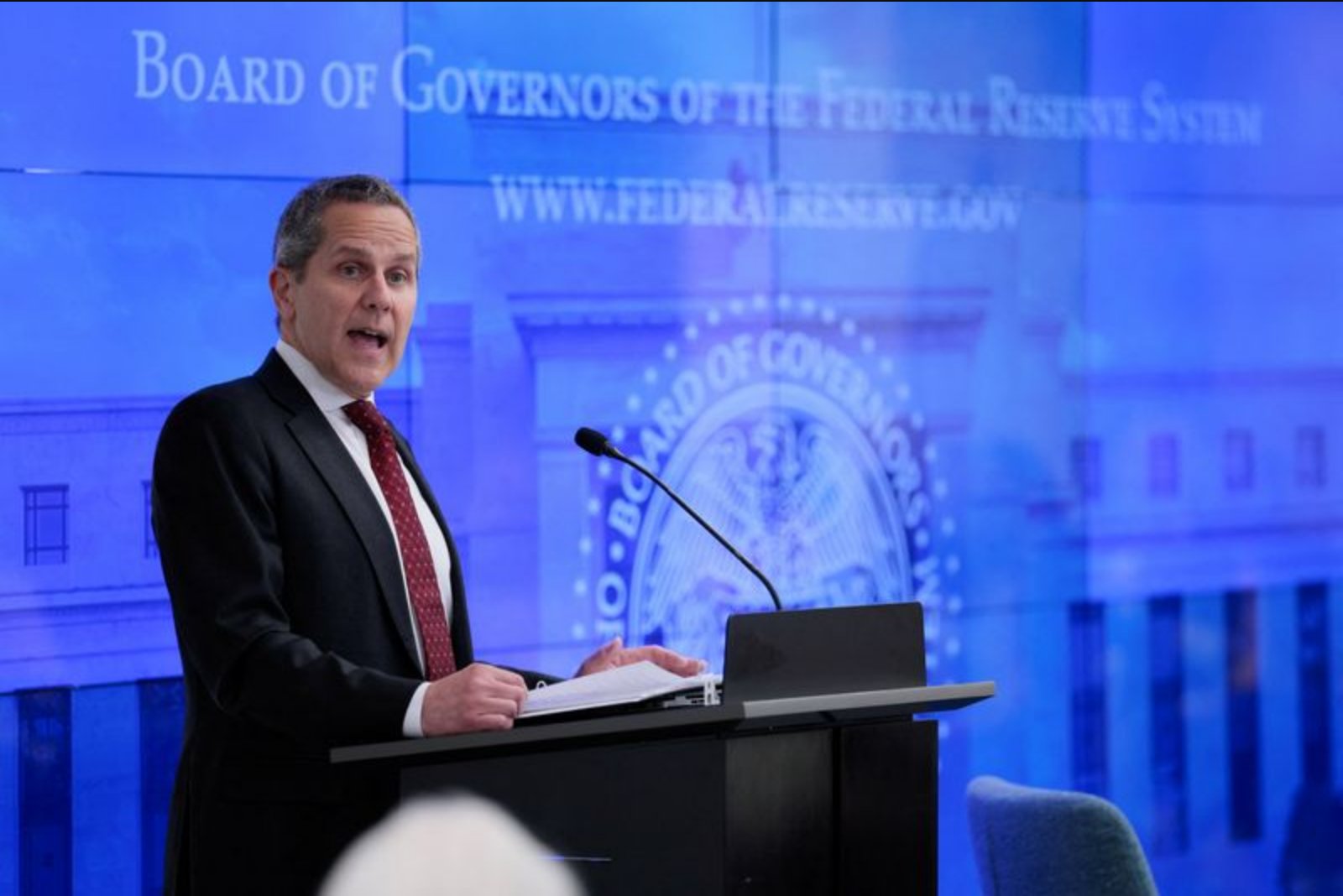
In a recent address delivered in New York, Federal Reserve Governor Michael Barr expressed strong opposition to proposals that would lower liquidity rules as a means to reduce the central bank's holdings. Addressing an audience at a gathering organized by the Money Marketeers of New York University, Barr noted that there has been significant recent dialogue concerning the reduction of the Federal Reserve's balance sheet size to minimize its presence within the broader financial system.
Barr explicitly stated his belief that shrinking the balance sheet is not the correct objective for the central bank. He argued that many of the suggested methods to achieve this goal could have detrimental effects on the economy. Specifically, he indicated that these proposals might undermine the resilience of banking institutions, interfere with the effective functioning of money markets, and ultimately pose a threat to overall financial stability. Furthermore, Barr pointed out a potential irony in some of these proposals, noting that they could actually result in an increased footprint for the Federal Reserve within financial markets.
Core Arguments and Market Implications
A central pillar of Barr's argument is the relationship between liquidity requirements and institutional safety. He suggested that if banks were permitted to hold less liquidity as a tactic to shrink Federal Reserve holdings, it would likely elevate the risk of these institutions needing to rely on Federal Reserve liquidity facilities during periods of financial distress. Reflecting on the banking stresses experienced in 2023, Barr indicated that rather than decreasing, liquidity requirements should potentially be increased.
Additionally, Barr challenged the prevailing metric used to gauge the central bank's influence. He argued that the total size of the Federal Reserve's balance sheet is not the appropriate measure for assessing its footprint in financial markets. Given that the process of creating reserves is costless for the Federal Reserve, Barr emphasized that the true priority should be the effectiveness with which monetary policy is implemented.
Barr noted that the current regulatory regime has successfully achieved monetary policy objectives for many years. He maintained that ensuring effective policy implementation is a key component in supporting smooth and continuous market functioning.
Key Economic Points
- Liquidity as a Safety Buffer: Barr emphasizes that maintaining robust liquidity requirements is essential for bank resilience, particularly following the stresses observed in 2023. This impacts the banking sector's ability to manage sudden outflows.
- Policy Implementation vs. Balance Sheet Size: The focus of central bank oversight should remain on the efficacy of monetary policy implementation rather than the raw size of the balance sheet. This affects how market participants interpret central bank actions and market stability.
- Money Market Functioning: Changes to liquidity rules could impede how money markets operate, which has broader implications for short-term capital allocation across various financial sectors.
Risks and Uncertainties
- Systemic Financial Instability: There is a risk that lowering liquidity standards to shrink the Fed's footprint could inadvertently threaten the stability of the entire financial system. This presents a macro-level risk to all market participants.
- Increased Reliance on Central Bank Facilities: Reducing bank liquidity could force institutions to turn to Fed liquidity facilities during times of trouble, creating a cycle of dependency and potential volatility in the banking sector.
- Market Disruption: Proposals aimed at reducing the balance sheet size carry the risk of disrupting money market operations, creating uncertainty for institutional investors and liquidity providers.