
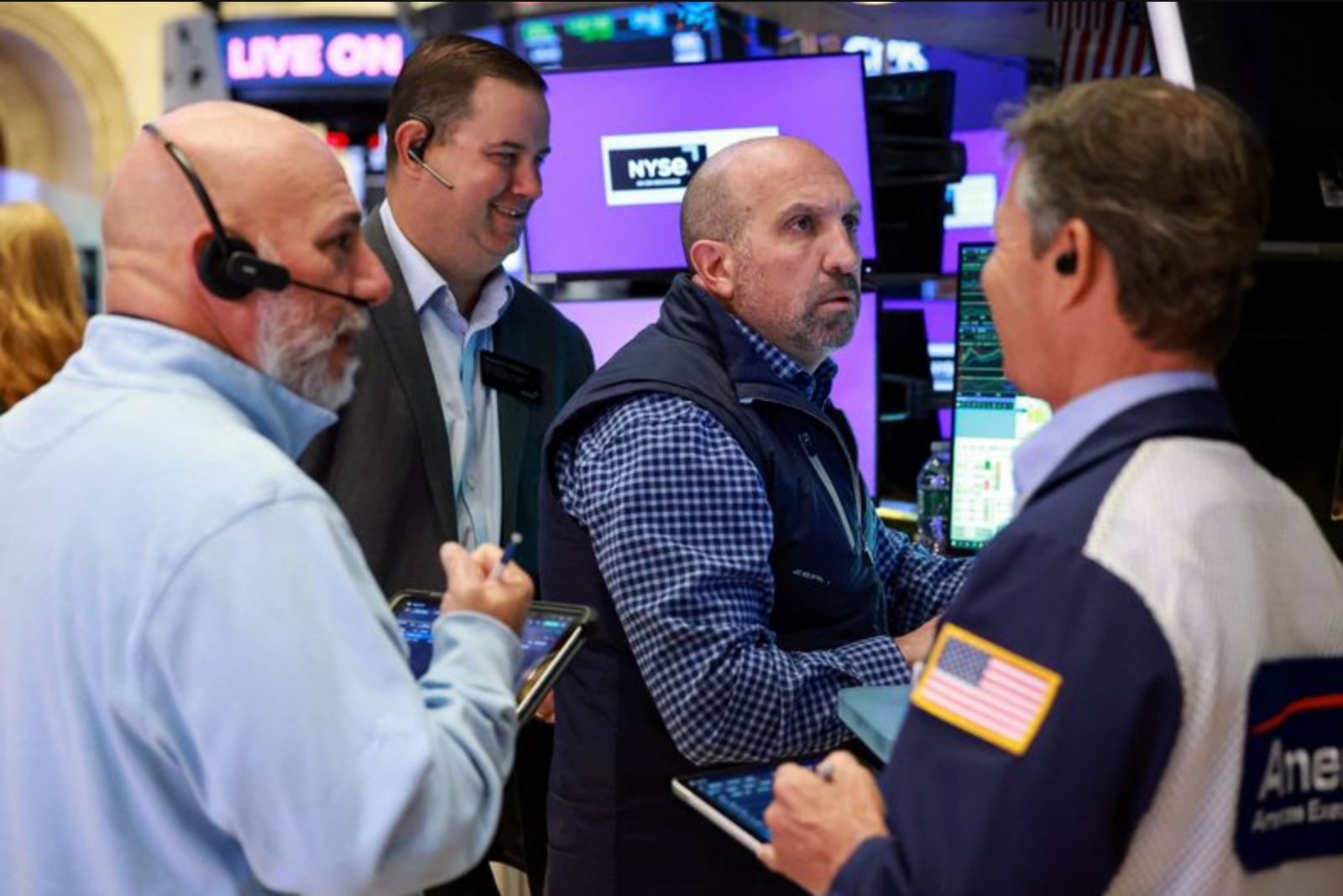
Global financial markets experienced a wave of record-breaking performance on Thursday, characterized by a relentless rally in the technology sector that appears to be insulating investors from geopolitical friction. The Nasdaq and S&P 500 both reached fresh highs, matching a broader global trend where major indices such as the Nikkei, KOSPI, and MSCI All Country also climbed to new peaks. In Asia, the Shanghai Composite achieved its highest level in 11 years, while European markets saw gains of 0.8% and the UK rose by 0.5%.
Market Performance and Sector Dynamics
The recent market activity has been heavily influenced by specific sector movements. Within the S&P 500, six sectors advanced while five declined, with the technology sector leading the charge with a 1.9% increase. Individual stock performances highlighted this volatility and strength: Cerebras saw a massive 90% surge following its Nasdaq debut, Cisco rose by 13%, Ford climbed 7%, and Nvidia gained 4%. Conversely, Qualcomm saw a decline of 6%, and Boeing shares fell by 5%.
In the foreign exchange markets, the US Dollar Index rose by 0.4%. The USD/JPY pair moved back above the 158 level for the first time following recent interventions, while the USD/CNY hit a new three-year low of approximately 6.78. Additionally, the USD/INR reached a record high. The British Pound (GBP) emerged as the most significant global decliner during this session.
The commodities sector showed mixed results, with oil prices ending the day flat, while silver experienced a decline of 5%.
The Concentration Risk: Narrow Market Breadth
Despite the celebratory tone of hitting new highs, an analysis of market breadth suggests that the current rally is driven by an extremely narrow group of participants. While earnings are rising and the markets appear efficient, the distribution of gains is highly uneven. According to a FTSE Russell analysis, nearly 50% of the total returns for the FTSE All-World index in April were generated by just 13 stocks out of a pool of 4,250, all of which are related to Artificial Intelligence (AI).
This concentration is further evidenced by data from LPL Financial. Adam Turnquist noted that currently, only 53% of S&P 500 stocks are trading above their 200-day moving average. This stands in stark contrast to the historical average of 77% typically seen when an index reaches record levels. While Goldman has suggested that such narrow breadth can persist for several months, the disparity between index highs and broader participation remains a notable technical feature of the current market.
The Asian AI Expansion
The technology boom is not confined to the United States. As President Donald Trump engages in discussions in China alongside various high-level tech executives, Asian semiconductor and hardware giants are demonstrating significant financial strength. Taiwanese chipmaker TSMC has announced an aggressive ramp-up of its production capacity. Meanwhile, South Korea’s SK Hynix is approaching a $1 trillion valuation. These companies, along with Samsung, are at the forefront of the regional AI expansion, fueled by massive inflows of overseas investment. These Asian firms serve as critical suppliers to the "Mag 7" U.S. tech giants and provide essential hardware to Nvidia, which remains central to the global AI movement.
Bond Market Volatility and Treasury Concerns
In the fixed-income sector, the landscape is becoming increasingly complex. While yields fell in some areas - with UK gilt yields dropping as much as 8 basis points at the long end and U.S. yields falling by 4 basis points, leading to a flattening of curves - there are underlying pressures in the U.S. Treasury market. The 30-year yield has climbed above the 5% threshold. Critically, borrowing costs are also spiking at the short end of the curve. For a heavily indebted Treasury Department currently working to reduce its debt maturity profile, these rising costs across the curve represent a significant point of concern.
Political Shifts in the United Kingdom
The political landscape in the UK is experiencing sudden instability following the resignation of Health Minister Wes Streeting. Streeting has called for a leadership contest, which adds pressure to Prime Minister Keir Starmer's administration. While a formal contest hasn't been triggered and Streeting's own involvement remains uncertain, the perceived strength of Starmer's leadership appears to be under scrutiny. Adding to this complexity, Manchester Mayor Andy Burnham has indicated he would seek to contest a recently vacated parliamentary seat, a move that could potentially challenge the current Prime Minister. This political uncertainty coincided with a slump in the pound, though gilt yields fell, preventing a definitive "sell UK" market trend.
Looking Ahead: Key Economic Indicators and Events
Market participants are closely monitoring several upcoming developments that could influence volatility tomorrow. These include:
- Geopolitical shifts in the Middle East and updates from the U.S.-China summit between Presidents Trump and Xi Jinping regarding Taiwan and other relations.
- Energy market fluctuations and New Zealand's manufacturing PMI for April.
- Japanese economic data, including wholesale inflation (April) and corporate earnings from Mizuho and Mitsubishi UFJ.
- Final Q1 GDP figures from Hong Kong.
- U.S. industrial production data for April and the New York Fed manufacturing index for May.