
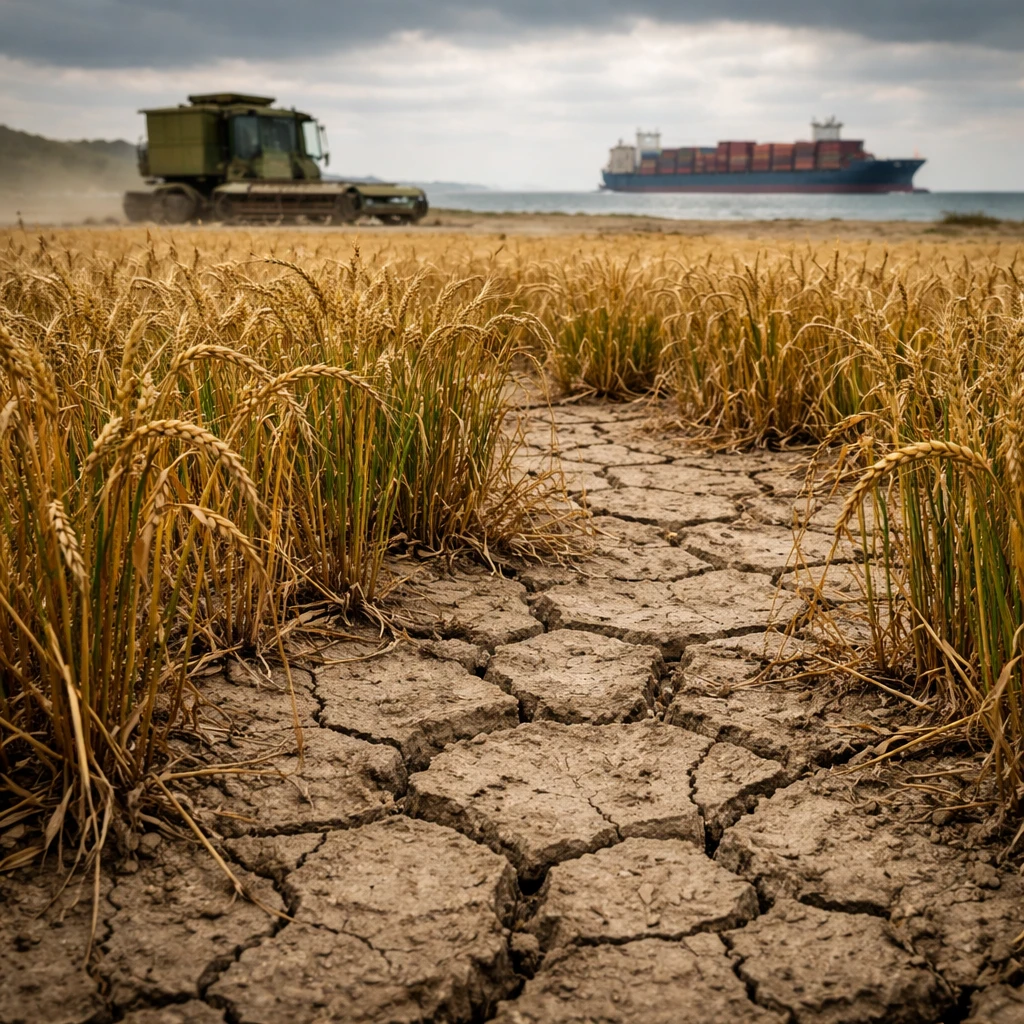
The prolonged closure of the Strait of Hormuz, along with severe weather patterns and rising input expenses, has propelled farm commodity prices to a two-year high as fertilizer constraints and the prospect of smaller harvests intensify food inflation risks.
The Bloomberg Agriculture Spot Index, which tracks 10 of the world’s most-traded crop products, rose for a third consecutive month to reach its highest level since November 2023. The advance represents a material change from the period before the Middle East war, when plentiful stocks and bumper harvests generally kept crop prices subdued.
Producers across Asia, Australia and the United States are confronting overlapping pressures tied to the Iran war and persistent drought. Those combined factors are contributing to price increases for essential food items, including bread, pasta and cooking oil.
Wheat and corn - both crops that rely heavily on fertilizers - have been among the most affected commodities. On the Chicago Board of Trade, benchmark wheat futures have climbed roughly 12% since the onset of the war in late February and this week reached their highest level in almost two years. Corn futures have also advanced, up about 6% over the past two months to reach the strongest level in a year.
Some farmers in major producing countries have curtailed planting in order to reduce costs. In the United States, ongoing dryness across the Great Plains is contributing to upward pressure on wheat prices. Meanwhile, adverse weather outlooks are raising alarms in other key producing regions, including Australia and Russia, with those concerns spilling over into corn markets as well.
In Europe, Paris corn futures have jumped to a 14-month high on expectations of tighter supplies after French farmers scaled back planting amid sharply higher fuel and fertilizer costs. The confluence of shipping disruptions, input price inflation and unfavorable weather has thus tightened the supply outlook for several staple crops.
Analysis note: The combination of supply-chain disruption at a critical maritime chokepoint and adverse weather across multiple producing regions has altered market dynamics that were previously dominated by ample inventories and strong harvests.