
Economy May 1, 2026 12:49 PM

EU Trade Chief Condemns U.S. as Unreliable After 25% Auto Tariff Announcement

Bernd Lange faults U.S. conduct as European Parliament prepares legislative response ahead of June deadline

By Nina Shah
EU Trade Chief Condemns U.S. as Unreliable After 25% Auto Tariff Announcement

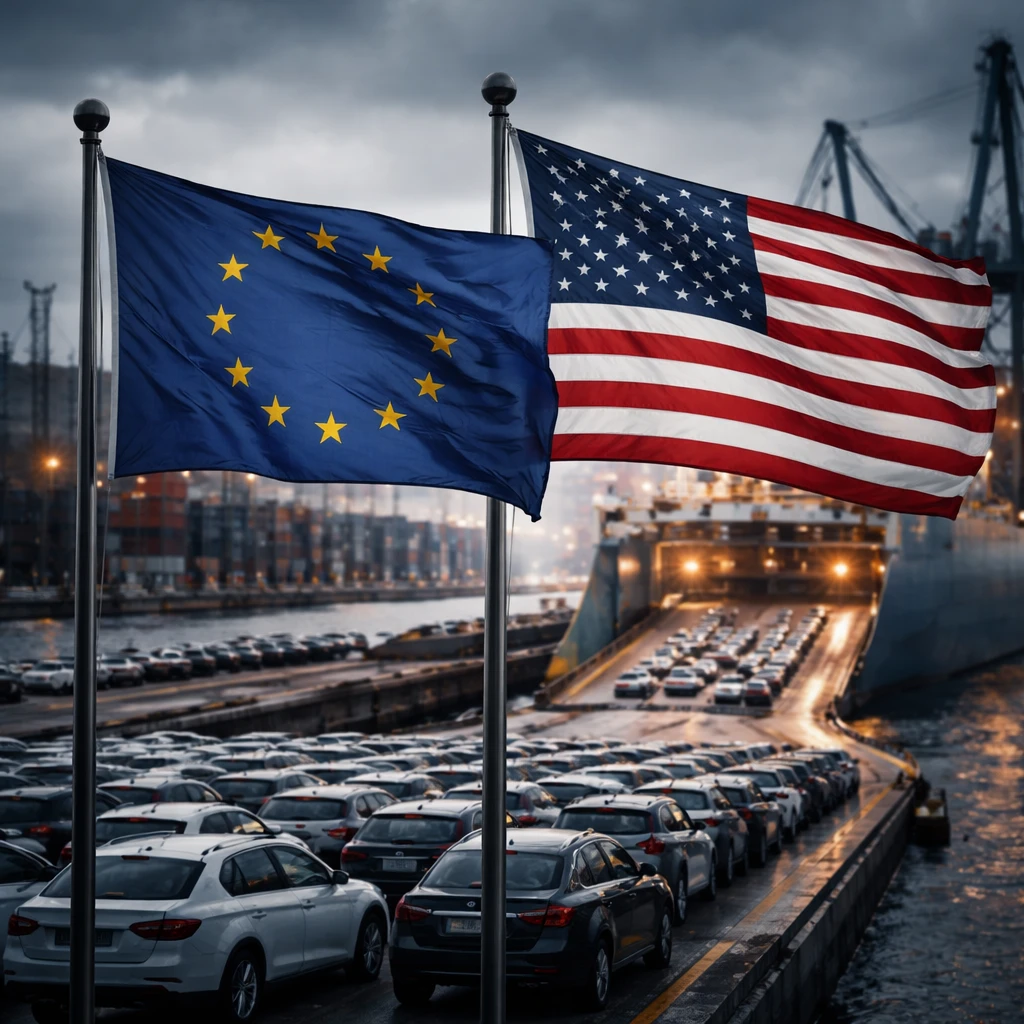
The chair of the European Parliament's trade committee criticized President Donald Trump's decision to raise U.S. tariffs on vehicles imported from the EU to 25% next week, calling the move evidence that the United States is an unreliable trading partner. The EU lawmaker said the bloc will respond firmly and noted the European Parliament is drafting legislation with a parliamentary position expected to be finalized in June.

Key Points

  • President Trump announced an increase in U.S. tariffs on EU cars and trucks to 25% effective next week, applying to vehicles imported from the EU while excluding those built in U.S. plants - sectors impacted include automotive manufacturing and international trade.
  • Bernd Lange, chair of the European Parliament's trade committee, labeled the U.S. action unacceptable and described the United States as an unreliable trading partner, signaling heightened political tension between the EU and U.S. - impacts on diplomatic and trade relations.
  • The European Parliament is drafting legislation and has a parliamentary position aimed at completion in June, indicating a coordinated legislative response from the EU that could affect trade policy and regulatory environments.

Bernd Lange, who leads the European Parliament's trade committee, issued a sharp rebuke of President Donald Trump's announcement that U.S. tariffs on cars and trucks from the European Union will rise to 25% next week.

Lange said the action underscores a troubling pattern in U.S. behavior toward its closest economic partners. "This latest move demonstrates just how unreliable the U.S. side is," he said. "This is no way to treat close partners. Now we can only respond with the utmost clarity and firmness, drawing on the strength of our position."

The tariff increase, announced by the U.S. president on Friday, targets vehicles imported from EU member states. According to the announcement, vehicles produced at U.S. plants will not be subject to the new levy.

Addressing the broader context of the dispute, Lange affirmed that the European Union is abiding by the terms of the Scotland Deal, while asserting that the United States has repeatedly breached the agreement. He indicated that the European Parliament is actively preparing a legislative response and has already developed a parliamentary position. Lawmakers aim to complete that process in June.

The European Parliament's effort to formalize its stance and draft legislation reflects an intent to reply in a coordinated and firm manner, drawing on the bloc's institutional mechanisms. Lange's comments framed the tariff move not merely as a commercial adjustment but as a strain on the reliability of transatlantic relations.

For businesses and markets, the tariff applies only to vehicles imported into the United States from the EU; cars and trucks assembled in U.S. facilities will remain exempt from the new duties. That distinction was highlighted in the announcement of the tariff change.

As the parliamentary timetable advances toward the June target, the European Parliament will continue to refine its legislative approach and its official position in response to the tariff escalation.

Risks

  • Increased tariffs on EU vehicle imports create market and operational uncertainty for automotive manufacturers and suppliers that rely on transatlantic trade - this affects auto production, supply chains, and related financial exposures.
  • Heightened political tensions and the characterization of the U.S. as an unreliable partner raise the risk of further retaliatory measures or prolonged trade disputes, with potential consequences for trade flows and investor sentiment.
  • The legislative response being drafted by the European Parliament introduces regulatory uncertainty until a parliamentary position is finalized in June, which could affect planning and investment decisions in sectors exposed to EU-U.S. trade dynamics.

More from Economy

Yen Holds Near Two-Month High as Dollar Strengthens on Middle East Tensions May 4, 2026 Venezuela’s Monthly Inflation Falls to 10.6% in April, Central Bank Reports May 4, 2026 Customs Agency Says First Electronic Refunds for Trump's Tariffs Could Begin May 12 May 4, 2026 Iran's Araghchi Says Military Action Won't Resolve Hormuz Standoff, Voices Cautious Hope on Pakistan-Brokered Talks May 4, 2026 Westpac’s H1 profit underperforms as margins and credit charges weigh May 4, 2026